

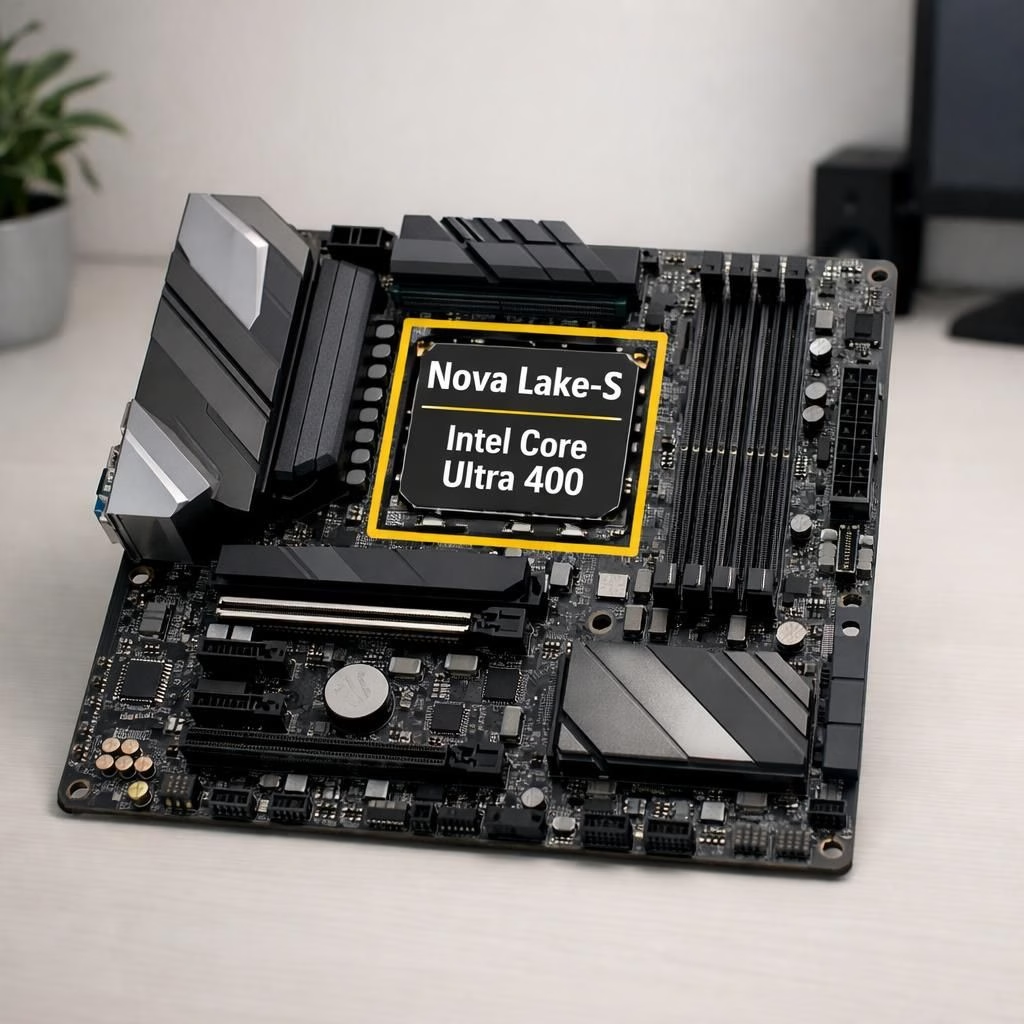
Nova Lake-S and Intel Core Ultra 400 are buzzing terms in 2026’s leak season. The vibe is playful, but informative too. As rumors swirl from outlets like VideoCardz and Tom’s Hardware, developers and enthusiasts map out what a flexible platform could mean for performance and longevity. In this piece, we unpack what the leaks suggest and what it could mean for builders and power users alike, with practical angles you can use today.
Nova Lake-S and Intel Core Ultra 400: What leaks reveal
Fresh chatter points to a broad core range for Nova Lake-S, from six to fifty-two cores. DDR5-8000 memory support is mentioned for several SKUs, along with forward socket compatibility hints. Coverage comes from outlets like VideoCardz, Tom’s Hardware, Igor’s Lab, KitGuru, and OC3D, all painting a picture of ambition: more cores, faster memory, and flexible upgrade paths for the Intel Core Ultra 400 family.
These leaks also hint at how Intel might position the platform for future generations, balancing core counts with memory bandwidth. The Nova Lake-S ecosystem could aim for a longer upgrade path, reducing frequent motherboard changes for creators and enthusiasts. In short, the narrative leans toward a flexible, scalable platform that can grow with demanding workloads.
Nova Lake-S and Intel Core Ultra 400: ILM talk and LGA 1954
A hot topic is 2L-ILM, a two-lever retention mechanism. The concept promises easier cooler mounting, especially with thick radiators and multiple fans. Tom’s Hardware outlines how a two-lever system could work, while industry chatter also asks whether flattening IHS contact could improve heat transfer. The aim is even pressure across the IHS to support heavy cooling setups and stable overclocks for the Intel Core Ultra 400 ecosystem.
Alongside ILM, some discussions center on how this socket design could influence LGA 1954-era compatibility and the broader motherboard ecosystem. The goal is to reduce mounting friction without sacrificing thermal performance. If the two-lever approach delivers, builders may find mounting faster and maintenance simpler across revisions and cooler generations.
What this could mean for enthusiasts and the market
The rumor mill points to a wide cores range, but the practical value lies in efficiency, platform longevity, and upgrade flexibility. A six-core entry model can attract budget builders, while a fifty-two-core flagship would push power delivery and cooling to the limit. The DDR5-8000 reference implies strong memory bandwidth for heavy workloads, including content creation and AI tasks. Forward compatibility means fewer immediate motherboard upgrades, keeping overall costs lower across generations.
Nova Lake-S could outlast older platforms by emphasizing a fluid ecosystem rather than a single socket cycle. The market might shift toward boards and chipsets designed to accommodate multi-socket revisions and evolving memory standards, helping power users ride multiple generations without a full platform swap. The industry views leaks as clues rather than confirmations, but cadence suggests Intel is signaling a longer, more adaptable desktop path with the Intel Core Ultra 400.
From a practical angle, builders should budget for robust cooling, strong power delivery, and a motherboard lineup ready for revisions. The 2L-ILM topic isn’t merely a hardware curiosity; it’s about user experience during assembly and maintenance. If the two-lever design delivers, cooler mounting becomes easier, especially with thick radiators and multi-fan setups. Enthusiasts who enjoy overclocking should prepare for a wider testing matrix, as varying cores, boosts, and memory speeds interact in surprising ways. The Nova Lake-S ecosystem is not just silicon and software; it’s a promise of a more fluid upgrade path in the Intel Core Ultra 400 era.
Looking at the broader market, this chatter could ripple into laptops, servers, and workstations if Nova Lake-S scales well. While desktop rumors dominate, the appetite for a flexible, high-performance platform remains wide. Intel Core Ultra 400 could become a rallying point for developers and OEMs who chase performance per watt, memory bandwidth, and thermal stability. In short, Nova Lake-S is a stage, and Intel Core Ultra 400 is the lead actor with a lineup of supporting roles for AI workloads and creative apps.
Original reporting and thoughtful analysis by VideoCardz, Tom’s Hardware, Igor’s Lab, KitGuru, OC3D, and others provide the scaffolding for this overview. For the scoop that sparked many of these threads, see the original coverage here: Exclusive: Intel Core Ultra 400 “Nova Lake-S” preliminary SKU list leaked: 6 to 52 cores, DDR5-8000 and forward socket compatibility. A big thank you to VideoCardz and the other outlets for sharing early insights that keep the community informed and entertained.
If you enjoy this take, share your thoughts in the comments. We love hearing perspectives on Nova Lake-S and the Intel Core Ultra 400.
References
External context: For broader context on socket design and cooler mounting, you can explore articles from Tom’s Hardware, AnandTech, and TechPowerUp. These sources provide background on how modular platforms can affect upgrades and cooling efficiency.