

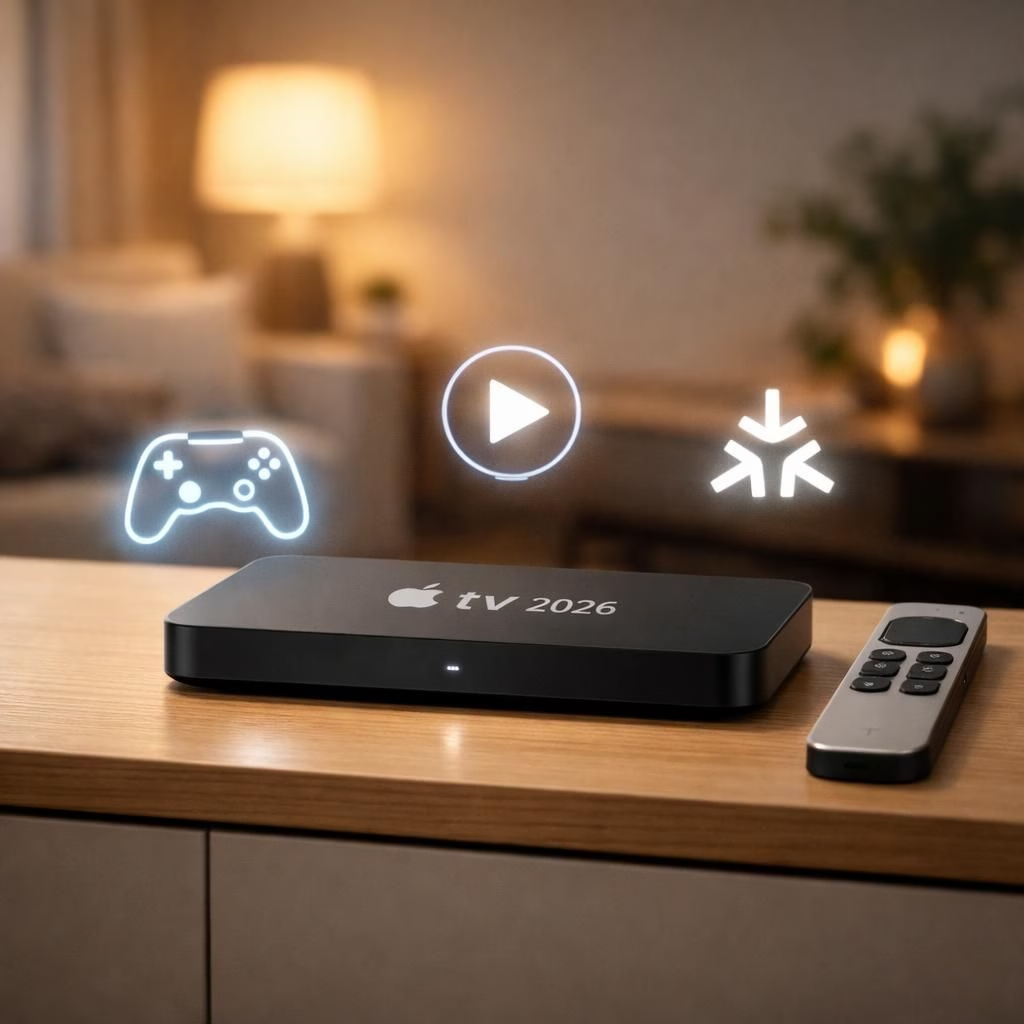
Rumors about the Apple TV 2026 have Apple TV fans and Smart Home enthusiasts buzzing. This update promises meaningful gains in performance, connectivity, and home automation, without turning your living room into a tech museum. It isn’t a radical overhaul, but it could tilt the balance toward a more integrated setup that feels both clever and friendly. If you own a smart speaker, a streaming box, and a handful of motion sensors, this is the kind of upgrade that makes you nod in appreciation rather than sigh at yet another device pile. In short, the Apple TV 2026 story aims to keep things compact, capable, and a touch more magical for everyday living—especially for those who care about the Apple TV experience and the Smart Home ecosystem.
Apple TV 2026: Smart Home Vision for Apple TV Fans
At the heart of the chatter is a practical upgrade path: a faster processor to power beefier apps and smoother games. Rumors point to an A18 or A19 Bionic chip, stepping up from the A15 Bionic in the current Apple TV 4K. The result would be fewer hiccups when loading a game or switching between apps, and cooler operation during extended sessions. A stronger chip would also help with high-detail streaming and multitasking, while keeping the device quiet and efficient. For fans who rely on Apple TV as a core Smart Home hub, this means a more responsive experience across both entertainment and automation workflows.
Ray tracing has surfaced as a potential feature, delivering more realistic lighting and shadows in supported titles. Even if you aren’t a hardcore gamer, faster rendering improves menus, transitions, and UI responsiveness. An efficiency boost also means cooler idle times and lower power draw during intense tasks; over time, these tiny gains add up for both performance-minded users and those who want a quieter living room.
Two big connectivity upgrades are often cited: a stronger wireless stack—likely Wi‑Fi 6E—for steadier streaming and fewer drops when multiple devices are in use; and improved Bluetooth handling for remotes, controllers, speakers, and accessories. Taken together, these changes promise a smoother, more predictable experience whether you’re binging, gaming, or coordinating Smart Home routines. For households relying on a growing Smart Home ecosystem, these enhancements help keep automations snappy and reliable.
Apple aims to keep the compact, minimalist design fans know and love. The physical footprint should stay friendly to most setups, with a practical port configuration that doesn’t demand a degree in cable management. It’s the kind of device that blends into a living room rather than shouting for attention. Small changes in the chassis aren’t the headline, but they do a lot of the quiet work in real life: easier placement, fewer cable tangles, and a cleaner look when perched beside a TV stand or a shelf of other gadgets.
For curious minds who like to think ahead, these rumors point toward a platform that’s more than a streaming box. The Apple TV 2026 could become a more capable bridge between entertainment and home control, a hub where apps and devices talk to each other with fewer hiccups and more cooperation. If you’re already invested in the Apple ecosystem, this upgrade could feel like a natural step forward—an incremental but practical improvement that makes your day-to-day tech simpler and more reliable for both Apple TV and Smart Home needs.
Smart Home Harmony with Apple TV 2026: A Connectivity Quest
Beyond raw power, the Apple TV 2026 is pitched as a better Smart Home companion. Matter support is frequently highlighted as a potential feature, enabling devices from different manufacturers to communicate more reliably. The promise of interoperable scenes and automations could mean you set a morning routine that quietly wakes your lights, adjusts the thermostat, and cues a favorite show, all coordinated by your Apple TV as the central conductor. For homes already loaded with Matter-enabled devices, the Apple TV 2026 could become the central nervous system, reducing the friction of configuring and maintaining a multi-brand ecosystem.
Pricing rumors float around the possibility of a more accessible price point, with figures suggesting the device could sit under $100 in some markets. If true, this could broaden the appeal of the Apple TV 2026 beyond core enthusiasts to casual viewers and renters who value an integrated Smart Home on a budget. Of course, production costs, tariffs, and component choices will shape the final sticker price, but the direction is clear: more capability at a price that invites a broader audience to join the Smart Home circle without breaking the bank. Meanwhile, Apple’s usual focus on build quality and software polish could help this model feel premium without requiring a premium price tag.
Release timing often surfaces as October 2026, aligning with Apple’s historical cadence for streaming devices. While this window isn’t carved in stone, it sets expectations for those planning upgrades around big fall launches. If you want the latest features and the smoothest experience, keeping an eye on official notes will be worthwhile. For more casual observers, the current Apple TV 4K remains a compelling option, delivering solid performance, a robust app library, and the convenience of a proven system—all compatible with a growing Smart Home landscape, at a price that won’t scare the wallet on day one.
Bottom line: the Apple TV 2026 aims to blend stronger performance with easier home automation and better ecosystem interoperability. For many users, that combination translates into a more enjoyable, less fiddly experience that saves time and reduces frustration. If your life leans toward gaming, streaming, and Smart Home automation, this update could be a meaningful step forward—without forcing you to adopt a whole new lifestyle overnight.
Want to weigh in on what matters most to you about the Apple TV 2026? Share your thoughts in the comments below, and tell us how you’d use a smarter Apple TV and a more capable Smart Home in your daily routine.
Source & Image Credit: HotshotTek — Thank you for the original coverage and inspiration. Original article: HotshotTek original Apple TV 2026 coverage.
Practical upgrade checklist
- Check current hardware: Is your Apple TV 4K model running smoothly, with room for a faster chip?
- Assess your Smart Home ecosystem: Do you rely on Matter-enabled devices and fast automations?
- Consider budget and timing: Would a fall purchase fit your home upgrade plan?
- Plan compatibility: Will your TV, speakers, and sensors work well with the new Apple TV?
Frequently asked questions
Apple TV 2026: Will it matter for your Apple TV and Smart Home setup?
In short, yes — if you value faster performance, better connectivity, and stronger interoperability with Matter-enabled devices.
How should I decide whether to upgrade now or wait?
Consider your current devices, your budget, and how close you are to milestone upgrades. Early reviews will clarify whether the new hardware meets real-world needs.
Is Matter support guaranteed at launch?
Rumors point to continued Matter support as a focus, but final confirmation comes from official disclosures at launch.
When will the Apple TV 2026 release date be official?
Apple typically aligns new streaming devices with fall launches. Expect announcements around October 2026, with availability following shortly after.
Pricing, Availability, and What It Means for You
For buyers who care about the balance of features and value, the conversation around pricing is as important as the feature list. A price tag under $100 would be a notable swing factor for many households, especially if the device ships with a strong software foundation, robust Matter support, and a path to future upgrades. Availability around October 2026 would fit neatly with autumn upgrade cycles and the back-to-school season for power users who want to outfit living spaces with a single, cohesive interface. If you are considering an upgrade, weigh your current setup: if your TV, Smart Home devices already play nicely with Apple TV and you’re ready for a more seamless Smart Home workflow, waiting for the 2026 model might offer tangible benefits. If you’re content with your current Apple TV 4K and your Smart Home is still growing, you might prefer to ride out one more cycle and watch early reviews before committing.
Bottom line: the Apple TV 2026 aims to blend stronger performance with easier home automation and better ecosystem interoperability. For many users, that combination translates into a more enjoyable, less fiddly experience that saves time and reduces frustration. If your life leans toward gaming, streaming, and Smart Home automation, this update could be a meaningful step forward—without forcing you to adopt a whole new lifestyle overnight.
Want to weigh in on what matters most to you about the Apple TV 2026? Share your thoughts in the comments below, and tell us how you’d use a smarter Apple TV and a more capable Smart Home in your daily routine.
Design, Features, and Real-world Use: Apple TV 2026 at Home
Design-wise, Apple keeps the minimalist ethos that the product line has cultivated. The box remains unobtrusive, the remote still feels familiar, and the overall user experience aims to be intuitive rather than intimidating. In practice, the difference shows up in how quickly apps launch, how cleanly menus respond, and how reliable Smart Home automations feel when you ask Siri or tap a button on your remote. The potential for better gaming performance, combined with more robust streaming and smarter Smart Home control, could make the Apple TV 2026 feel like a more capable anchor for a modern living room.
On the entertainment side, you’ll likely see improvements in frame rates, reduced load times, and better power management. On the Smart Home side, more capable Matter integration and faster response times translate into fewer moments of waiting for devices to acknowledge a command. The practical upshot is a smarter, more responsive Apple TV that behaves like a true hub for both streaming and Smart Home control.
External sources
For broader context, see coverage from major outlets: