

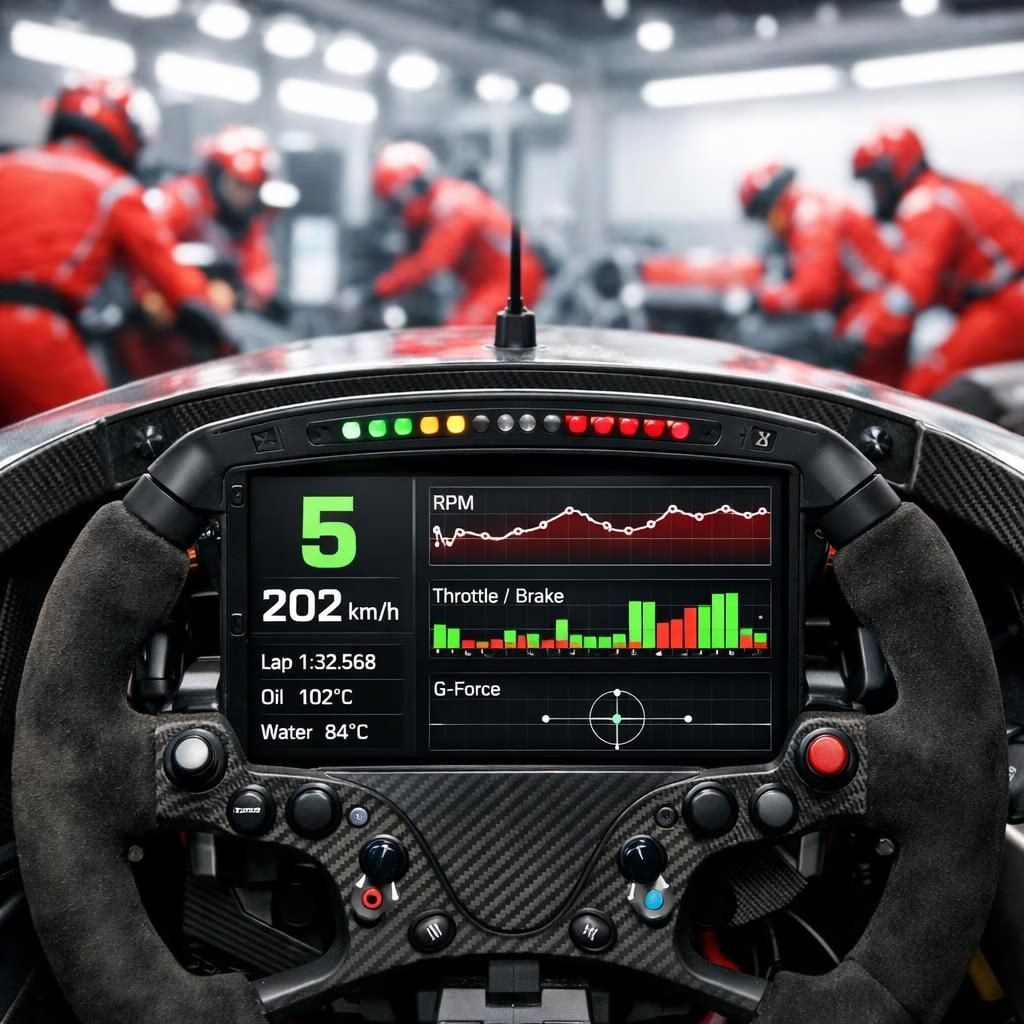
Motorsports and Technology are no longer separate pillars; they share a single heartbeat that drives every lap. The roar you hear on the grandstand is now joined by the soft hum of sensors, streams of data, and a chorus of engineers who live between laptops and pit walls. This isn’t a distant future; it’s today’s reality, where a race is won as often by numbers as by nerves. Fans get more context; teams gain sharper intuition; and drivers train with precision that feels closer to a flight simulator than a garage bell. Motor racing thrives on a double-edged advantage: speed on the track and speed of thought in the garage. In short, Motorsports has learned to love Technology as a co-pilot, not a curious spectator.
Motorsports and Technology: A Shared Pulse on the Track
Before the engines roar, the grid hums with plans. Teams use high-fidelity simulations to predict tire wear, fuel windows, and pit timing with confidence. They feed data from track temperature, wind, and tire temperatures into race plans that look more like weather reports for a championship than a simple timetable. It’s not magic; it’s modeling, calibration, and a bit of data storytelling, all tuned to help Motorsports win smarter, not just faster. The result is a sport where the loudest shout can be a well-timed keystroke rather than a shout from the pit wall.
Motorsports Technology in Practice: Simulators, Telemetry, and Real-Time Strategy
In practice, this data-driven approach shows up in the driver’s notebook and in the data streams that cross the pit wall. Drivers arrive with a notebook full of micro-adjustments learned in simulators that recreate the track down to the tiniest ripple in asphalt. In these high-end sessions, motorsport becomes a rehearsal cinema: you can brake a little earlier here, apex a corner there, and test an overtaking move without risking a single drop of fuel on race day. Engineers feed real-time telemetry to the pit wall—engine temps, tire grip, and driver biometrics—creating a live feedback loop that nudges strategy as the data speaks. This is where Motorsports and Technology prove their daily worth: decisions aren’t guesses; they’re probabilistic bets backed by dashboards and drift models that learn from every lap. Telemetry isn’t a novelty; it’s the new referee, guiding when to push, when to conserve, and when to pit for a smarter race with less risk to Motorsport integrity.
Technology and Motorsports: Safer, Sharper, and Simpler to Follow
Safety remains the quiet hero of the story. With advanced materials in the chassis and cockpit, barrier improvements, and smarter medical response, Motorsport gets safer every season without dulling the thrill. Technology tools track every hazard on track and flag issues in real time, letting officials respond with speed and precision that feels almost prescient. The collaboration between advanced systems and Motorsports doesn’t just prevent accidents; it elevates the confidence of crews, drivers, and fans alike. When you see a driver walk away from a crash, you’re witnessing a victory of Technology applied to real-world situational awareness in Motorsports—a win for safety that still respects the sport’s edge.
Engineering at the Edge: Precision in Motorsports
There’s a quiet revolution in how parts are designed and tested. Engineers push for microscopic gains in aerodynamics and weight distribution, knowing a hundredth of a second can change a race outcome. Instead of building every component and hoping for the best, teams run digital twins, simulate countless iterations, and only commit to physical parts once the math says it will pay off. This means each car arrives at the track closer to perfection—and with less waste. Technology doesn’t replace the craft of Motorsports; it sharpens it, enabling teams to chase performance with surgical focus while reducing wear and tear on both machines and minds. The result is a sport that keeps evolving, but still feels unmistakably human at the edge of speed.
Driving Toward a Data-Driven Grand Prix Era
Fans aren’t just watching cars anymore; they’re watching a living data stream that runs parallel to the race. Live broadcasts reveal tire temperatures, gear selections, and even pit strategy probabilities, letting you see the hidden chessboard in real time. This deeper layer of context enhances the excitement and makes every decision feel consequential. It’s not about turning motors into math; it’s about letting data illuminate the art of racing, helping Motorsports stay dynamic, engaging, and accessible to curious minds watching from home or in the stands. And yes, the sport still loves its drama—the difference is that now the drama has a data-driven backbone that makes it smarter, not colder.
Beyond the track, the fusion of motorsports and Technology spills into fan experience. Social media channels and streaming services deliver live cuts, behind-the-scenes looks, and quick breakdowns that bring the pit lane into living rooms worldwide. The ecosystem thrives on cross-industry tech extensions—gaming platforms, simulations, and interactive dashboards—so that the thrill of speed travels far beyond a single race weekend. If you crave a more immersive view, you can dive into the data, explore the strategies, and even re-run laps in a safe, simulated environment. It’s a new era where Motorsports and Technology reinforce each other, delivering faster laps, safer cars, and a richer sense of participation for every kind of fan.
From Planning to Pit Stop: A Continuous Loop of Improvement
Preparation remains the backbone of a winning weekend. Before the first practice session, teams run exhaustive simulations, molding race plans around track conditions and tire behavior. They plot multiple pit-stop scenarios, weighing the risks of traffic and safety cars against the potential gains of fresh rubber and clean air. When practice begins, the data stream becomes a living map—each sector reveals new opportunities, each lap adds a data point. The pit stops, once frantic theater, now unfold with military-like precision, driven by the same data that scouts tire temperatures and airflow patterns. This isn’t magic; it’s disciplined engineering and careful testing that keeps Motorsports moving forward without losing its character.
For drivers, the training ground looks less like a simple gym and more like an all-in-one cockpit lab. Hours in simulators translate to muscle memory on real asphalt. Braking points, apex speeds, and overtaking windows are tuned with science, then tested with feel. The human element remains essential—the driver’s judgment, instincts, and adaptability still decide tight races. But those instincts now operate with a digital safety net and a sharper understanding of the variables in play. In this evolved landscape, Motorsports and data-driven systems are partners in progress, each amplifying the other’s strengths.
As we look toward the rest of 2026 and beyond, the trend is clear: data, digital tooling, and live telemetry will be as important as horsepower and chassis balance. The edge belongs to teams that embrace the full toolkit of Technology while preserving the sport’s competitive spirit and showmanship. For fans, that means more insight, more engagement, and more moments when the data line up with the drama on track.
Original article: Thank you to the authors of the original article for the inspiration and material on modern motorsports and technology.
If you enjoyed this look at how Motorsports and Technology are reshaping the sport, share your thoughts in the comments. Your experiences and questions help fuel the conversation.
Practical takeaways for fans
- Watch beyond the cars: look for live telemetry, tire data, and pit strategy indicators during broadcasts.
- Follow official team feeds and FIA/Formula 1 updates for context on decisions as they unfold.
- Try safe, sponsor-approved simulations or data dashboards to explore how laps and tires interact over a race distance.
FAQ
- What role does telemetry play in modern racing?
Telemetry delivers close-to-real-time measurements from the car to the pit wall, enabling smarter decisions, safer management, and better understanding of how a track behaves lap after lap. - How does data improve safety?
Data and sensors help teams detect anomalies early, optimize crash-absorption measures, and accelerate medical response when needed. - Can fans engage with data during a race?
Yes. Broadcasters and official apps often provide live data overlays, pit probabilities, and sector-by-sector insights to deepen the viewing experience. - Will data replace human judgment?
No. Data augments human judgment, giving teams and drivers more reliable context while preserving the human thrill of racing.
External reading
- Formula 1 technology and data
- BBC Sport: Formula 1 coverage
- FIA: Safety and technology in motorsport
References
Original source: https://speedwaydigest.com/index.php/news/racing-news/882883-how-technology-quietly-runs-the-show-in-motorsports/