

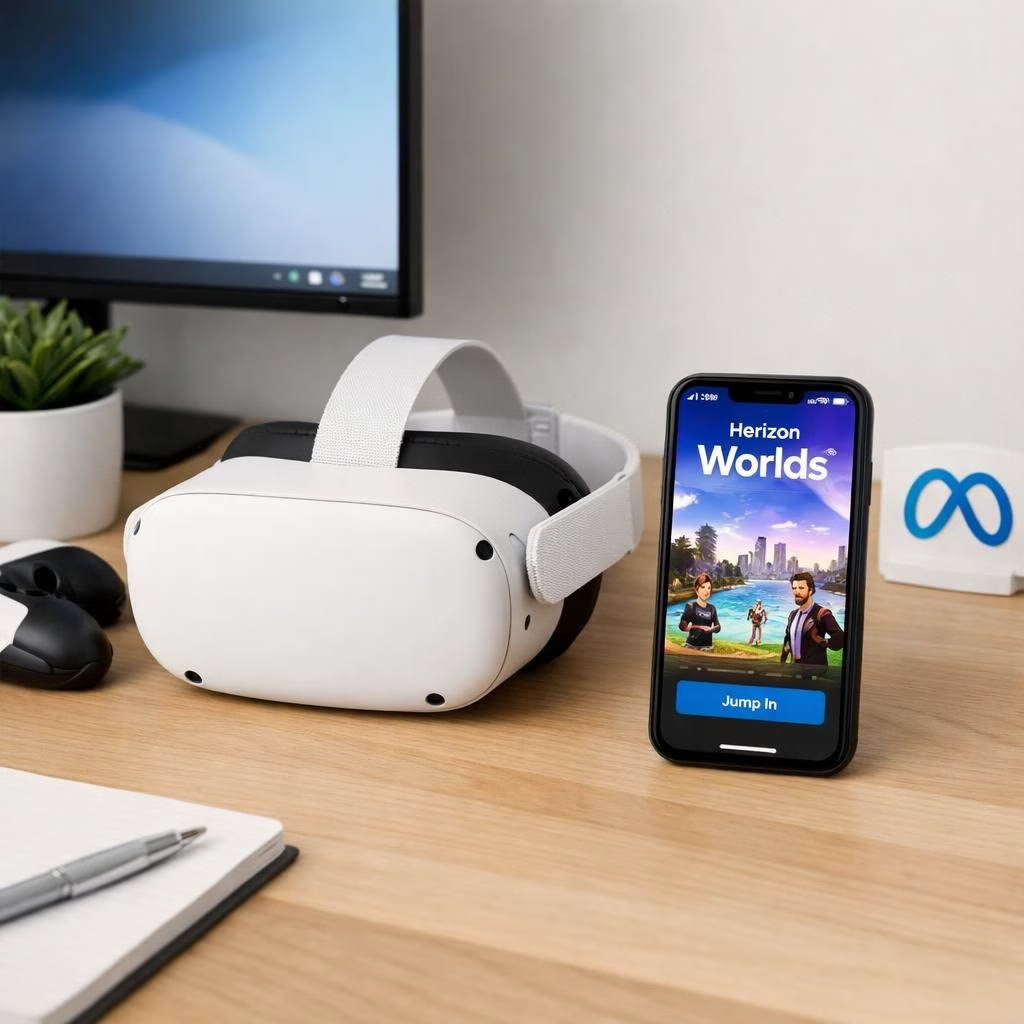
In 2026, the metaverse dream pitched by Meta is getting a gentle, humorous reality check. The metaverse concept remains a bold promise, but Meta‘s rollout faces confusion and a high price. If there’s a single lesson here, it’s that grand tech visions need clarity, user delight, and a dashboard that won’t crash at first sign of activity. Meta‘s Horizon Worlds, a VR social playground, begins a quieter arc toward a mobile encore, proving a bold idea can survive reality’s nudges.
Horizon Worlds launched in 2021 as a beacon for the future of social spaces, staying on Quest headsets and later adding a cautious mobile version to welcome non-VR fans. The result? A user base hovering in the low hundreds of thousands and a chorus of critics pointing out bugs, clumsy navigation, and a sense that the idea might be more metaphor than metropolis. The spirit remains: experiment, iterate, and laugh at glitches that remind us that reality has texture too.
metaverse lessons: why Meta’s grand plan stumbled
The internal story behind Horizon Worlds is a blend of ambition and misreads. Vasuman Moza, a former Reality Labs engineer, points to middle management as a bottleneck: a team that could describe a product but not how young people actually use it. He wrote that the metaverse had legs, but the middle layer strangled it. He recalled shipping a tool developers needed, only for a London team to ship it to die. He was reassigned to a higher-priority project that zero developers asked for. The lesson is simple: a bright idea needs voices that actually use the product. Meta leadership believed in the long game, yet the path demanded more listening and faster iteration.
There is a stubborn optimism in the air, and Meta signals a willingness to adjust. The company has poured billions into Reality Labs, and the results have been sobering but instructive. Turning away from a VR-only mindset does not erase ambition; it reframes the plan so it can scale in real life terms. The pivot is not surrender—it is a different route that keeps the dream alive while aligning with practical constraints.
VR realities and the metaverse pivot: Meta keeps chasing the dream
VR still shows uneven traction for everyday use. Horizon Worlds moved toward mobile, making it easier for non-headset owners to join the social stage. Meta also leans into wearables with Ray-Ban smartglasses, which have sold well and broadened the hardware conversation. The Superintelligence Lab (MSL) works on new AI models, even as Avocado faced delays in internal tests. Meta acquired Moltbook, aiming to combine Moltbook’s team with MSL to build smarter AI agents that can help with daily tasks. The thread here is simple: mix hardware, software, and AI to serve real people, not just hype.
Meta Horizon Worlds’ VR support will sunset by June 15, 2026, with the app moving to mobile-first. The Quest store will drop Horizon Worlds at the end of March, and Meta Horizon Plus members will lose perks like Meta credits, digital clothing, avatars, and in-world purchases. The plan is a recalibration, not a collapse; it aims to keep the core idea alive in a form that more people can access. If the dream was meant to be everywhere, the pivot should still feel open and inviting rather than exclusive to a headset.
Yes, the journey was bumpy, and yes, the timeline stretched. Yet the core takeaway is resilience: admit mistakes, trim the fat, and chase a refined version of the dream with focus and humility. The mindset isn’t dead; it’s evolving, learning to ride the wave of real-world constraints while still imagining new kinds of social space. It’s a reminder that progress often looks like careful pruning rather than a single dramatic bloom.
What do you think about the metaverse, Meta‘s bets, and VR’s evolving role? Share your thoughts in the comments. And a final note of gratitude: this article acknowledges the original reporting by Armaan Agarwal. Read the original article here: Original article by Armaan Agarwal.
Practical takeaways for the metaverse journey
- Clarify goals and onboarding early to reduce friction for new users.
- Involve real users in testing and iterate quickly based on feedback.
- Blend hardware, software, and AI to deliver tangible everyday value, not just hype.
FAQ
Q: What is the metaverse?
A: A 3D virtual space where people can work, play, and connect, often accessed with headsets but increasingly on mobile.
Q: Why is Horizon Worlds shifting to mobile?
A: To broaden access and test the core idea with non-headset users, while managing costs and complexity.
Q: Will Meta continue investing in wearables and AI?
A: Yes. The company is pursuing smarter AI models and wearables that bridge the digital and real world.
Q: What happened to the Horizon Worlds user base?
A: It struggled to grow beyond a few hundred thousand monthly active users, due to bugs, usability issues, and competing priorities.