

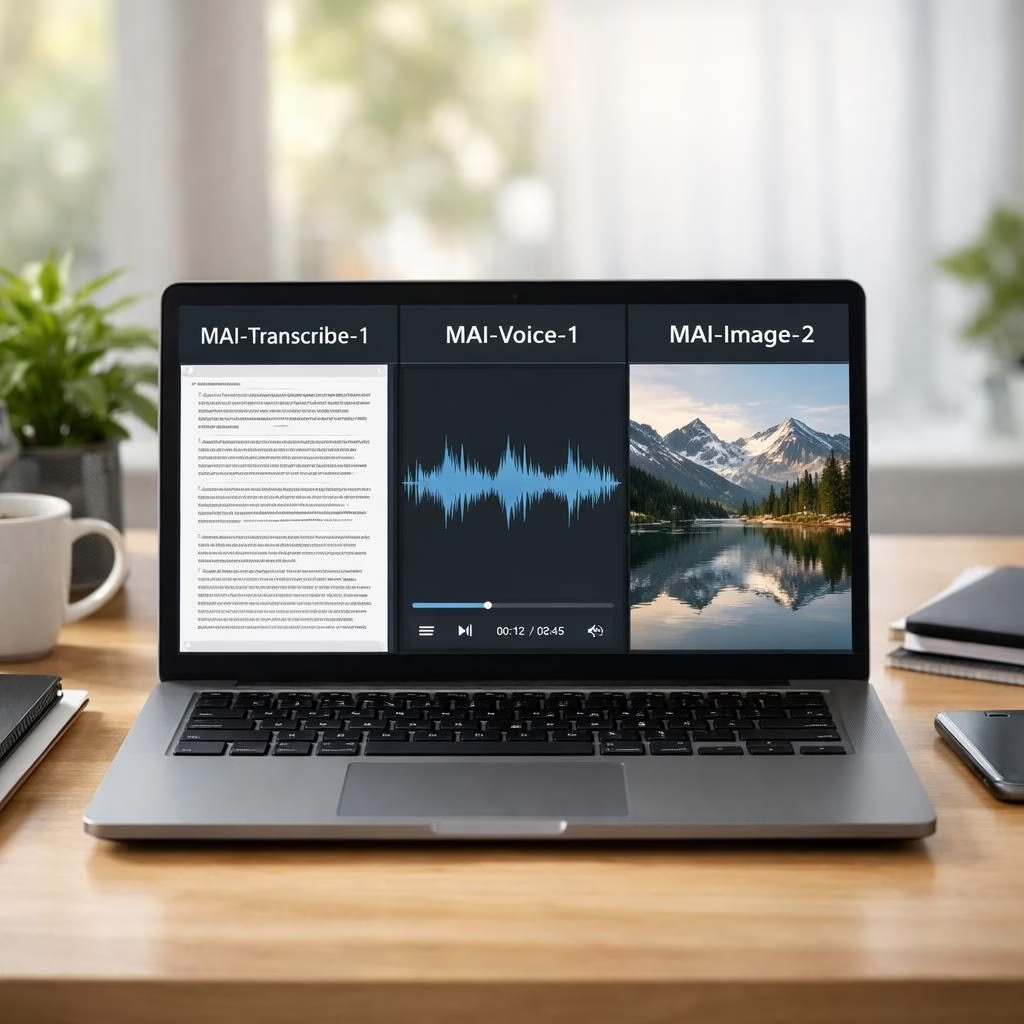
In a world where AI buzzwords spark coffee-fueled debates, Microsoft rolled out a fresh trio of models on April 2, 2026. The lineup includes MAI-Transcribe-1, MAI-Voice-1, and MAI-Image-2. The promise is simple and confident: better quality, faster performance, and prices that make rivals blink. The team led by Microsoft AI CEO Mustafa Suleyman says all three models deliver top-tier results. Three models, three aims, all shipping within a few months to Foundry and the MAI Playground. If you want AI power that’s not trying to gaslight you with acronyms, you’re in the right place.
MAI and AI in the spotlight: three models rise
MAI-Transcribe-1 is the speech-to-text workhorse. It converts spoken audio into text across the top 25 languages. Microsoft claims it runs 2.5 times faster than Azure Fast. The price is an appealing AI entry point at $0.36 per hour, designed to ease pilots in teams adopting AI at scale.
MAI-Voice-1 flips the process around, turning text into natural, expressive speech. The model is designed to carry emotional nuance and speaker identity, even in long-form audio. Microsoft says it can generate 60 seconds of audio in one second. Pricing sits at $22 per million characters, making it competitive for voice content studios and large e-learning projects within a 2026 budget.
MAI-Image-2 is the image-generation model. It debuted as a top-three model on Arena.ai and is now integrated into Copilot, Bing, and PowerPoint. Microsoft promises at least a doubling of image generation speed with no drop in quality. Pricing starts at $5 per million tokens for text input and $33 per million tokens for image output, a structure that mirrors how teams buy both inputs and outputs in a compute world.
For years, Microsoft’s AI story has wandered through a service tunnel with OpenAI, the company behind ChatGPT, in which Microsoft has invested over $13 billion. The new trio signals an intent to build and own more of the AI stack. In practice, that means faster iterations, tighter integration with Office and Bing, and a level of control that matters to large buyers and smaller teams alike.
How MAI changes AI workflows: speed, cost, quality
In real terms, the MAI lineup reduces the drag between idea and deliverable. MAI-Transcribe-1 speeds up captioning for meetings and content libraries, freeing teams to repurpose material faster. MAI-Voice-1 makes it practical to generate voiceovers that fit brand voice without hours of human studio time. MAI-Image-2 helps product teams iterate visuals quickly, from UI mockups to marketing assets, without waiting for a separate designer sprint.
The pricing choices are crafted to appeal to both lean startups and sprawling enterprises. By pricing transcription at $0.36 per hour and voice at $22 per million characters, Microsoft aims to position MAI as a reliable baseline rather than a premium tease. AI-powered visuals are priced by input and output tokens, a scalable model for teams that routinely mix text, graphics, and AI-powered visuals.
From buzz to business: the MAI AI pricing puzzle
Pricing is never simply about numbers. It’s about predictability, licensing, and the fear that AI will suddenly become a budget black hole. The MAI trio leans toward price-per-unit clarity, which helps finance and procurement teams model ROI with less guesswork. The blend of speed and quality claims also invites comparisons with external AI vendors and internal tooling. Will customers find these numbers compelling enough to shift workloads from other platforms to MAI-powered Foundry and Copilot? The market will tell us.
Beyond numbers, the real business shift is architectural: tighter integration into productivity suites, better data reuse, and the potential to ship features as part of a broader MAI stack. Meanwhile, the strategy hints at a future where Microsoft builds more of its AI tools in-house and aligns them with its software ecosystem—less reliance on external partners and more on platform-wide coherence.
Developers and product teams should anticipate smoother APIs, better edge-case handling, and more consistent performance across languages and formats. For content creators, the promise of faster transcription, more natural synthetic speech, and higher-fidelity visuals could cut production cycles dramatically.
For security-minded enterprises, the trio also raises questions about data handling, retention, and governance. Expect more documentation about model capabilities, privacy controls, and clear SLAs as MAI becomes a standard part of enterprise workflows.
Have thoughts or questions about these MAI AI models? Share your perspective in the comments and start a constructive dialogue.
External references and useful resources can help you compare options and build a plan. For example, see Azure Speech-to-Text for technical details, or Arena.ai for model leaderboards and benchmarks.
MAI in the enterprise: practical implications
- Captioning and translation become quicker, improving accessibility and reach.
- Voiceovers can mirror brand voice without studio bottlenecks.
- Design teams iterate visuals faster, reducing cycle times from weeks to days.
AI pricing strategy for teams
Adopting MAI means balancing unit costs with expected throughput. Transcription at 0.36 per hour, voice at 22 per million characters, and image tokens at tiered levels create a transparent operating model for procurement and budgeting. It’s easier to forecast monthly spend when usage follows clear pricing rules rather than opaque caps.
Implementation considerations: security, governance, and support
Enterprises should review data retention policies, access controls, and vendor SLAs before widespread deployment. Microsoft is expected to publish more detailed governance guidance as MAI expands. Organizations should plan pilots with defined success metrics and guardrails for sensitive data.
In short, MAI promises faster production, tighter integration with the Microsoft ecosystem, and clearer cost signals. As adoption grows, teams will want standardized setup patterns, referenced architectures, and predictable performance across languages and formats.
FAQ
-
What exactly are MAI-Transcribe-1, MAI-Voice-1, and MAI-Image-2?
They are distinct models for speech-to-text, text-to-speech, and image generation, designed to work together inside Foundry and the MAI Playground for faster, end-to-end AI workflows.
-
How should a team start using MAI?
Begin with a pilot focused on a single use case (e.g., automated meeting transcripts or marketing visuals). Measure speed, cost per unit, and quality, then scale gradually.
-
What about data privacy and governance?
Expect detailed documentation from Microsoft on data handling, retention, and security SLAs as MAI becomes part of enterprise workflows.
-
Where can I access MAI models?
They are available through Microsoft Foundry and the MAI Playground, with broader ecosystem integrations planned across Copilot, Bing, and PowerPoint.
Conclusion and takeaways
The MAI trio signals Microsoft’s intent to own more of the AI stack and to weave AI capabilities deeper into everyday tools. For teams, the key questions are: how will these models fit your workflow, what will the total cost of ownership look like, and how will you govern data as usage grows? If you’re evaluating MAI, start with a focused pilot, map clear success criteria, and track speed, cost, and quality over time.
Original article: Times of India — original source
References
Original article: Times of India