

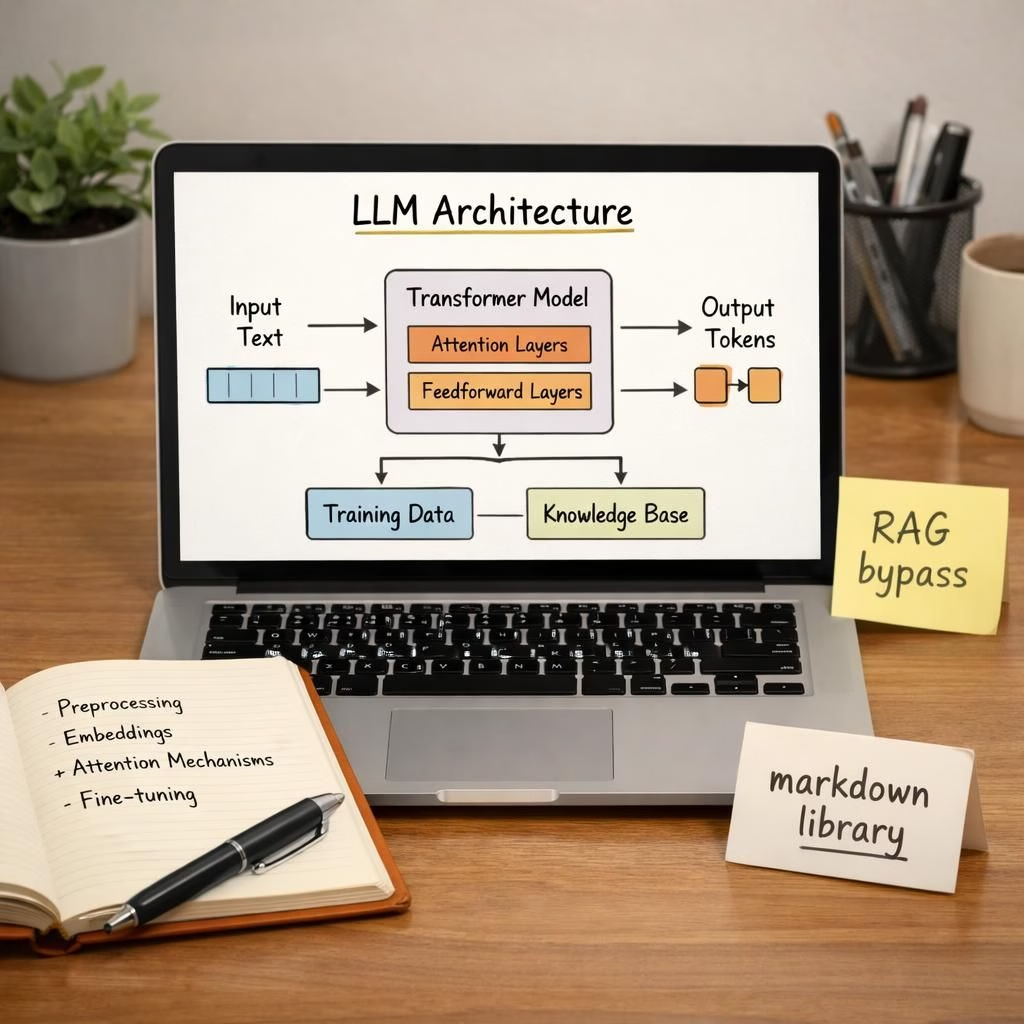
In this era of AI chatter, the LLM Knowledge Base approach Karpathy sketches offers a refreshing alternative to the RAG dance. The core idea treats the model as a curator, not a hunter: a living markdown library, gradually expanded by AI, that the system can consult with confidence. This isn’t about piling on external data; it’s about turning sources into structured, referenceable notes, indexed so the model can retrieve, cite, and cross-link with minimal latency. The architecture emphasizes stable interfaces, versioned snippets, and a sensible balance between generation and reference, giving engineers room to tune the behavior without chasing brittle pipelines all day.
In practice, this architecture relies on a living markdown library as a canonical source of truth. The library records high-quality notes, redlines, and updates in a way that AI can parse, index, and fetch. It uses lightweight metadata to tag sources, authors, and versions, enabling cross-linking between topics without requiring a full-blown database. Because the library grows through AI contributions and human curation, the model gains a sense of continuity: older notes anchor newer ideas, and the system can avoid stale references that plague brittle RAG pipelines. This approach does not pretend to replace all search. Instead, it reorganizes how a model sees sources, reducing latency and risk while increasing explainability. In 2026, teams are increasingly drawn to knowledge-centric patterns that reflect a modern, scalable mindset.
LLM: A Flexible, Real-World Architecture
Inside the lines of code, the LLM interacts with a structured Markdown library where each snippet is versioned. The model fetches by slug, inserts it into a response with a citation, and proceeds with generation that stays anchored to the source. The evolving library keeps pace with new facts, updates, and corrections. Engineers steer updates via pull requests, audits, and light governance, a compact editorial desk for an AI product. The result is not a single giant knowledge map but a network of micro-nodes that a single prompt can traverse with clarity.
Building a Practical Knowledge Base for AI
To turn this concept into a working product, teams can start with a few pragmatic steps. First, establish a simple, shared Knowledge Base schema that captures source, date, author, and version. Keep code blocks and diagrams standardized to minimize parsing friction. Second, implement a lightweight indexing layer that maps topics to notes. A tiny search API will let the model retrieve relevant notes by keyword or slug. Third, enforce governance: code reviews for note updates, automatic checks for outdated sources, and a harmless rollback path. Fourth, integrate with existing models by exposing a stable retrieval interface that returns both the note and its provenance. Fifth, design citations that feel natural to users: not too verbose, but precise enough to verify claims. Over time, this becomes a friendly, scalable knowledge spine for AI systems.
From a developer’s standpoint, the beauty is in the balance. You retain the model’s creative strengths while grounding it to a transparent, auditable Knowledge Base spine. This reduces the risk of hallucinations, because the model can show a source for every asserted fact. It also lowers operational costs: fewer external lookups, fewer brittle pipelines, and less ad hoc data wrangling. The evolving Markdown library becomes a living contract between data and decision-making. It is the kind of tooling that makes both AI and humans feel a little more in control of the conversation.
Of course, no approach is perfect. The Markdown library must be curated with discipline, and the team must avoid overloading the system with trivial notes. The goal is to create a lean, navigable web of notes that grows responsibly. When done well, the LLM Knowledge Base model serves as a trustworthy guide that still respects the nuances of language and context. It invites questions, supports audits, and scales as new information emerges in the field.
What do you think about a knowledge-based LLM approach? Share your thoughts in the comments below. If you want to see the original material that inspired this piece, check the attribution link at the end.
Original article: VentureBeat — thank you for the source material and thoughtful analysis.
Practical takeaways for teams
- Define a simple, interoperable Knowledge Base schema to anchor notes and sources.
- Version each snippet and track provenance to improve traceability.
- Balance retrieval and generation to keep responses explainable and fast.
Further reading
FAQ
- What is a Knowledge Base in this context? A structured, versioned set of notes and sources that a model can retrieve and cite during generation.
- How does this reduce hallucinations? By anchoring each claim to a note with provenance, the model can show a source for each assertion.
- What are the trade-offs? You trade some immediacy for transparency and auditability, with a new workflow for updates and governance.
Conclusion & next step
The LLM Knowledge Base pattern offers a practical, scalable path for aligning language models with verifiable sources. Start small, standardize notes, and invite collaborative curation. Over time, teams can build a resilient knowledge spine that supports reliable, explainable AI-driven conversations.