

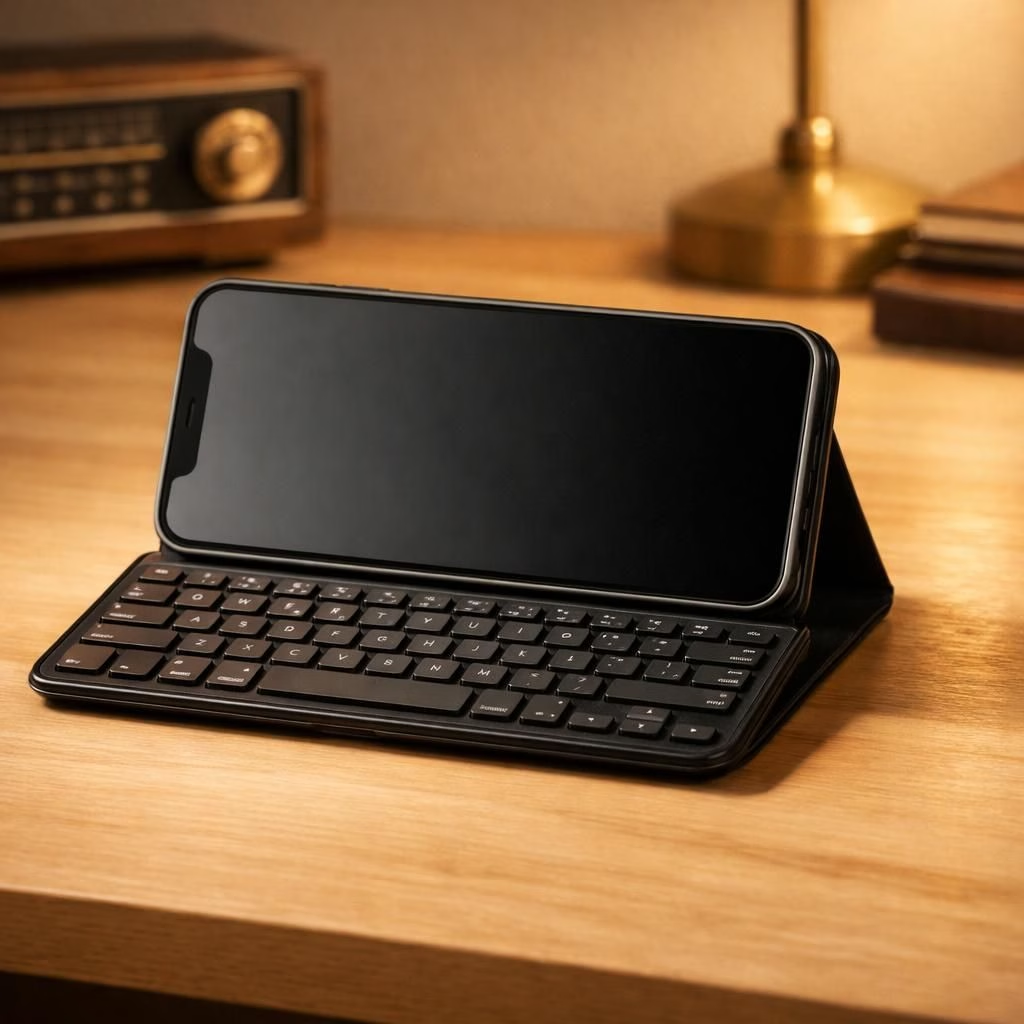
If you miss the hand-stitched click of a physical keyboard and the warm glow of Tag B, you’re not alone — even in 2026, the keyboard Tag B wave is real and rolling.
From CES chatter to Mobile World Congress buzz, firms test a comeback by turning smartphones into hybrid devices. The idea is simple: preserve the sleek touch screen while inviting tactile feedback back to the table. The result? A trend that nods to the classics without abandoning modern power.
keyboard nostalgia fuels modern UX in 2026
Smartphones now serve as our pocket computers. We draft emails, edit docs, and navigate apps on glass with fast swipes. But the Tag B effect continues to entice. It reduces autocorrect chaos and invites deliberate typing. The keyboard becomes more than a gadget; it becomes a cue for focus, a calm anchor in a chaotic notification storm. This is how Tag B lands softly in mainstream UX.
Manufacturers tease variations that combine case attachments, full-blown dedicated devices, or modular add-ons. The aim is not to replace touch keyboards entirely but to offer an optional tactile layer for those who crave it. The modern keyboard, once confined to ancient clamshells, resurfaces as a design choice, not a cringe relic.
keyboard nostalgia: options you can actually consider
The simplest path to a keyboard experience is to strap a case onto a modern phone. The Clicks keyboard case debuted big at CES 2024 and keeps growing. Pop your phone in, and presto—the screen remains the primary canvas while the keyboard gives you quick shortcuts and tactile feedback. It currently supports the iPhone 14 and newer, the Razr 2024, and the Pixel 9/9 Pro. Price starts around $139, a low-risk ticket to keyboard nostalgia without a second phone contract.
- Clicks Keyboard Case — Adds a hardware keyboard to many modern phones via a case. The setup preserves screen space while giving you tactile keys and keyboard shortcuts. It’s a lightweight way to dip into the keyboard nostalgia without buying a new device.
- Clicks Power Keyboard — A magnetic attachable keyboard with a sizing slider; pairs via Bluetooth to tablets and smart TVs. This option goes beyond a single-device case and offers flexibility across devices. Preorder today is around $79.
- Clicks Communicator — A dedicated Android device centered on the keyboard experience, designed by a former BlackBerry designer to imagine a 2026-style BlackBerry. It prioritizes messaging with a text-heavy home screen and a tactile keyboard.
- Unihertz Titan family — Titan, Titan Pocket, Titan Slim, and Titan 2 deliver rugged, compact Android keyboards. An upcoming Titan 2 Elite has been teased for Mobile World Congress, hinting at a curvier profile. Prices start around $300.
- Ikko Mind One — A card-sized Android phone with an optional keyboard case, a Sony 50‑megapixel flip camera, and an Ikko AI OS. The Pro version runs around $429.
- Minimal Phone — A distraction-free option with a simple, e-paper-like display and a QWERTY keyboard running Android. At about $449, it’s a calm, focused flavor of keyboard nostalgia.
For most users, the easiest path to keyboard nostalgia remains the Clicks accessories—the keyboard case, or the Power Keyboard—because you won’t need to buy a new device just to get the tactile magic. The broader appeal of the Tag B experience is that it’s optional, not mandatory. If you want a full keyboard-centric phone, you’ll enter a specialized market where software support and security updates vary. Do your homework on update lifecycles before committing. Tag B
strategy and practical tips
Before you buy, ask about software updates, security patches, and app compatibility. The best keyboard nostalgia experience comes when the keyboard is responsive and reliable, not just a novelty. Some devices offer years of updates; others might slow down after the first year. Your best bet is a model with a solid update plan or one that’s easy to sideload apps without sacrificing security.
- Check software update lifecycles and security patch frequency for any niche keyboard phone you’re considering.
- Test real-world typing with multiple apps to gauge responsiveness and autocorrect behavior.
- Evaluate battery life when the keyboard is actively used; some models may sip power, others may drain faster.
- Decide whether you want a secondary productivity device or a primary phone with a tactile layer.
Consider how you’ll use the device. If you want a secondary productivity tool, the Clicks Communicator or the Minimal Phone could suit you well. The Unihertz Titan line and Ikko Mind One provide closer analogs to the BlackBerry feel for those who want a tactile line to run with a more modern OS.
Key question: is it worth the trade-off? If you crave focused writing, fewer distractions, and a dash of retro chic, Tag B is delivering. It’s not about replacing top-tier smartphones but about offering an tasteful, optional path for heavy typists and retro lovers alike.
Wrap-up: the keyboard revival in 2026 is not a single product launch. It’s a family of options that honor a tactile past while acknowledging current tech realities. You can mix-and-match with a case, a slider, or a dedicated device to achieve the right balance of feel, speed, and battery life.
Have thoughts on keyboard nostalgia in mobile devices? Share your experiences and opinions in the comments below. I’m eager to hear your stories about tactile keys, autocorrect woes, and retro tech experiments Tag B.
References to further reading and context can be found below.
External sources
- The Verge coverage on hardware keyboards and retro-inspired mobile devices
- PCMag: Minimal Phone review