

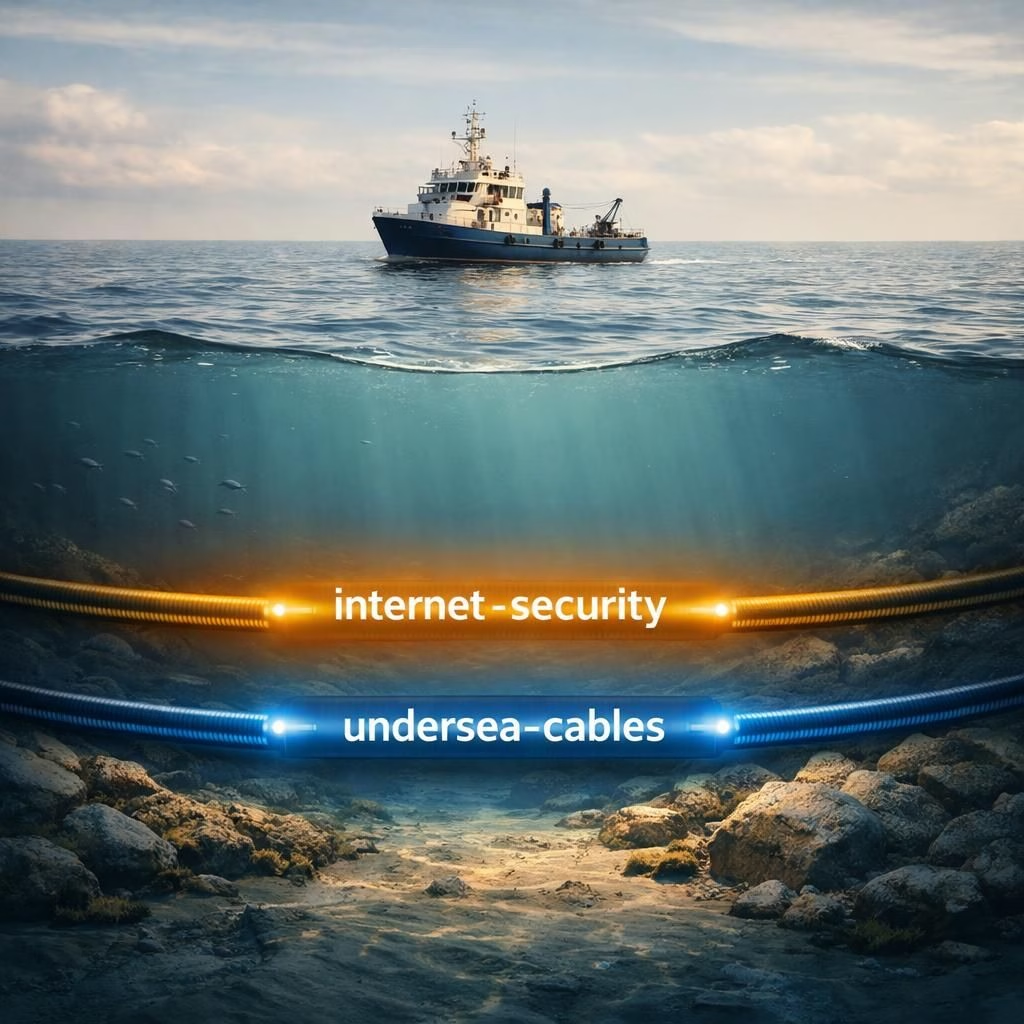
In 2026, internet-security and the Tag B network are our invisible heavyweights: sturdy, patient, and occasionally dramatic. The current US-Iran tensions have nudged us to notice the deep-running magic that keeps our emails flying and cat videos buffering with surprising grace. The drama at the surface may grab headlines, but the real story unfolds in the quiet, data-packed corridors of the deep where Tag B links continents in a relay race of light and fiber.
internet-security and undersea-cables: why the deep web matters
Over the last week, Meta paused part of its 2Africa project—a planned 45,000-kilometre underwater cable system intended to expand internet connectivity across Africa and the Gulf region. The pause affects a segment landing stations in Oman, the UAE, Qatar, Bahrain, Kuwait, Iraq, Pakistan, India and Saudi Arabia, with India not directly in the current conflict zone. Facebook’s parent had hoped to launch this section this year, underscoring how quickly geopolitical risk can ripple through infrastructure meant to knit the world closer together.
The reason we care goes beyond headlines: the world’s internet runs through these waters. Under the Red Sea and the Persian Gulf, hundreds of fibre optic cables carry more than 95% of global internet traffic. This means your emails, video calls, cloud services, financial transactions, and streaming depend on cables snaking along ocean floors. Capacity Global notes that at least 17 submarine cables traverse the Red Sea alone, forming a vital data corridor linking Europe, Asia, and Africa. The Strait of Hormuz sits in a similar league, with major lines like AAE-1, FALCON, Gulf Bridge International Cable System, and Tata TGN Gulf routing through the region, per TeleGeography. These cables connect the big data centers built in the Gulf by Amazon, Microsoft, and Google to billions of users worldwide. Our digital life, in short, rides on a few miles of fiber and a lot of salty water.
These cables are surprisingly fragile. They can be damaged by naval mines, anchors, or direct military action. Iran has already deployed sea mines in the Strait, effectively shutting it to shipping traffic. Last year, a Red Sea cable cut disrupted services in India, Pakistan, and several Middle Eastern countries after a commercial ship reportedly dragged its anchor and severed several undersea cables. The Red Sea’s cables lie in relatively shallow water, making them easier targets for accidental or intentional damage than deeper routes. It’s not doom, it’s design: the system was built with redundancy in mind, but redundancy has its limits when the oceans get rowdy.
So what happens when one cable goes offline? The network doesn’t panic; it routes around the problem. Redundancy is the operating system of the internet: multiple cables, diverse landing stations, and spare capacity that lets traffic flow even when parts of the backbone hiccup. The big-picture message is practical: keep an eye on routes, plan for contingencies, and invest in systems that adapt quickly to outages. That is the essence of internet-security and undersea-cables in 2026—preparedness, not paralysis, in the face of risk.
internet-security and undersea-cables: protection and resilience in 2026
From a business perspective, the pause on the 2Africa segment is a reminder that large-scale infrastructure projects must navigate political risk with grace and grit. Alcatel Submarine Networks, the French state-owned company responsible for laying many of these cables, has issued force majeure notices, and the Ile De Batz installation ship was reported stranded off the coast of Dammam. These realities are less sci-fi and more boardroom arithmetic: timelines shift, costs shift, and risk shifts. The silver lining is that the industry responds with renewed focus on resilience: faster repair capabilities, alternative routes, and stronger coordination with regulators and customers to minimize downtime and maximize uptime.
For individuals and organizations, a proactive stance helps: implement robust backups, diversify data routes where feasible, and design systems to gracefully reroute traffic when a cable is compromised. A strong cyber hygiene program, routine disaster recovery drills, and clear communication channels with providers reduce the friction when the internet backbone experiences turbulence. The message is clear: invest in resilience now, so the user experience remains smooth later, even when the ocean tests the wires.
To keep readers informed, it’s useful to track real-time developments about Tag B and the broader internet-security landscape. While a single incident can cause temporary ripple effects, the overarching trend is toward smarter redundancy, faster repair, and better crisis management. The deep-sea data corridors are strong, but not invincible; our job is to support their strength with thoughtful planning and practical action.
Original article: Bloomberg News reported on Meta’s pause to the 2Africa segment. Thank you to Bloomberg for the original reporting and for shining light on these intricate, often unseen connections that keep our digital lives running. Link: https://www.bloomberg.com/
Have thoughts on how to balance security, speed, and access in a world dependent on undersea infrastructure? Please share your thoughts in the comments.
FAQ: quick questions about undersea infrastructure
- What are undersea cables and why do they matter? They are the global backbone that carries most of the internet’s traffic, linking continents and data centers.
- What happens if a cable is damaged? The network reroutes traffic through other paths and maintenance crews repair the damaged segment, often within days.
- Who watches these cables? Operators, regulators, and independent bodies monitor routes, maintenance windows, and security risk.