

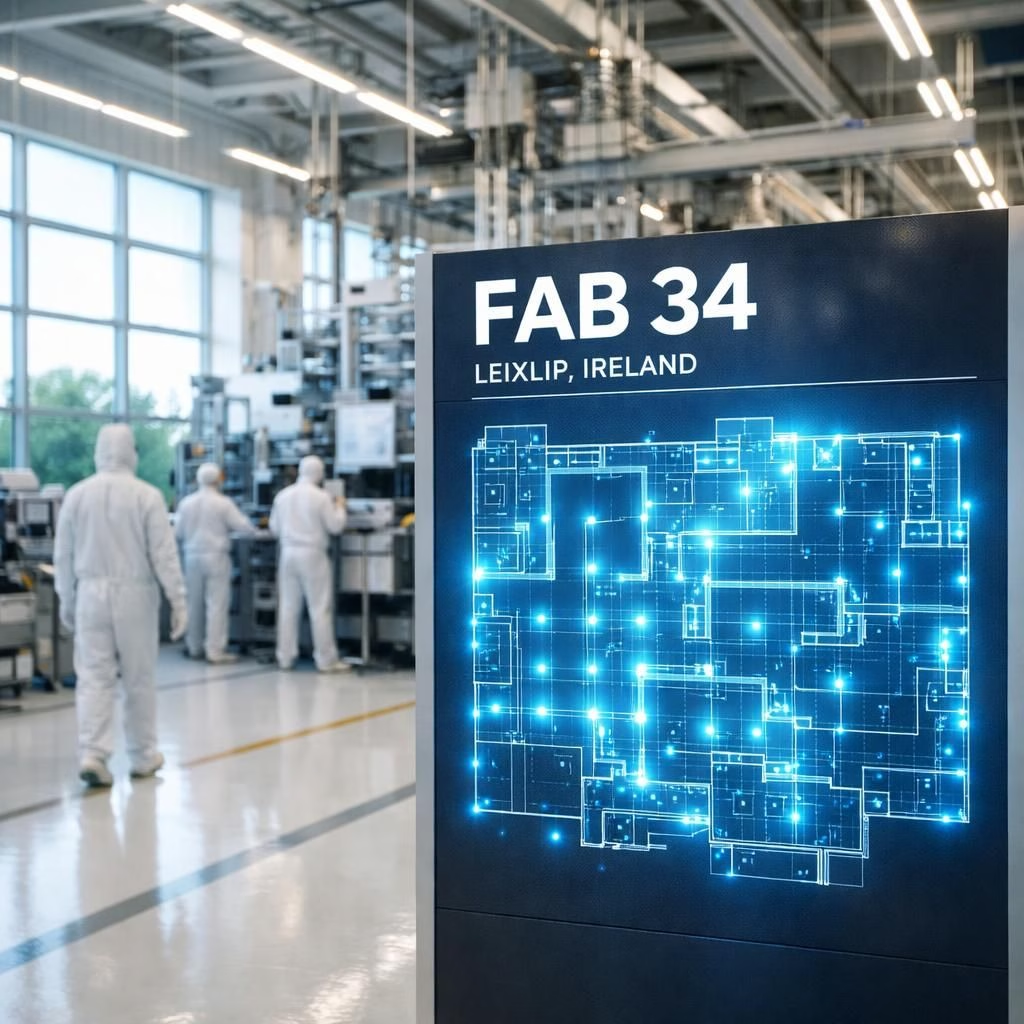
Intel and Fab 34 are turning a corner in 2026 with a bold $14.2 billion move to reclaim full ownership of the Leixlip, Ireland fab. The Dublin-area plant, once shaped by a 2024 joint venture with Apollo Global Management, returns to single ownership as AI-driven demand accelerates. With healthier finances and bigger production ambitions, the company shifts from cautious planning to confident sprinting. It’s a story of capital, confidence, and a dash of Irish luck, served with a smile.
Intel Fab 34 Buyback: Strategy, Signals, and Scope
The buyback signals a clear strategy: consolidate control, simplify the capital structure, and lean into the AI infrastructure wave. The deal values the remaining stake at $14.2 billion and will be funded through a mix of cash on hand and roughly $6.5 billion in new debt. The move unwinds the 2024 SCIP-like structure that once provided flexibility in a period of capital scarcity. The finance chief framed the shift as a natural evolution: a stronger balance sheet, tighter discipline, and a business plan that has evolved in lockstep with market realities. The company states the buyback will boost profits and strengthen its credit profile by 2027, turning an opportunistic step into a long-term domino fall of good news for lenders and investors alike.
While some headlines framed the maneuver as a defensive pivot, the tone here reads like an offensive sprint. The decision is described as prudent, not panic-driven, and reflects a belief that the Fab 34 facility remains a pivotal engine for European output as demand for high-end servers and PCs climbs. The company will still rely on cash on hand for portions of the payment, with the rest backed by fresh debt. In plain terms: the balance sheet gains muscle, and the balance sheet’s glow-up should unlock more cash flow downstream for R&D and capacity expansion.
In a LinkedIn note, the CFO highlighted the arc from 2024’s flexible structure to today’s stronger fundamentals. He noted that the right move at the time was the 2024 arrangement, which provided vital flexibility during a pivotal manufacturing expansion. Today, the balance sheet is leaner and the strategy sharper, reinforcing confidence that the enterprise can execute its plan while maintaining prudent risk management. Partners on the other side of the table—like the resilient Apollo team—are thanked for collaboration, not for providing a soft landing but for staying aligned with a long‑term orientation that made the deal workable from day one.
Fab 34 and the AI-Driven Manufacturing Comeback
The repurchase fits into a broader conviction that Intel can capitalize on the global surge in AI infrastructure spending. Fab 34, located on the outskirts of Dublin, is central to this ambition. It’s the site that has hosted Intel’s Intel 4 manufacturing process, an approach that uses EUV lithography to push performance while squeezing power use per chip. While the plant currently operates with the Intel 4 and Intel 3 nodes, the attention is squarely on the next big leap: the 18A technology. This node is being rolled out in U.S. plants and is described as the linchpin of Intel’s goal to reclaim global manufacturing leadership from peers such as TSMC.
What does this mean in practice? It’s a bold assertion that the factory floor can swing from risk mitigation to rapid, well-controlled ramp-ups in capacity. The intent is not only to meet rising demand but to do so with improved yield, lower unit costs, and a tighter feedback loop between design, process development, and production. The plan includes a careful balance of capital investment, supply chain resilience, and a pragmatic approach to debt, which should keep lenders smiling as profits trend higher in the forecast horizon.
The Fab 34 story also reflects a broader industry trend: AI is more than a buzzword in procurement forecasts. It’s now a measurable factor in equipment cycles, process improvements, and capacity planning. The plant’s location near Dublin, coupled with Europe’s growing appetite for domestic production, positions it as a crucial node that can help the company translate architectural innovations into real-world throughput and performance. The strategic takeaway is simple: when you pair a strong manufacturing backbone with AI-enabled process optimization, you unlock a sustainable advantage that isn’t easily eroded by cyclical demand shifts.
Financial Discipline Meets Manufacturing Ambition
The journey from cost-cutting in 2025 to a more expansive, balanced growth strategy is not accidental. Leadership signaled a willingness to recalibrate headcount, streamline some expansion projects, and pursue asset optimization where it makes sense. The objective is to create a leaner, more adaptable business that can absorb shocks and invest in capabilities that drive long-term value. The latest financial maneuver—mixing cash on hand with new debt—aims to preserve liquidity while supporting a ramp-up in high-value production and R&D collaboration. In short, this is about turning a good year into a great decade by ensuring the core assets remain competitive and scalable.
The Nvidia partnership and U.S. government investments, noted in the period leading up to this move, have already reshaped the ownership landscape. With the government stepping in as a major shareholder in the broader portfolio, the company enters a phase where policy alignment and capital markets support reinforce each other. The narrative is not simply about one facility; it’s about an ecosystem that can sustain long-term growth across multiple regions and product lines, all while maintaining a disciplined approach to risk and debt management.
Rooted in Dublin, Fab 34 and the 18A Transition
The Fab 34 site’s evolution is emblematic of a larger industry shift. The production lines that once formed the backbone of Intel’s European presence are now anchors for an ambitious transition to advanced nodes. The 18A technology, seen as essential to recapturing manufacturing leadership, is being introduced with a careful eye on yield, reliability, and supply chain stability. This isn’t just about speed; it’s about sustainable, high-quality output at scale. The Dublin plant thus stands as a living example of how a legacy manufacturing footprint can be modernized to meet the demands of AI-era workloads while contributing to regional economic resilience.
In practice, the 18A transition means closer collaboration with suppliers, more precise process control, and a new wave of equipment and materials procurement that emphasizes efficiency and lower cost per transistor. The ambition is to reestablish the manufacturer as a world-class benchmark, not just in chip design but in end-to-end fabrication. It’s a tall order, but the combination of capital discipline and a matured strategic framework makes the path plausible—and increasingly exciting for investors who track both manufacturing scale and technology leadership.
Original article credit and gratitude: a heartfelt thank you to the Bloomberg reporting team for laying out the context of this strategic move, the financial details, and the broader industry implications: Original Bloomberg coverage. This post builds on that material to present a more readable, optimistic interpretation for readers who care about how these decisions ripple through jobs, regional economies, and the future of AI hardware.
In closing, the move to buy back the stake in Fab 34 marks more than a financial maneuver. It’s a statement that the fundamentals have improved, that AI demand is real, and that a traditional manufacturing powerhouse can still adapt with wit, discipline, and a touch of braver-than-average optimism. If you enjoyed this positive spin, share your thoughts in the comments and tell us how you think the 18A transition will influence the next wave of silicon innovation.
Original article attribution: Bloomberg — thank you for the thoughtful reporting and context that helped shape this analysis.
FAQs
- What is Fab 34 buyback?
The move reclaims full ownership of the Leixlip facility and aligns the manufacturing strategy with AI-driven demand while simplifying the capital structure.
- What is the 18A transition and why does it matter for Intel?
18A represents the next generation of the core manufacturing process, aimed at higher yields and lower cost per transistor, supporting a sustainable production ramp.
- How does this affect finances and debt levels?
The deal uses cash on hand plus about $6.5 billion in new debt, with a goal of strengthening liquidity and long-term profitability by 2027.
- What does this mean for Europe and the Irish jobs market?
By reaffirming a European high-volume site, Intel supports regional supply chains, skilled jobs, and domestic chip production, while strengthening its position against global competitors.