

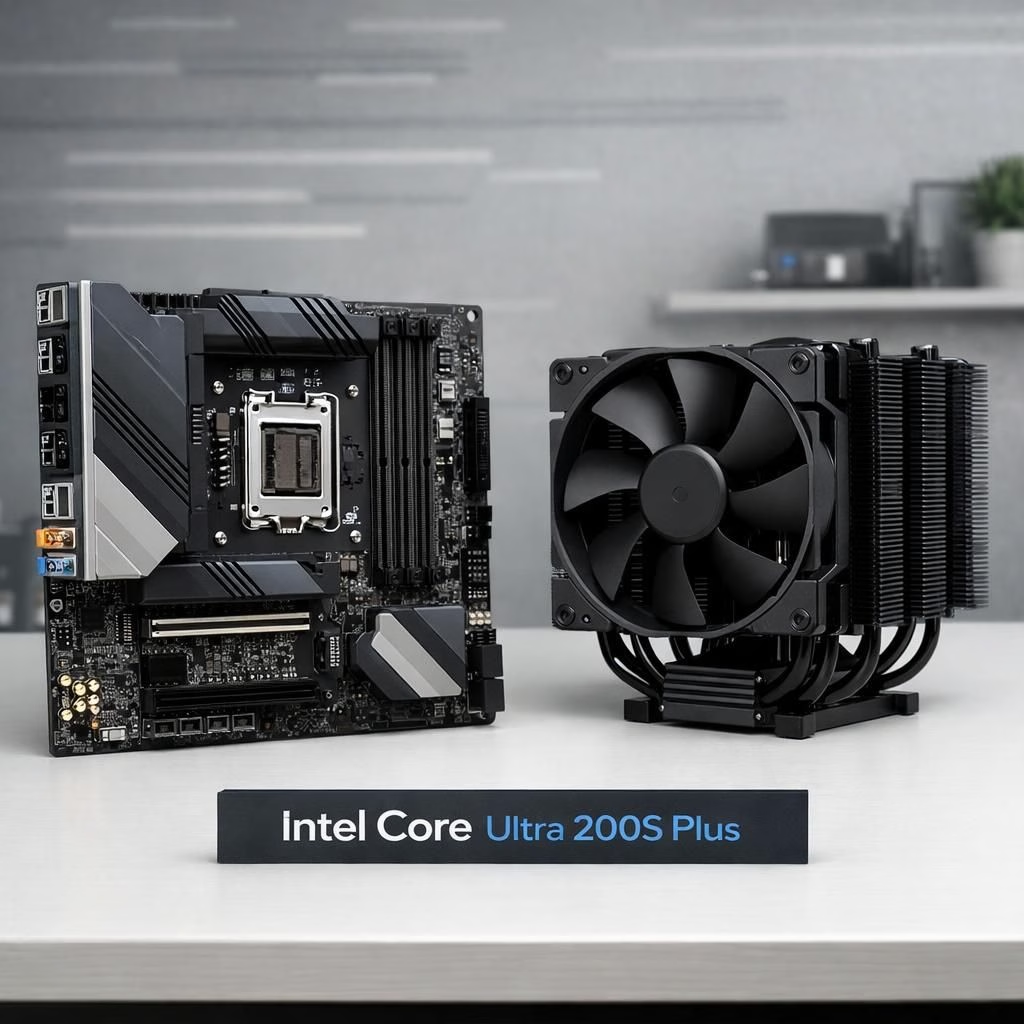
Intel Core Ultra 200S Plus: A practical upgrade for gamers and creators
Welcome to Intel Core Ultra territory, where the Core Ultra 200S Plus lineup adds more cores, higher speeds, and a touch of software magic. This is not a lab demo; it’s a practical upgrade aimed at gamers, creators, and multitaskers who want more headroom without a new motherboard every year.
The Core Ultra lineup moves forward with bigger ambitions. Intel cites higher core counts, faster internal links, and a new software optimization tool as headline features. The gist remains: more cores, higher frequencies, improved efficiency, and a few clever tweaks that actually translate to real-world benefits.
- Core counts: the Core Ultra 7 270K Plus pushes to 24 cores (8 performance cores + 16 efficiency cores), up from 20 in the old model. The Core Ultra 5 250K Plus carries 18 cores (6 performance cores + 12 efficiency cores), up from 14.
- Frequency headroom: both chips see up to a 900 MHz die-to-die frequency boost versus their predecessors, translating to snappier data movement and lower latency in demanding tasks.
- Gaming and multithread: Intel claims up to 15% faster gaming performance in this generation and as much as 103% better multithread performance in its price tier against many rivals.
- Binary Optimisation tool: Intel introduces a Binary Optimisation translator that aims to optimize software written for other processors, helping workloads run more efficiently on the new hardware.
- Memory ecosystem: support for DDR5 at 7,200 MT/s (up from 6,400 MT/s) plus warranty-friendly overclocking up to 8,000 MT/s via the Boost BIOS profile.
- New memory format and compatibility: early support for 4-Rank CUDIMM on select Intel 800 Series boards, supporting up to 128 GB per stick.
On the platform side, Intel emphasizes that the Core Ultra 200S Plus processors are fully compatible with existing 800-series chipset motherboards, so your current board may live on for another upgrade cycle without a full platform replacement. That’s the kind of practical optimism that makes enthusiasts smile, especially when the upgrade path remains straightforward rather than an unexpected motherboard swap.
When to buy, how much, and what you get: the chips go on sale March 26, 2026, with the Core Ultra 5 250K Plus priced at $199 and the Core Ultra 7 270K Plus priced at $299. OEMs and system integrators will be selling pre-built systems powered by the Core Ultra 200S Plus lineup on the same date, making it easy to pick up a complete, ready-to-go machine. If you’re building your own rig, the value proposition is driven by a balance of core count, memory bandwidth, and the promise of improved single-thread response along with the promised multithread uplift.
Energy and efficiency threads also get attention. The upper core-count option isn’t a numbers game alone; the architectural tweaks aim to deliver smarter scheduling and data routing. For most daily workflows, the result is a steadier performance envelope where background tasks don’t steal cycles from your gaming or streaming load. The result is not a blink-and-you-miss-it change, but a tangible sense that the system feels instantly more responsive under diverse workloads.
Practically speaking, the memory story is compelling: DDR5 at 7,200 MT/s gives more headroom for bandwidth-hungry titles and apps. For enthusiasts who want to push the envelope, Intel’s Boost BIOS profile allows memory overclocking up to 8,000 MT/s, a feature that rewards hands-on tuning and careful component selection. The 4-Rank CUDIMM option is a meaningful upgrade path on compatible boards, delivering higher capacity per module and better RAM density for heavy pipelines like video editing, 3D rendering, and AI-assisted workflows.
In daily use, what does this mean for you? If you’re chasing high frame rates in modern titles, you’ll appreciate the improved headroom on the Core Ultra 200S Plus 7 270K Plus. If you’re balancing gaming with streaming or content creation, the Core Ultra 200S Plus 5 250K Plus offers a strong, more affordable route with a robust multithread footprint. The Binary Optimisation tool adds a layer of software efficiency that can help older games and apps scale better on the new hardware. And the memory story ensures you won’t bottleneck on bandwidth while working with large assets, multi-monitor setups, or high-resolution video tasks.
Another practical note: Intel confirms compatibility with the existing 800-series motherboard lineup. You don’t need to upgrade your entire platform to enjoy the benefits of the Core Ultra 200S Plus family. That reduces friction and makes the upgrade more accessible for a wide audience, from PC enthusiasts to professional creators who want a future-proof, reasonably priced upgrade path.
If you’re deciding between the two SKUs, consider your workload mix. The Core Ultra 7 270K Plus is best for multitaskers who run many virtual machines, render farms, and modern games at high detail. The Core Ultra 5 250K Plus remains a versatile, capable choice for gamers who also dabble in streaming or light production work. The price-to-performance balance leans in favor of both SKUs, particularly when paired with fast memory and a solid GPU, making it a compelling upgrade in 2026.
Intel Core Ultra: Core Ultra 200S Plus performance promises
Let’s anchor expectations in plain terms. The Core Ultra 7 270K Plus is a 24-core powerhouse that handles parallel tasks well, yet remains friendly for gaming and streaming. The Core Ultra 5 250K Plus is the leaner option with 18 cores that still manages heavy workloads, content creation, and modern titles with confidence. The 900 MHz die-to-die boost translates into crisper data routing between CPU blocks, meaning less wait time for the next frame or thread to start.
The Binary Optimisation tool is more than a clever name. It translates a broad swath of software designed for different processors into more efficient instruction sets that align with the Core Ultra 200S Plus hardware. In practice, that means improved performance in games and apps that previously ran with a touch less efficiency on diverse platforms. The 7 270K Plus and 5 250K Plus both benefit from this translation layer, enabling a smoother baseline across a wide software library.
Intel Core Ultra: Core Ultra 200S Plus memory and efficiency
Memory bandwidth is a recurring hero here. DDR5 at 7,200 MT/s opens more headroom for dreams of higher frame rates and more responsive systems. For enthusiasts who want to push the limits, Intel continues to offer memory overclocking up to 8,000 MT/s under the Core Ultra 200S Plus Boost BIOS profile. That’s a feature that will attract overclocking hobbyists who enjoy tuning for daily use rather than bench show scores.
In addition, the 4-Rank CUDIMM memory modules are arriving on select 800-series motherboards, with the potential to reach 128 GB per module. That is not a neat trick; it’s a meaningful capacity increase that can help content creators who work with large assets, 3D scenes, or high-resolution video editing pipelines. The combination of faster memory, higher core counts, and a robust boost profile translates into real-world improvements in large-scale tasks and multitasking workloads.
If you’re a PC gamer who wants more frames in more titles, or a creator who runs GPU-accelerated tasks side-by-side with productivity apps, the Core Ultra 200S Plus family aims to deliver a balanced experience. The architecture remains compatible with your existing 800-series motherboard, which means less friction if you’re already invested in that ecosystem. The result is a straightforward upgrade path with better headroom, not a forced platform overhaul.
Buying guidance, practical takeaways, and audience fit: For a budget-minded gamer, the Core Ultra 5 250K Plus at $199 offers a compelling blend of performance and efficiency, especially if you pair it with fast DDR5 memory and a capable GPU. For power users who run many threads, the Core Ultra 7 270K Plus at $299 can justify the premium with more cores and additional memory bandwidth, along with the promise of stronger multithreaded performance. Either way, the 200S Plus family stands out in a crowded midrange market by offering a modern memory interface, a software tool, and a practical upgrade path without forcing a full platform swap.
In closing, you don’t need to don a lab coat to appreciate what Intel is aiming for with the Core Ultra 200S Plus. These chips blend a meaningful core-count upgrade with faster memory access and a software toolkit that slots into real-world workflows. They aren’t revolutionary, but they’re crafted to make your next upgrade feel smarter, not louder. If you’re curious about real-world performance, plan your own tests with your typical workloads and games. You might be surprised how the combined effect translates into fewer bottlenecks and faster load times.
We invite you to share your thoughts in the comments below. Original article attribution: https://example.com/intel-core-ultra-200s-plus. Thank you to the original author for the material that inspired this rewrite.
FAQ
- What is Core Ultra 200S Plus?
- A midrange desktop family from Intel featuring higher core counts, faster memory support, and a software optimization toolkit designed to improve efficiency across a broad software library.
- Are these CPUs compatible with 800-series motherboards?
- Yes. Intel confirms full compatibility with existing 800-series boards, which simplifies upgrading without a platform change.
- What memory speeds are supported?
- DDR5 up to 7,200 MT/s, with a Boost BIOS option enabling up to 8,000 MT/s for users who tune memory settings carefully.
- Which SKU should I choose?
- Choose the Core Ultra 7 270K Plus for multitasking and heavy workloads; the Core Ultra 5 250K Plus offers strong performance at a lower price for gaming plus streaming or light production tasks.
Conclusion: Smart, not revolutionary
The Core Ultra 200S Plus family aims to deliver meaningful headroom without forcing a platform overhaul. If you’re upgrading this year, plan your tests around your typical workloads and games to see the tangible benefits in load times, frame pacing, and multitasking smoothness.
References
- Times of India — Intel Core Ultra 200S Plus series overview
- JEDEC DDR5 memory standard
- Tom’s Hardware — memory bandwidth and CPUs
- AnandTech — memory and platform interoperability