

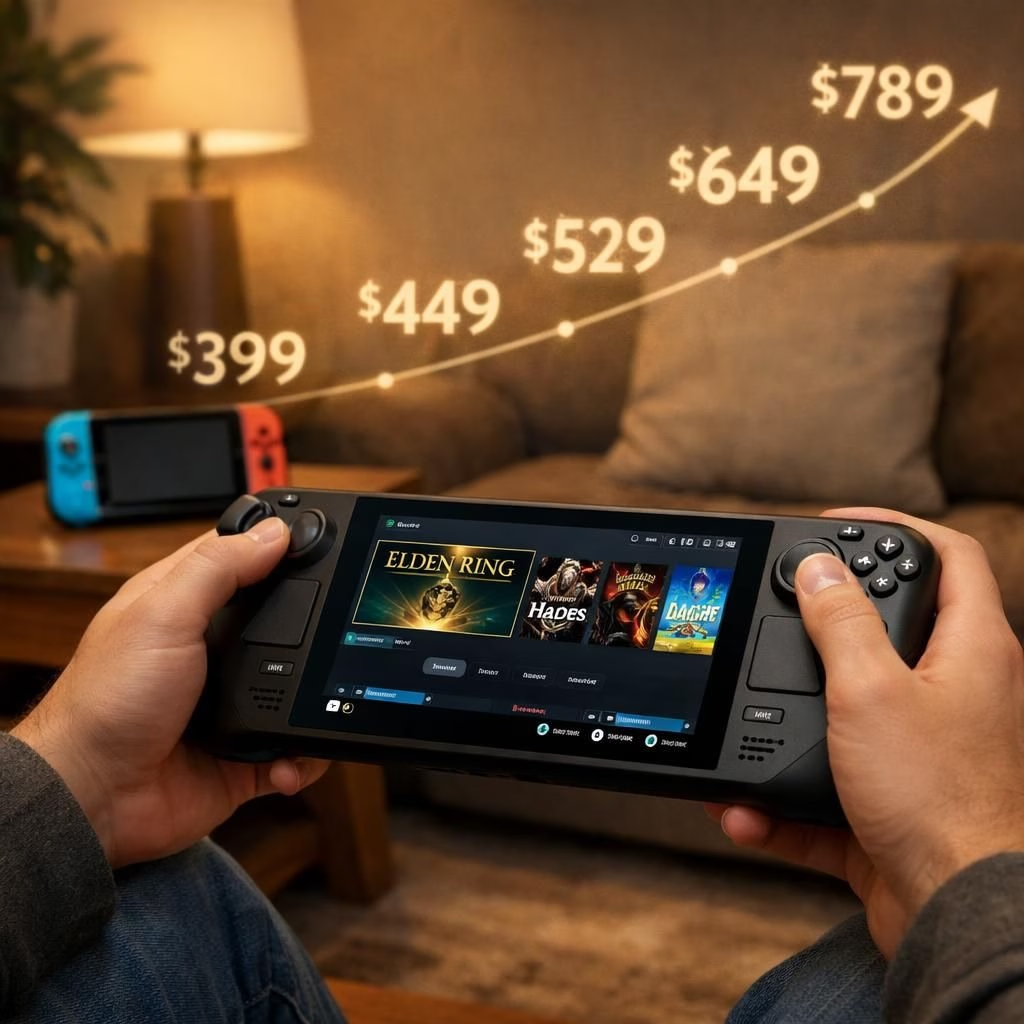
In the era of handheld gaming, the Steam Deck arrived like a clever trick of pocket-sized delight. It was the device that let you run Elden Ring in the subway, on a couch, or during a coffee break. It promised a dream: portable PC gaming at a price that didn’t feel like a second mortgage. And yet the market has shifted since 2022, with price increases nibbling away at that dream. This isn’t doom and gloom; it’s a friendly nudge toward smarter choices and a whispered joke about the absurdity of hardware economics. If you’ve ever balanced a Steam Deck on one knee while a dog begs for a treat, you know the magic and the math both had to grow up someday.
The trend isn’t limited to one gadget or one brand. In 2026, price increases aren’t a rumor; they’re a chorus. RAM, storage, tariffs, oil costs, and the occasional global supply hiccup have all joined the stage. The Steam Deck set the stage a few years ago by offering a portable PC experience at a price that felt plausible for enthusiasts rather than financiers, and people bought in. Today, that same handheld has moved into a higher price class, and the ripple effects touch Nintendo, Sony, and even Windows PC builders watching the horizon.
handheld gaming realities amidst price increases and Steam Deck nostalgia
Let’s talk numbers with a light grin. The Steam Deck started at $399, a price that still sounds almost mythical in 2026 dollars. Today, the starting point sits closer to $789—still impressive for a pocketable PC in a world of premium gadgets, but not the bargain it once was. Nintendo’s Switch began life at $299; with the market’s changes and various hardware refreshes, today’s equivalent entry could flirt with the $499 mark. It’s a reminder that handheld gaming devices were sold as an affordable bridge to big-console libraries, yet the bridge has grown a few inches taller.
Meanwhile, the competition has leaned into the same inflationary headwinds. These dynamics are partly driven by price increases across components, not just devices. Microsoft’s Xbox Ally X launched at a price that looked like a PC, not a console, and now sits around the $1,000 line for many buyers who want premium specs. Lenovo’s Legion Go S has climbed into near-$1,600 territory, and MSI’s Claw 8 AI Plus has bounced from $1,000 to $1,299 (even if you still see it on sale). The net effect is a portfolio where the “affordable” tag is reserved for a narrower slice of hardware, and the phrase “handheld gaming on a budget” becomes a well-timed punchline rather than a daily reality.
What does this mean for the vibe of handheld gaming? It means a shift from “try it and see if you fall in love with gaming everywhere” to “you might need to plan a little more carefully.” The era of a spontaneous impulse hardware purchase feels closer to a curated hobby than a casual lifestyle choice. And yes, that has a certain sting—especially for folks who remember where the line between “great value” and “great power” used to feel a lot shorter.
handheld gaming optimism: price increases won’t kill the vibe of Steam Deck
Here’s the bright side, because optimism still has a seat at the table: the core appeal of handheld gaming remains intact. You can carry a swath of your library in your pocket, play demanding titles on a portable display, and share the experience with friends without the need to summon a living room rig. The Steam Deck, even at a higher entry price, still delivers a compelling power-to-portability ratio, particularly for those who value PC game ecosystems and flexibility. For many, the value isn’t solely about the sticker price; it’s about the kind of experiences you can squeeze into a commute, a park bench, or a long layover.
New competitors might arrive, or they might not, but the broader trend is clear: players who want portability still chase the idea of “play anywhere.” The market’s price evolution isn’t necessarily a verdict on the devices themselves; it’s a reflection of demand, supply chain realities, and the evolving cost of silicon and memory. In other words, the dream remains; it’s simply a more exclusive version of the dream. The good news is that the community keeps refining its expectations—compatibility, performance-per-dollar, and the joy of gaming in unconventional spaces stay alive, even if the numbers have grown taller.
Practical reality check: if you’re on a budget but still craving handheld joy, here are practical paths forward:
- Consider refurbished or open-box deals from reputable sellers, especially around major sale events.
- Watch for price-perf parity rather than absolute price; a device with a slightly older chipset can still deliver most of what you want, and sometimes you can pair it with a bigger microSD card and a robust library.
- Don’t overlook mid-range devices that hit a sweet spot between portability and horsepower.
- If you’re dreaming of a future upgrade, create a plan: save for a seasonal sale, or pick up a secondhand unit—condition permitting—when the market breathes between big launches.
The core joy remains: you still can play big titles on the go, and that’s not a fate that expires with the newest model.
Of course, the larger industry shifts matter, too. Some publishers are rethinking PC ports and timelines; others are embracing cross-platform ecosystems that make the idea of a handheld library feel more robust. The overall takeaway is simple: the hardware price bar has moved, but the practical value of portable gaming persists for many players. It isn’t a seamless, unbroken road, but it’s still a road worth walking—with a few more budgeting steps and a bit more strategic planning.
For enthusiasts with a taste for the absurd, this price arc also offers a chance to savor the tiny rituals of gadget culture: a daydream about a $399 handheld that could run Elden Ring, a mid-year sale that makes a premium device momentarily feel reasonable, and the small thrill of telling friends, “Yes, I carry my entire PC in my backpack.” The romance isn’t dead; it’s simply learned to budget a little more gracefully.
If you’re reading this and thinking you’d still like to dip a toe into handheld gaming in 2026, you’re not alone. The allure remains; the price tag, while higher, is still a conversation worth having. And if you’ve found a personal strategy that keeps the magic alive without breaking the bank, I’d love to hear it. Share your experiences and tips in the comments below so we can all navigate this evolving landscape together.
Original article inspiration and gratitude: the original piece that sparked these reflections is linked in the References below.
Thank you for reading. If you enjoyed this take on the Steam Deck era and the broader handheld gaming price increases, please share your thoughts in the comments below.
External exploration: for more on official hardware details, see the Steam Deck page and related reporting.