

grid-powered resilience: AI growth tests the US grid
In 2026, the energy story around AI isn’t just about clever algorithms; it’s about a grid that keeps the lights on and storage that can actually store a movie’s worth of energy. When JB Straubel, the co-founder of Tesla and the founder of Redwood Materials, speaks, the room takes notice. He isn’t predicting doom; he’s offering a pragmatic plan with a wink and a warrant. He warns that US AI developers face a grid strain from surging data-centre energy demand, and that China’s rapid power-capacity expansion adds pressure to the race for AI infrastructure. The takeaway is simple and urgent: the grid needs expansion, and storage must play a bigger role near where power is used. In short, grid and storage are not luxuries; they are speed limits we must raise, especially as we chase AI leadership in 2026.
storage-driven renaissance: batteries at the edge and near-end
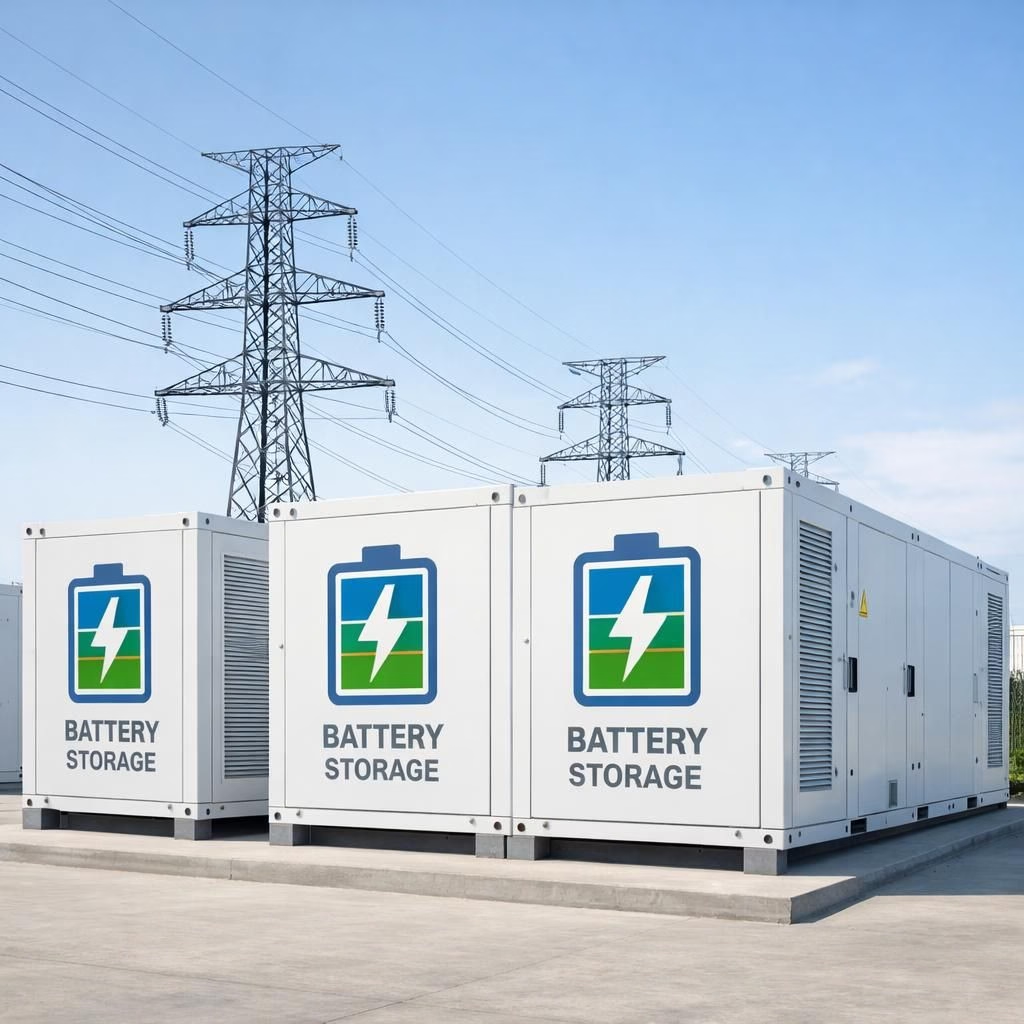
Redwood Materials has shifted from old-fashioned recycling to battery energy storage systems for data centres and the broader grid. The company has also struck a notable partnership with General Motors to repurpose recycled EV batteries to power GM facilities. This pivot isn’t just branding; it signals a broader trend: storage isn’t optional, it’s necessary. By pushing stored energy closer to the end user, the grid becomes more resilient, and AI workloads can run more reliably. Straubel notes that future energy will come from a mix of sources—fossil fuels, nuclear, renewables—but what matters is how much storage capacity sits in reserve when demand spikes. In his view, the energy renaissance is not a fad; it’s a durable shift toward storing what we generate and delivering it where it’s needed most.
grid and storage synergy: practical bets for 2026 and beyond
So what should companies and policymakers do today? First, invest in grid expansion that reduces bottlenecks between generation and consumption. Second, deploy storage near data centres to smooth peaks and provide backup during outages. Third, encourage cross-industry partnerships that turn waste into energy, as Redwood Materials is doing with GM. The near-term path blends traditional power plants with smarter storage to keep the lights stable as AI workloads scale. The practical implication is clear: plan for a future where energy storage, not just generation, supports AI innovation. The grid benefits from diversification, and AI accelerates when the power is dependable. It’s not just efficiency; it’s a competitive edge we can architect with purpose.
- Invest in grid expansion to reduce bottlenecks between generation and consumption.
- Deploy storage near data centres to smooth peaks and provide backup during outages.
- Encourage cross-industry partnerships that turn waste into energy, such as Redwood Materials’ collaboration with GM.
- Plan for a future where energy storage is a core infrastructure alongside generation.
Industry experts warn that power constraints are already delaying or canceling some AI projects. The stakes are high because data centres are thirsty, and energy is a political and economic story as well as a technical one. Straubel argues that the US must act quickly to avoid jobs being shifted abroad due to unreliable energy access. The brighter note is that the solution is not only large-scale: microgrids, local battery storage clusters, and smarter demand management can all contribute. In this refreshed view, grid expansion and storage are not red tape; they are tools to accelerate progress and maintain momentum in the AI race.
If you’re running a data centre, a startup, or a policy puzzle, practical steps you can take today to align with the grid and storage vision. Start by mapping your energy demand to identify critical hours and potential storage backup. Seek pilots that pair storage with renewables to reduce exposure to peak rates. Collaborate with battery recyclers to reuse materials and cut lifecycle costs. And above all, advocate for transparent, outcome-focused investments in grid capacity so your own AI projects don’t stall when a heatwave hits or when a new model training cycle peaks. The message is upbeat: we can grow with AI if we invest in the right grid and the right storage.
Source attribution: Fortune Brainstorm Tech coverage. Original material inspired this post. Fortune Brainstorm Tech.
FAQ: grid and storage for AI resilience
- What’s the takeaway for AI developers? The pace of AI growth is pushing the grid and storage capacity to keep up. Planning and investment now helps prevent outages and delays.
- How much storage capacity is needed? It varies by workload, but near-end deployments and microgrids can dramatically reduce peak demand and improve resilience.
- Are microgrids worth it for data centres? Yes. Local energy clusters can buffer outages and shave expensive peak rates while enabling faster AI cycles.
- What policy steps help? Supporting transparent grid-architecture investments and public–private partnerships accelerates the deployment of storage and transmission capacity.
References
- Original Times of India article
- Fortune Brainstorm Tech
- EIA: Data centers and electricity use
- IEEE Spectrum: Data centers and energy use
To stay updated, you can also explore industry commentary and expert analyses linked above.