

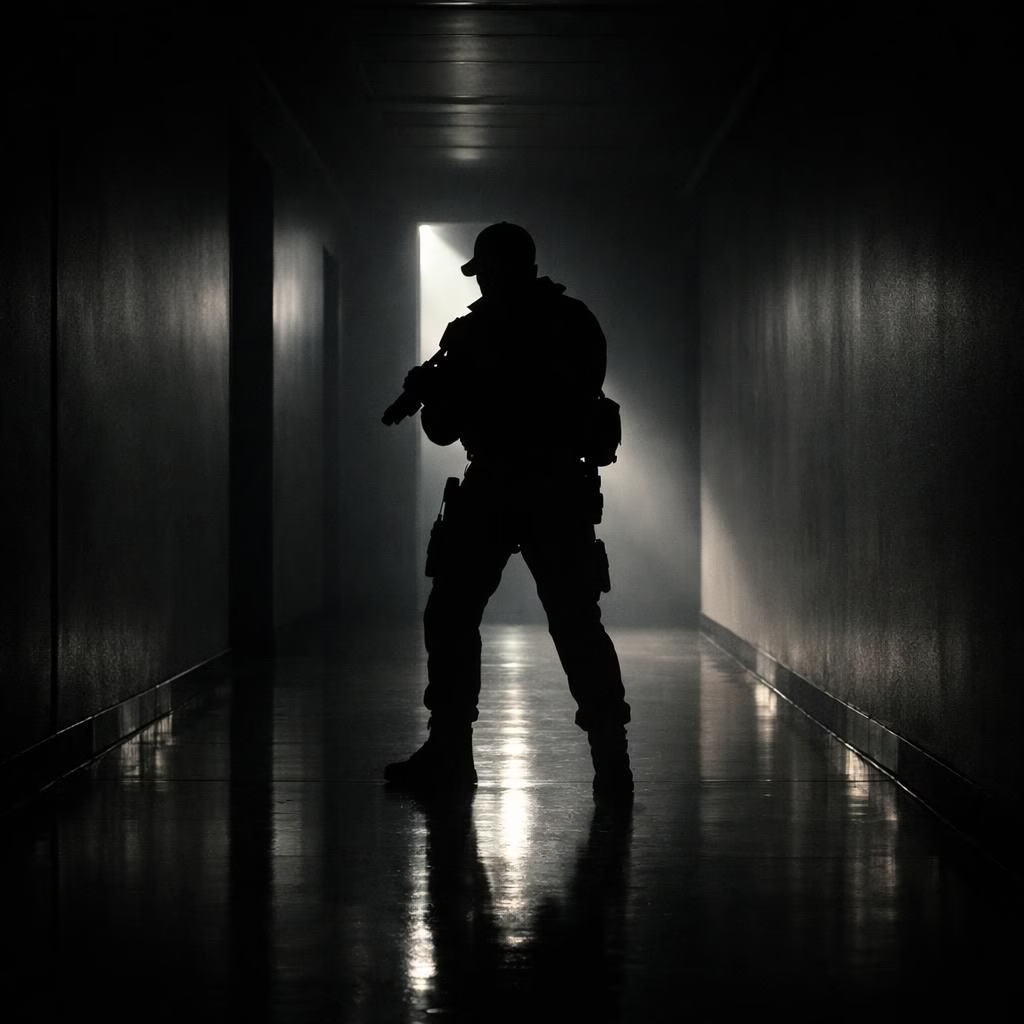
In the ongoing conversation about modern Graphics realism colliding with Stealth design, IGN’s summary frames a practical concern: realism can elevate mood and fidelity, yet it can turn Stealth into a game of avoiding bright corners and crisp textures rather than weaving careful moves. When corridors gleam with photoreal lighting and textures rival cinematic backdrops, players sometimes lose track of cues that kept their hands steady in the shadows. The goal isn’t to regress to retro visuals; it’s to teach the room to support Stealth and not reveal it in a single frame. If visuals shout too loudly, the quiet art of hiding can feel like background noise. The core truth remains simple: Graphics and Stealth are teammates, but they need choreography, not a gladiator fight for screen time.
Graphics and Stealth: Why Realism Changes the Pace
Realism raises the stakes in several ways. Lighting becomes a character. Shadows set the tempo. Textures and reflections create surface tension that nudges players toward obvious lines of sight. The old trick of slipping past a guard on a moonless street can vanish when the game renders a sharp beam of light that betrays your silhouette. The challenge is not to punish players for fidelity but to recalibrate feedback. A designer can let a precise light bleed be a choice, not a flaw. The trick is to keep the brain reading the environment quickly, even as visuals grow more convincing. That means careful level layout, smarter AI awareness, and paced encounters. The goal is tension, not pixel polish. Graphics, when paired with stealth cues, can reward patience and observation. Stealth becomes a conversation between visuals and the player’s instincts.
Graphics Tactics and Player Feedback
To keep the experience engaging, developers experiment with how much visual detail is necessary for good stealth decisions. Too much realism can blur critical cues, while too little can dull immersion. The balance point often sits at a design crossroads: give the player clear enough silhouette cues without erasing the mystery of the environment. This is where Graphics design meets Stealth fundamentals. A well-tuned blend gives players meaningful options—sneak, wait, or improvise—without forcing a cinematic beat every few steps. The upshot is a game world that feels alive, not a static diorama. When done right, players experience the thrill of reading light, shadow, and geometry as a core mechanic that complements Stealth technique rather than replaces it.
Stealth Mechanics Under Heavy Graphics Realism
Another risk is that realism makes every mistake feel costly. If the game models every surface, the cost of a clumsy sprint is real. Players may overcorrect, hugging walls or timing actions to perfection, which kills flow. Designers respond with adjustable difficulty, forgiving detection, and hints that keep pacing intact. The interplay between visual fidelity and stealth tools becomes a balance act: night-vision gear, moving lights, and cover systems must feel fair. The best examples show how to lean into realism without turning Stealth into a museum tour. Maintaining variety in routes, sounds, and enemy patterns ensures players stay engaged. The Graphics footprint should enhance strategy, not punish improvisation. In short, realism should serve gameplay, not smother it.
Beyond the tech, the core design insight remains sharp: clarity in feedback matters. Audiences want to know when they are close to being detected, even if the visuals are gorgeous. When a shadow shifts and a guard swivels, players should feel the moment, not guess at it. This is where Stealth design wins: it earns trust by delivering predictable, learnable cues within a beautiful canvas. The tension comes from smart timing, not from the screen’s ability to render every texture at ultra-sample rate. Graphics and Stealth can push each other toward elegance if the team avoids over-engineering the exit ramp of every encounter.
IGN’s discussion of realism’s impact on modern Stealth games invites a constructive takeaway: keep the focus on player agency and meaningful choice. It isn’t about sacrificing fidelity; it’s about letting fidelity serve clever design. A well-tuned game will feel both authentic and alive because the visuals reinforce, not overwhelm, strategic options. The best studios learn to read the room—the room being the player’s eyes, ears, and reflexes—and adjust the level geometry, AI responses, and pacing accordingly. This is the kind of evolution that can honor a franchise’s DNA while embracing contemporary hardware without turning stealth into a photo gallery.
So, what does this mean for players and designers alike? It means deliberate decisions about lighting, sound, AI, and pacing. It means treating Graphics as a tool that illuminates opportunities and Stealth as the discipline that makes those opportunities meaningful. It means testing with real players and listening to how it feels to hide in plain sight. In practice, it can translate to smarter level layouts, more forgiving but still tense detection systems, and a mood that respects both fidelity and the art of staying unseen. The result is a stealth experience that is perceptive, not punitive, and visually convincing without crowding the brain with too much detail at once.
Special thanks to IGN for the original article that sparked these reflections. You can read the source here: IGN — Former Splinter Cell Creative Director on Realistic Graphics and Stealth.
Have thoughts on how Graphics and Stealth interact in your favorite games? Share your insights in the comments below. And if you enjoyed this playful yet insightful take, please discuss your examples of how realism has helped or hindered Stealth in modern titles.
Source and thanks: Special thanks to IGN for the original article that inspired this rewrite. Original: IGN Article.