

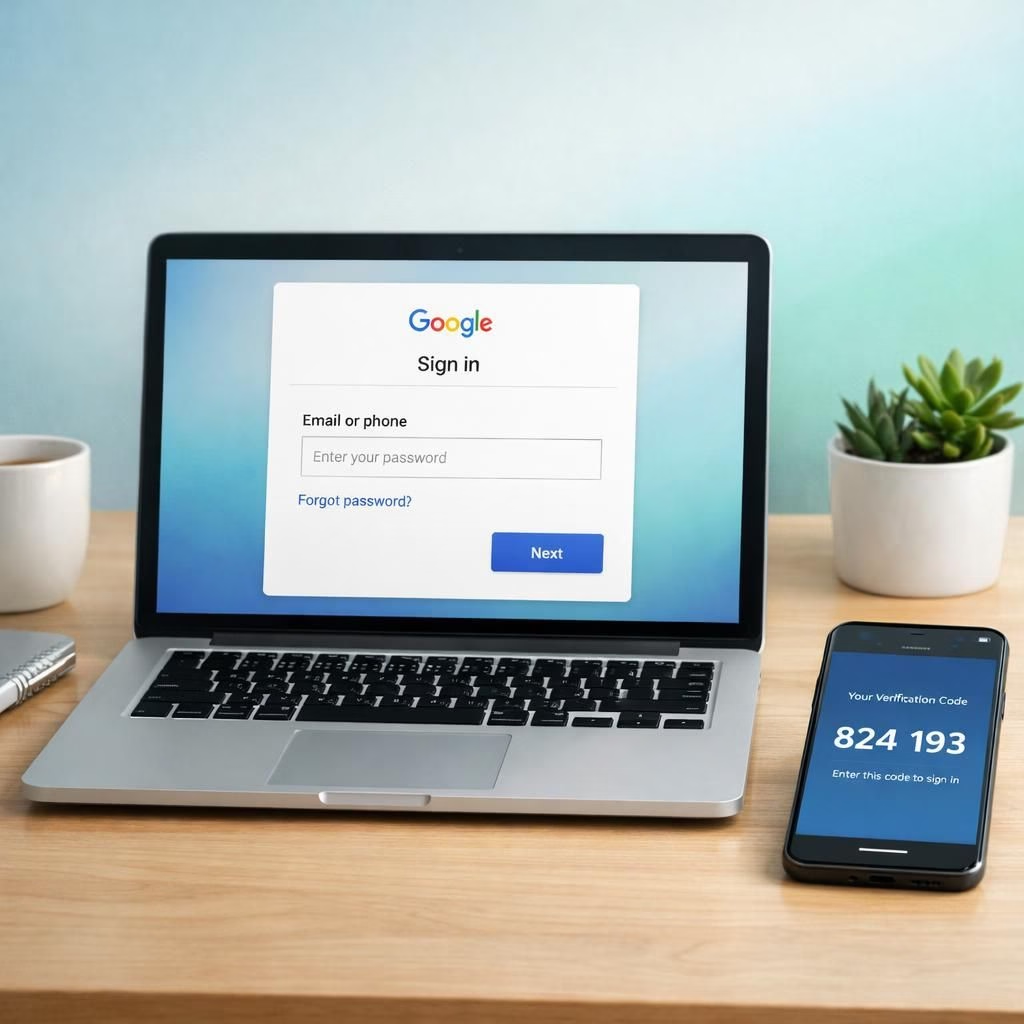
Google Storage and Account Security sit at the center of Google’s latest regional experiment, where new accounts in select regions start with a 5GB starter and can unlock a full 15GB by adding a phone number. The move is framed as a friendly nudge toward stronger Account Security rather than a wholesale cut in free storage.
In practice, Google says this change aims to keep Google Storage reliable while nudging users toward better account verification and backup readiness. The emphasis is on ensuring a safer Account Security posture across devices and services, with phone-number verification acting as a check against fraud.
Officially, a phone number isn’t mandatory to create a new account, though historical patterns show Google sometimes requests one when activity appears suspicious. The new approach keeps Account Security in mind by making numbers optional for now, but offering storage gains if you provide one.
News outlets traced the change to a Reddit thread and PiunikaWeb’s coverage, noting the 5GB starter is a temporary cap and not a universal rollout. The test sits within a broader tech trend toward stronger identity checks and privacy-conscious data handling. It also reflects efforts to better verify identities to promote safer data recovery across devices and apps and to silo adult content more safely in some regions.
Google Storage: A Controlled Experiment
From a consumer perspective, the 5GB starter feels small but isn’t simply about cramming files; it’s a nudge toward better Account Security.
Yes, you can still store memes and cat videos, but with a phone-number anchor, you gain more resilience. The 15GB milestone isn’t a threat to free storage so much as a gentle incentive to secure your account and back up data that matters.
In practice, users keep their current free tier unless they verify. If you add a phone number, your storage pool expands to 15GB, which might suit a busy user who backs up contacts, invoices, and a few high-motion GIFs. The policy remains clearly labeled as a test, so patience pays off while Google decides whether to roll it out more widely or retire it as a 2026 curiosity.
Account Security: The Phone Verification Twist
Account Security becomes a living concept here, reminding us that protection isn’t just a password. It’s a chain of verifications that helps keep identities reliable across devices and apps. With fewer suspicious logins, Google’s services feel steadier, which in turn improves recovery options. The trade-off is a bit more friction at setup, yet the payoff can be a safer overall experience for most users.
One can imagine a future where more services adopt a similar model—temporary storage caps to encourage stronger verification. The trend sits within a broader push for age verification in tech, designed to prevent access mismatches while preserving a smooth user experience for most people.
Practical Takeaways for Google Storage and Account Security
What does this mean for you? If you’re opening a brand-new Google account, expect a smaller initial allotment until you verify your phone number. This isn’t a punishment; it’s a safeguard that nudges you toward stronger recovery options. If you want 15GB of free space, update your contact details to unlock it with a phone number.
If you already have a Google account, you can breathe easily—the existing 15GB remains in place for now. The test targets new accounts in certain regions and is described as temporary. Exact regions aren’t published in detail, so stay tuned to official updates.
Beyond storage, the broader context matters: a world increasingly curious about who you are online. Stronger verification can reduce abuse while preserving a good user experience for most people. You can adopt best-practice steps such as enabling two-factor authentication, keeping recovery options current, and reviewing app permissions periodically. In short, Account Security and Google Storage aren’t enemies of convenience; they can be allies when used thoughtfully.
Finally, note the tone of this experiment: it’s a thoughtful nudge, not a sweeping policy overhaul. The testers emphasize quality, security, and data recovery—worthy goals in a noisy digital era. If this leads to smarter defaults and clearer pathways to recovery, we all win more peace of mind as gigabytes drift through the ether.
Original article reference and thanks: This post builds on coverage from Android Authority and other outlets that highlighted Google’s test in select regions. Original article reference: Android Authority. Thank you for the thoughtful material that inspired this rewrite and for keeping readers informed. Android Authority coverage.
Have thoughts, experiences, or questions about Google Storage and Account Security in 2026? Share your thoughts in the comments below and join the conversation. And if you found this helpful, feel free to share it with friends who care about cloud storage and security.
External sources
For context on Google’s approach, see the Android Authority coverage: Android Authority coverage.