

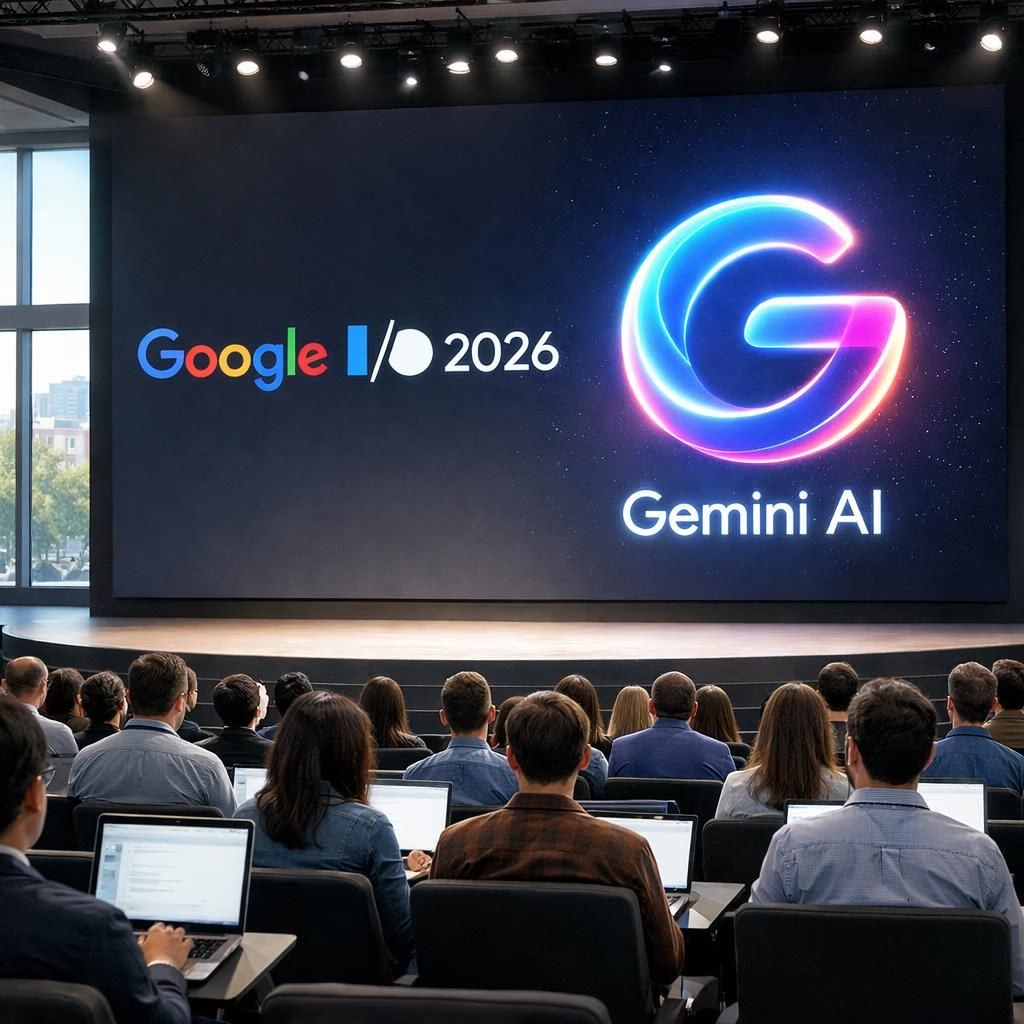
From the developer desk, Google I/O 2026 reads like a software-forward carnival. Google I/O 2026 reads like a sparkly demo reel, and the energy is contagious. Sundar Pichai touched down in India for the AI Impact Summit. Demis Hassabis lit Day 3 with a keynote that felt triumphant and teaser-like. Google has locked in the dates: May 19–20, 2026, at Shoreline Amphitheatre in Mountain View. Live streams will follow, ensuring the pajama-optimized keynote remains a modern ritual for the global dev crowd. The show’s focus is clearly software: demos, deep dives, and a Gemini AI cameo that refuses to stay shy, like a polite lab assistant with a wand of silicon truth. And yes, the promise of practical, user-friendly AI is the throughline we can all get behind.
Google I/O official site and extensive coverage from major outlets will shape the pace of the conversation in the run-up to May. For context and official details, you can also explore Google’s official blog, which often highlights keynote themes and developer-focused sessions. Reuters Technology and The Verge will likely publish practical takeaways as the event unfolds.
Google I/O 2026: Gemini AI Innovations
No hardware grandstanding is planned; only software fireworks and perhaps a clever Tuesday morning demo. The official blog hints the big draw will be Gemini AI-powered video generation, plus deeper Gemini ties into Search and Android. If you remember Veo 3 from last year, expect a reimagined version with smoother audio and better timing. Android 17 beta is in testing, and I/O may unveil Handoff, Desktop Mode, and a Liquid Glass UI that feels refreshingly calm.
Further, expect deeper Gemini integrations across core apps and services that developers rely on daily. The emphasis on on-device inference and privacy-friendly defaults aims to balance power with responsibility. If you want practical, user-friendly AI woven into everyday workflows, this year’s I/O is designed to deliver.
Gemini AI: Behind the Scenes at I/O 2026
Expect a tour of Gemini’s latest tools—Veo 3 showed silky video generation with synchronized audio, and refinements may follow. Image 4 could join the party, and open-source Gemma 3 projects might surface, inviting developers to remix the code. Inside Google Search, expect refinements that weave Gemini-powered results more naturally with queries, hints, and structured data. Meanwhile, the Android team nudges the UI toward a smoother, less intimidating interface that still feels like technology with a friendly wink.
Chrome AI upgrades are part of the backstage plan, aiming to erase some lag and pepper browsing with practical AI helpers. In the wild world of agentic browsers, competitors like ChatGPT Atlas and Perplexity Comet push Google to move faster. This is about reliability and usability, not hype.
Gemini’s momentum continues with a refreshed set of tools: Gemini 3 Pro and Flash have already landed, and the tone of I/O 2026 suggests more thoughtful integration across apps you actually use. The narrative favors developers who want powerful, accessible tools over flashy one-off features. Expect better on-device inference, more context-aware assistants, and a tighter loop between Gemini-powered services and your daily work routine. If you’re building with Gemini AI today, you’ll likely see a more seamless bridge to Android and Chrome, plus clearer guardrails and privacy controls designed for real-world use.
Google I/O 2026: Security Tips in 2026 and Gemini AI Ethics
Security and responsible AI aren’t afterthoughts here; they’re part of the stage directions. Expect practical guidance on data usage, on-device inference, and transparent prompts that help you understand how Gemini AI makes decisions. The show is likely to emphasize safer defaults, auditable AI behavior, and clearer disclosures about what Gemini AI gathers during interactions. The aim is to empower developers to build trustworthy experiences without sacrificing speed or creativity.
Gemini AI: A Developer’s Playground
The open-source angle gets another nudge, with Gemma 3 projects likely to appear in community channels. Expect hands-on discussions about modular tools, plug-and-play components, and real-world demos that show how to remix AI responsibly. For developers, the payoff is a more forgiving environment: faster iteration cycles, better documentation, and a sense that the AI you’re integrating behaves the way you want—most of the time, and with intent.
Bottom line: I/O 2026 invites developers to test, remix, and push the boundaries of Gemini AI integration across everyday apps. If you want more, keep an eye on Android 17’s rollout and the Chrome updates tied to Gemini.
Share your thoughts below after you read the stream of updates and demos. Original article attribution: Original article. Thank you for the inspiration. Please share your thoughts in the comments.