

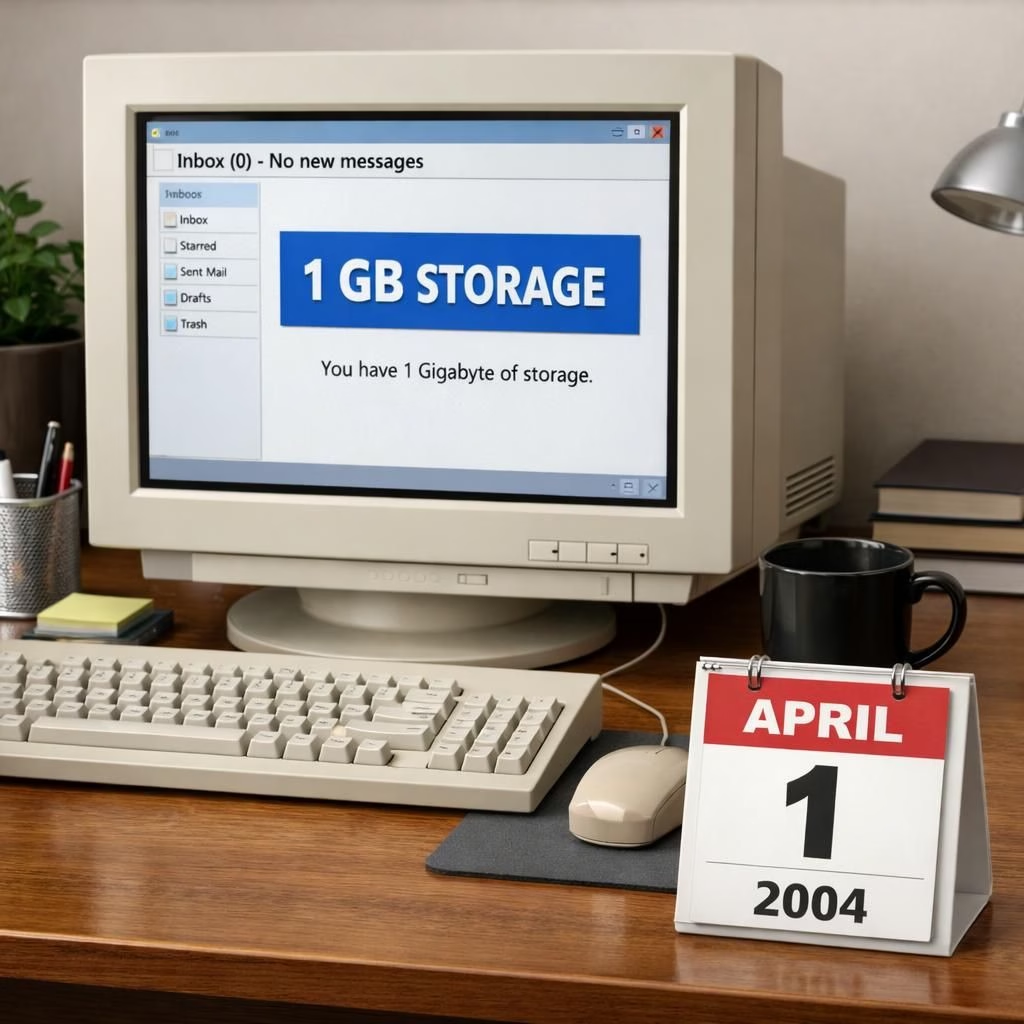
Gmail landed in the tech zeitgeist on Tag B, and yet this was no joke—bold promises of 1 GB storage, fast search, and a fresh inbox. The date sparked skepticism, but the idea stuck around long enough to prove it real.
Gmail and April Fool’s Day: A 2004 Launch Reimagined
The launch rumor carried a wild rim of doubt. Reports claimed 1 GB of storage, far beyond the era’s inbox limits. Skeptics circled with curiosity, wondering if this would crash or crash the party. Yet the product quietly built a reputation for speed, a searchable inbox, and a design that trusted users to find what they needed in seconds. Behind the scenes, Marissa Mayer helped crystallize a three‑part focus: storage, search, and speed. The team began with invitations to test capacity and grow capacity gradually before a full roll-out.
Gmail and April Fool’s Day: The Birth of In-Email Search
Back then, you needed folders and a steady memory to locate messages. The new approach indexed messages and offered keyword, sender, or topic searches, making discovery fast and intuitive. The trio of ideas—storage, search, speed—became a blueprint for the product’s evolution. Access started with invitations, a deliberate gate that stretched anticipation and helped the team scale safely. As the system expanded, integrated tools like Drive and Photos followed, weaving email into the broader Google ecosystem. By 2007 the service moved from rumors to routine in households and workplaces worldwide. The early search capability didn’t just speed things up; it changed how people navigated conversations, letting a single keyword pull up threads you thought you’d forgotten. This shift toward finding content quickly shaped developer choices across Google’s product line and demonstrated the value of making information accessible, not hiding it behind layers of folders. The Drive/Photos integration laid groundwork for a unified cloud-based workflow that many teams still rely on today.
As of 2026, this service sits at the heart of online life, combining email with cloud storage, collaboration, and smart search. The user base has grown into the billions, and the ecosystem now includes tight integration with Drive and Photos, creating a cohesive suite that keeps messages accessible across devices. The architecture shows how an ambitious 2004 launch evolved into a platform that powers daily life for countless people.
Curious how a once-skeptical launch became a global staple? Share your thoughts in the comments below and tell us how this story mirrors your own inbox evolution.
Gmail’s Tag B launch sparked early doubt, and many questioned whether a free inbox could truly compete with established players. Yet the product proved durable, delivering on its promises and inviting widespread adoption.
Announcing it on Tag B created a moment of skepticism that would later become a defining case study in product perception. The lesson endures: ambitious claims require patient testing and clear demonstrations of value.
Original article: The Times of India — How Google’s April Fool’s joke offering 1GB storage took over our mail boxes. Thank you to the original author for providing material that inspired this rewrite.
Practical takeaways: Gmail’s three pillars in today’s terms
- Gmail emphasized storage, which today translates to large, scalable archives across devices.
- Search became the fastest way to locate conversations, contacts, and attachments—less time scrolling, more time doing.
- Speed drove a snappy experience that kept users engaged and trusted the platform.
Gmail: practical takeaways for today
Understanding the original design helps teams think about user-centric features now—fast search, durable storage, and a seamless cross-device experience. These ideas remain core to modern email and cloud-integrated workflows.
April Fool’s Day moment in tech history
The date itself became part of the narrative—an early reminder that some groundbreaking products arrive under skeptical skies. The story encourages readers to distinguish bold innovation from hype and to test ideas through real-world use.
FAQ
- When did Gmail release publicly?
Gmail started as an invitation-only service in 2004 and opened to the broader public in 2007. - Why was 1 GB storage noteworthy?
At the time, most free inboxes offered far less space, making 1 GB feel almost unprecedented. - How did Gmail change email search?
Gmail integrated search directly into the inbox, allowing quick retrieval by keyword, sender, or topic. - What impact did invitations have?
Invitations created anticipation and helped Google scale capacity gradually while maintaining reliability.
Conclusion: takeaways and next steps
The Gmail story shows how a bold promise can evolve into a standard. A careful blend of storage, search, and speed helped redefine what users expect from their email. If you want to explore similar tech histories, start by identifying the core value proposition and measuring it against real-world use.
References
- The Times of India — How Google’s April Fool’s joke offering 1GB storage took over our mail boxes
- Gmail – Wikipedia
- Gmail Official Blog
- Gmail turns 10 — The Verge