

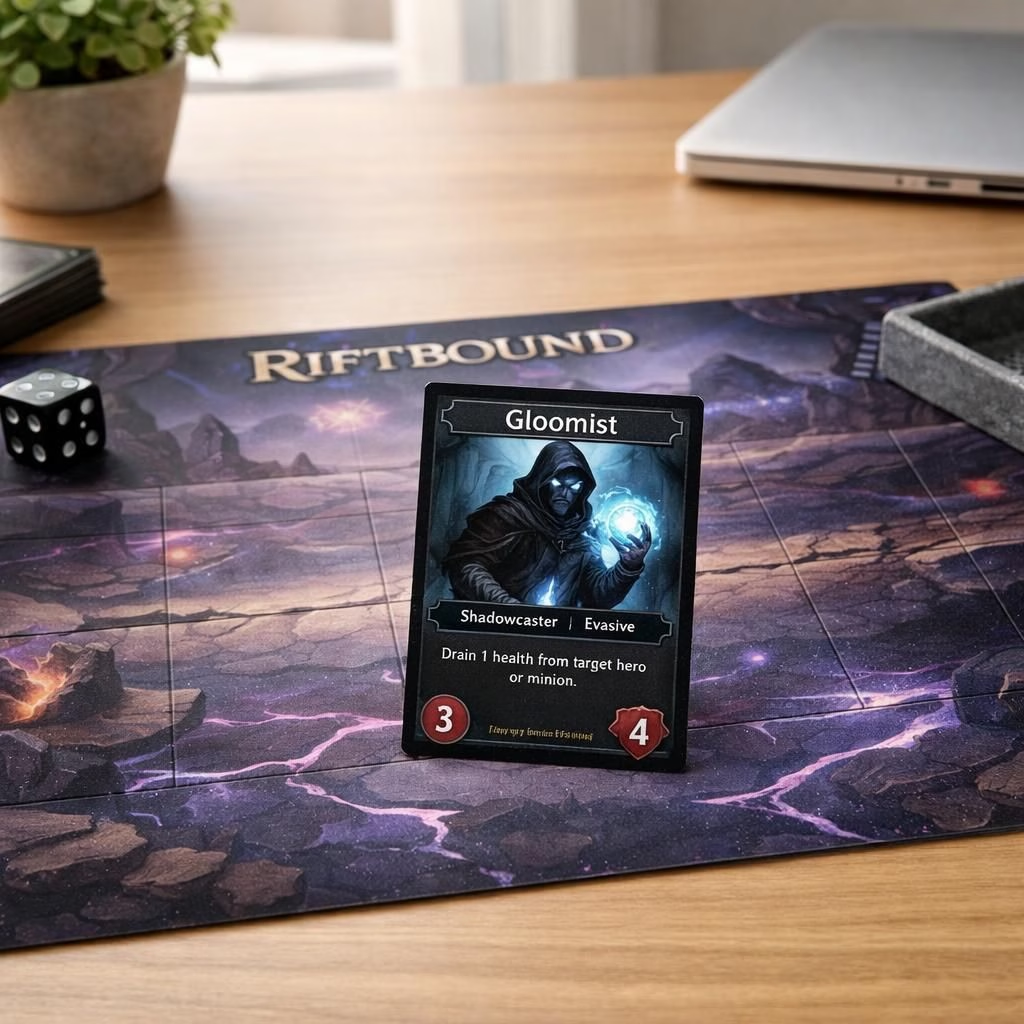
Gloomist and Riftbound collide in a strategic dance where battlefield control translates into draw power, and every defended hold becomes a small victory lap for your hand. In 2026’s evolving meta, the legend card named Gloomist proves that patience pays: when you or an ally hold, you may exhaust me to draw 1. The synergy is elegant: you defend, you hold, and you draw. Gloomist rewards the careful defender and the cooperative teammate alike, turning a naively stalled turn into a potential card advantage carousel.
Gloomist and Riftbound: A Playful Guide to Control
In Riftbound, “holding” means controlling a battlefield long enough to reap benefits. Gloomist acts as a flexible engine here: exhaust the card to draw one, while keeping pressure where it matters. The design encourages steady, patient lines—defend a key location, pass the turn with a plan, and watch your hand replenish. When you defend, you don’t just store tempo; you gain tempo by training your draws. Gloomist becomes a recurring theme in many Riftbound decks, a lighthouse guiding you through foggy late-game transitions.
Riftbound Tactics with Gloomist: Draw, Hold, Win
Riftbound‘s broader kit introduces Ambush, XP, and Hunt as the kind of mechanics that reward timing and battlefield control. Ambush lets you react during combat, turning a defensive stance into a counter-punch, and XP stacks toward stronger effects as you accumulate it. Gloomist fits naturally into this ecosystem: you can keep the battlefield under your thumb while the draw engine keeps your hand healthy. Narrow advantage becomes momentum; momentum sometimes becomes a win. The expansion expands to over 220 cards, more than 30 alternate-art variants, and a broad set of rarities that widen the tactical sandbox for 2026 players. Baron Nashor, an iconic Runeterra monster, becomes the first Ultimate Rare in this set, a testament to the game’s escalating scale and the thrill of rare finds.
Unleashed is the third set for Riftbound: The League of Legends Trading Card Game, Riot’s physical trading card game set in the world of League of Legends. The expansion contains more than 220 cards and over 30 alternate-art variants, introducing new champions, mechanics, and collectible rarities. Among the new Champion Legends arriving in the set are Kha’Zix, Lillia, Diana, and Ivern. The set also introduces new gameplay systems including Ambush (which allows cards to be played reactively during combat) and XP, a resource that builds toward stronger effects as players accumulate it. Another mechanic, Hunt, rewards players with XP when certain units conquer or hold battlefields. Together, these additions aim to expand strategic options while reinforcing Riftbound’s battlefield control mechanics — the same type of gameplay Gloomist supports. Riot has also introduced Ultimate Rarity, an extremely rare card tier appearing in less than 1% of packs. The first Ultimate Rare in the game features the iconic Runeterra monster Baron Nashor.
Riftbound Unleashed launches in China on April 10, followed by an English release on May 8. Players will also have the chance to try the new cards early during Pre-Rift sealed events at local game stores beginning April 3 in China and May 1 for English-language events. These timing windows, all in 2026, offer a practical ramp for players to test and tune their Gloomist–Riftbound synergy before big tournaments. If you enjoy co-op play, the new XP system makes your shared victories feel like genuine team wins, and the Ambush mechanic offers a delicious timing puzzle that rewards precise decisions rather than sheer luck.
For players who love the tactile thrill of card draw, holding ground, and planning the next two or three turns, Gloomist and Riftbound deliver a compact but meaningful design philosophy. The card draw engine is not a flashy gimmick; it is a reliable partner during slower, more tactical matchups. The synergy between control, draw, and battlefield presence remains the backbone of many top-tier Riftbound lists, and Gloomist stands out as a flexible anchor that can slot into multiple archetypes without forcing a single path.
Special thanks to the original article for material and insights. You can explore the deeper breakdown here: Original Riftbound Unleashed Analysis.
What do you think about Gloomist’s draw-on-hold mechanic in Riftbound? Share your thoughts in the comments below; I’m curious to hear how you’ve integrated Gloomist into your playstyle in 2026.
Original article attribution: Special thanks to the author and publisher of the original material; we appreciate the thoughtful exploration of Riftbound’s mechanics and the fun of its evolving meta. For full context, check the source here: Original Riftbound Unleashed Article.
Gloomist in Control-heavy Builds
- Start by securing a safe hold on a key battlefield and use Gloomist to draw a fresh card when your position stabilizes.
- Pair defense-focused turns with timed draws to maintain pressure without overcommitting resources.
- Coordinate with your teammates to maximize the value of each draw while keeping essential locations defended.
Riftbound: Timing, Ambush, XP
- Keep Ambush for reactive plays; use it to turn stalemates into favorable trades while Gloomist replenishes your hand.
- Build XP gradually; as it accrues, you unlock stronger effects that compound your control plan.
- Remember that Riftbound rewards careful timing and battlefield stewardship as much as raw power.
Frequently Asked Questions
- How exactly does Gloomist’s draw-on-hold work in practice?
When you or an ally hold a battlefield, you may exhaust Gloomist to draw 1 card. This works best when you time holds across turns and prepare a follow-up plan for your next two turns. - Can I use Gloomist to draw while defending alone, or does it require multiple players?
Gloomist rewards defensive posture in any build; while coordination helps in multiplayer formats, you can still profit from a well-timed hold alone. - How do Ambush and XP interact with Gloomist?
Ambush allows reactive plays during combat, which can open opportunities to defend while you draw. XP stacks toward stronger effects, making continued defense and draws increasingly rewarding.
Conclusion and Takeaway
Gloomist offers a compact yet powerful engine for Riftbound-style control decks. The draw-on-hold mechanic provides steady card advantage without resorting to gimmicks, making it a natural fit for slower, tactical matchups. By balancing defense with timely draws, you can turn guarded positions into long-term momentum and slowly tilt the game in your favor.