

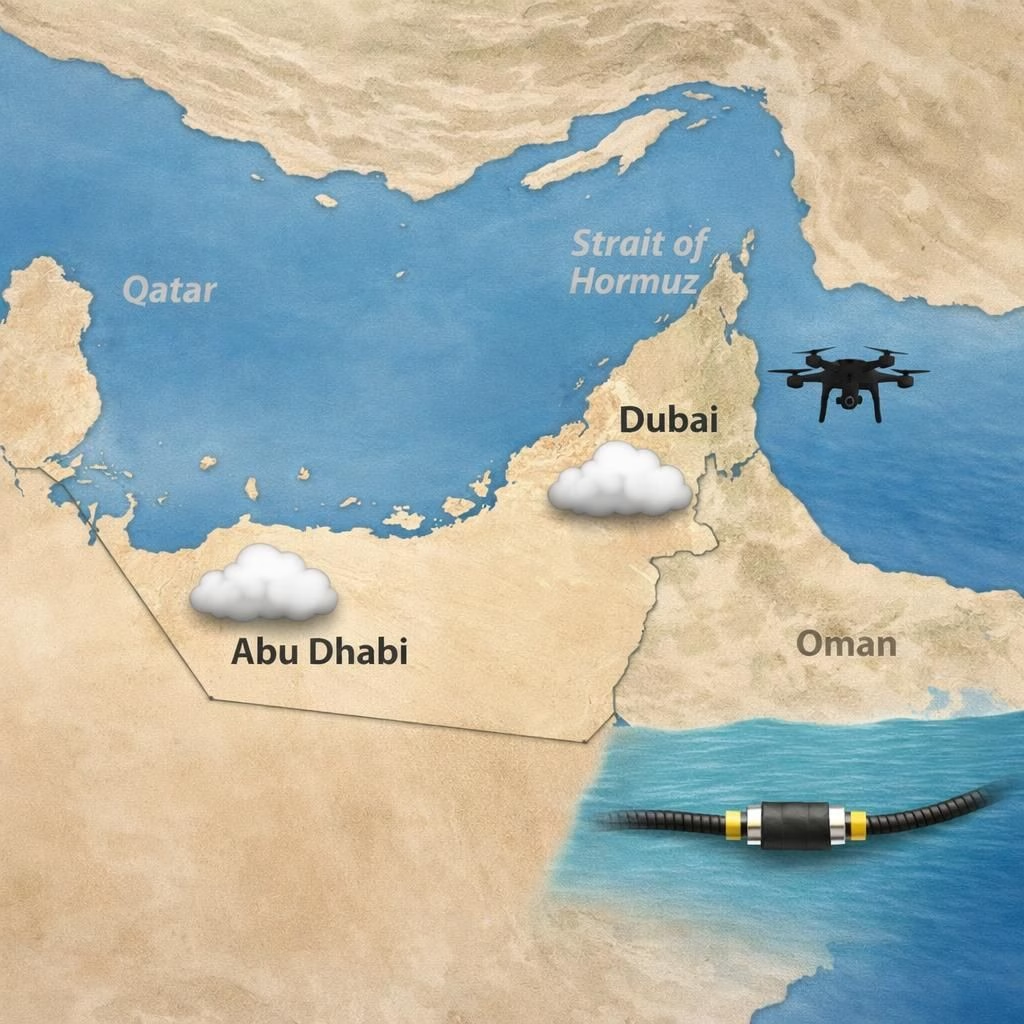
Geopolitics and Tech collide in a surprisingly practical way as Iran’s IRGC issues a direct warning about potential strikes on US Tech sites in the UAE and Bahrain, set to begin on April 1, 2026. This is not a drill for the science club; it’s a reminder that digital infrastructure is a frontline asset, and the internet’s backbone is a global city square where risk travels quickly on fiber and waves. The message is loud, the stakes are high, and the time to plan resiliency is now.
Geopolitics Meets Tech on UAE Cloud and AI
The UAE hosts major cloud giants in Abu Dhabi and Dubai, with data centers belonging to Amazon Web Services, Microsoft Azure, Google Cloud, and Oracle Cloud. The sites lie within 80 to 400 kilometers of the Strait of Hormuz, a fact that makes them a tempting target for aerial or sea-based disruption in a worst-case scenario. This is not alarmism; it is geography meeting business continuity planning in real time.
In March 2026, Iranian drones reportedly struck AWS facilities in the UAE and Bahrain, causing outages and service disruption. While painful for cloud customers, the episode acts as a live stress test for redundancy, failover, and regional workload distribution. Teams are shifting workloads to safer regions and enabling remote work for staff in high-risk zones. The lesson: design for resilience, because uptime is a user experience, not a checkbox.
Geopolitics and Tech Behind Subsea Cables and Data Centers
Subsea cables are the internet’s lifelines. In this region, systems like AAE 1, SEA ME WE 5 and 6, and Tata TGN Gulf carry most of the world’s traffic through Oman waters or land in Fujairah. Damage to any of these can slow speeds, disrupt cloud services, and ripple into real-time finance apps. Repairs in conflict zones are slow; ships may be restricted; even minor damage can take months to fix. The result is a sobering reminder that connectivity depends on fragile, international lines of supply and security.
Tech Mitigation: Shifting Workloads, Redundancy, and Stronger Security
Many Tech companies have begun moving workloads to safer regions such as India and Singapore. Employees located in high-risk areas adopt remote work and distributed teams. Organizations now build multi-region redundancy, diversify providers, and strengthen incident response. To users, this can mean a more reliable experience even when one region faces trouble. The shift is not glamorous, but it is practical—and it keeps services alive when the globe flickers.
What This Means for Users and Businesses in 2026
For everyday users, slow apps or temporary outages may appear as workloads migrate and gear shifts happen behind the scenes. For businesses that rely on cloud infrastructure, downtime translates into financial risk and reputational damage. On the bright side, awareness is rising, and resilience planning, cloud strategy, and submarine cable monitoring become core business capabilities rather than afterthoughts. The situation remains dynamic, and so should your response plans.
Practical Takeaways for Organizations
To translate risk into action, consider the following practical takeaways:
- Map risk across geographies, providers, and interconnections to understand exposure.
- Implement multi-region redundancy and automated failover to minimize downtime.
- Regularly test disaster recovery plans, including cable-cut scenarios and data center outages.
- Diversify cloud providers to avoid single points of failure in geopolitically tense regions.
- Monitor submarine cables and internet exchange points as part of standard risk governance.
- Develop clear communications and incident response playbooks for executives and customers.
Have thoughts? Please share them in the comments below to keep the conversation going and to help build a resilient digital future.
FAQ
- Why are UAE and Bahrain targets particularly risky for cloud providers?
Because major data centers and submarine cables converge near the Strait of Hormuz, creating exposure to geopolitical disruption and potential outages. Resilience requires redundancy and rapid recovery.
- What can users do to protect their data?
Use multi-region backups, enable automatic failover, keep offline backups, and choose multiple providers to reduce single points of failure.
- How do subsea cables affect daily internet use?
Subsea cables carry most international traffic; damage can slow speeds, disrupt cloud services, and affect real-time financial apps. Repairs can take months in conflict zones.
- What practical steps should organizations take today?
Map geographies and dependencies, implement multi-region redundancy, test disaster recovery, diversify providers, monitor cables and IXPs, and maintain clear incident communications.
Conclusion
The situation is evolving, but one takeaway is clear: resiliency is essential, not optional. Start by mapping exposure, diversifying providers, and rehearsing incident responses to keep services online during turbulence.
References
External sources
- Submarine Cable Map – TeleGeography
- ITU – Telecommunication and Submarine Cables
- NIST Cybersecurity Framework