

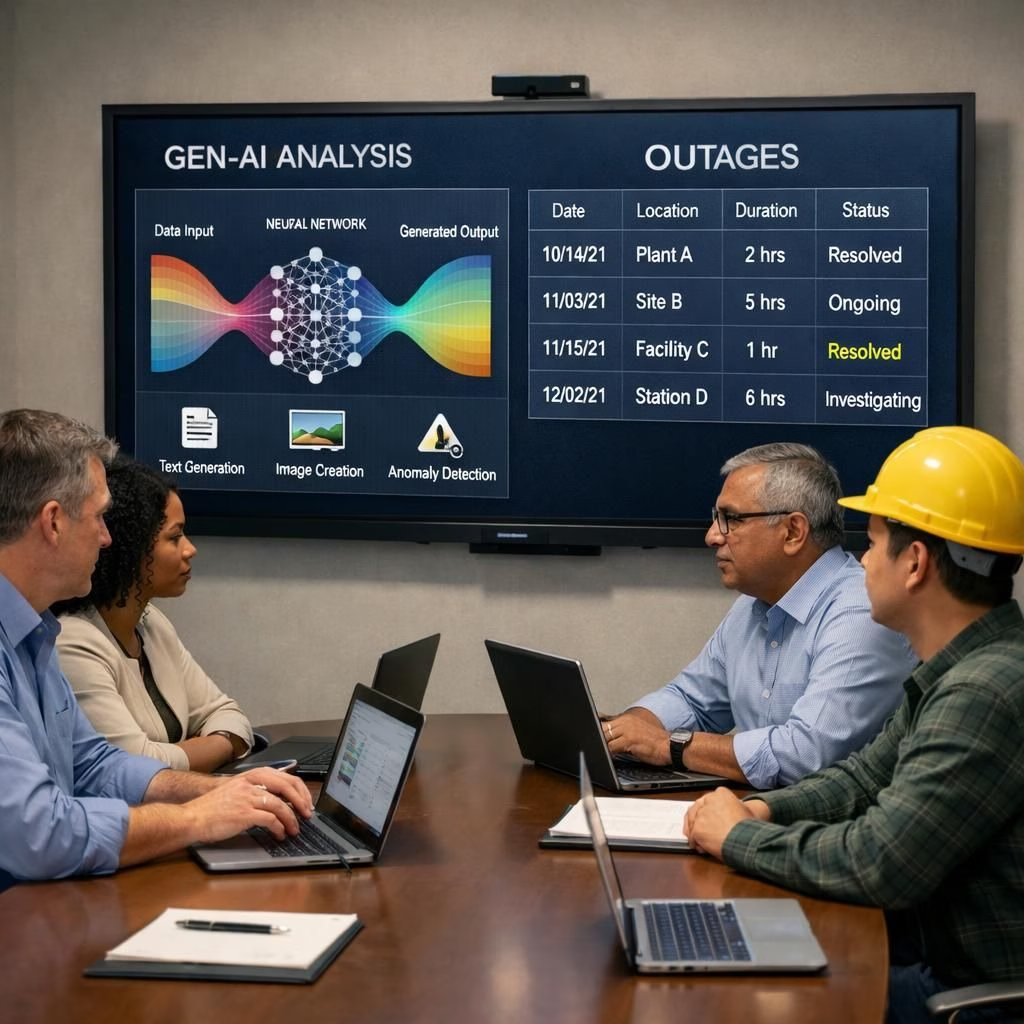
Gen-AI and outages are front and center as Amazon calls its engineers to a focused, upbeat deep dive into a string of recent hiccups. The Financial Times highlighted a trend of incidents with a high blast radius and Gen-AI-assisted changes, but Amazon positions this as a chance to tighten practices, prove resilience, and shore up safeguards before the next sprint. For readers tracking AI governance in large teams, you can also explore how tools like ChatGPT’s deep research tool are shaping workflows.
In a move that sounds more like a boardroom pep talk than a crisis drill, the company gathered a large engineering team on Tuesday, March 10, for what it calls a deep dive. The aim is to translate complex outages into clearer playbooks, measurable safeguards, and smoother customer experiences. The briefing note speaks of a rising pattern in recent months where Gen-AI aided changes caused wider ripple effects, or what insiders call a high blast radius. The tone from leadership is calm curiosity, not panic, and a warning to keep the mood constructive while we learn.
Gen-AI and outages in focus: the meeting agenda
The agenda mentions Gen-AI usage by engineers and asks for concrete guardrails before new tooling touches live systems. It is not about banning AI; it is about partnering people with process. Teams will push for better change control, more robust testing, and faster rollback options. Senior leaders stress that the availability of the site and related infrastructure has not always been reliable, so higher reliability is the target. Practitioners are told to document outages, edge cases, to share lessons, and to build a culture that notices problems quickly and fixes them without drama.
Outages as learning: turning a snag into a safeguard
Outside observers saw a flurry of social posts and heated commentary, but inside Amazon the mood is pragmatic and optimistic. The company compares the current spate of incidents to growing pains of any fast-moving tech giant. The goal is not blame, but an upgrade of practices that customers rarely see yet feel when they suffice. The note cites several contributing factors, including Gen-AI usage that has not yet matured into robust safeguards. Yet the team reframes this as a learning opportunity, a chance to tighten monitoring, validations, and sign-off procedures before a push reaches production.
Meanwhile, the broader tech world is watching. Elon Musk weighed in with a cautious nudge on social media, reinforcing the idea that the ecosystem gains from careful, transparent experimentation. The online chatter, while lively, signals a shared interest in safer AI adoption and better incident handling. Amazon will not pretend that the road ahead is perfectly paved, but it can promise a clearer plan and a more disciplined rollout approach.
March 5 outages: a lighter, faster recovery story
Separately, Amazon faced March 5 outages that affected website and app access for some users. CNBC reported that customers could not check out, view prices, or access account details for a few hours. Downdetector data showed more than 22,000 reports across a two-hour window, a spike that is large but not fatal. Amazon owned the issue, calling it a software code deployment gone awry. The company apologized, noted that the issue was resolved, and confirmed that the site and app are running smoothly again.
The speed of recovery stood out. Engineers traced the root cause to a deployment mishap, and teams worked to restore services quickly. The response demonstrates the resilience baked into the infrastructure, and it highlights the ongoing importance of change management in a world of rapid AI-enabled development.
For shoppers, the day will be a distant memory soon enough, but the lesson remains front and center. The incident underscores the need for robust monitoring, precise rollback options, and clear customer communication during disruptions. In addition, it shows Amazon’s willingness to own mistakes, communicate clearly, and move forward with a well-defined plan to minimize similar outages in the future.
Looking ahead, customers can expect stronger guardrails around Gen-AI workflows and more frequent post-incident reviews. The company intends to publish findings, improve testing regimes, and involve the broader engineering community in feedback loops that make AI-assisted changes safer and more reliable. If there is a silver lining to these events, it is that the organization is turning pressure into practice, friction into learning, and risk into a recipe for better reliability.
Thank you to Financial Times for the original reporting that sparked this deeper look into how Gen-AI and outages intersect at a global e-commerce giant. You can read the original piece here: Financial Times.
We invite readers to share their thoughts on how Gen-AI-driven changes should be managed in large teams. Please leave a comment below to join the conversation.
Practical steps for Gen-AI and outages governance
- Establish clear guardrails for AI-assisted changes before they touch production.
- Document failures and edge cases to accelerate learning and rollback readiness.
- Involve senior engineers in sign-offs for high-risk deployments.
- Schedule regular post-incident reviews to translate incidents into action.
FAQ about Gen-AI and outages
- What caused the March outages? The company has attributed the disruption to a software code deployment that affected both the website and app, with recovery following rapid remediation efforts.
- What changes is Amazon making to prevent future outages? The firm is pursuing stronger change control, more robust testing, and explicit rollback options for AI-assisted changes.
- What does this mean for customers? The goal is to deliver more reliable service and clearer communication during incidents, with faster restoration times and fewer disruptions.
- Where can I read the original reporting? See the Financial Times coverage linked in the article, and the Times of India link at the end for the source briefing referenced here.
Conclusion: turning pressure into practice
These events push Amazon to codify safer Gen-AI workflows and to increase transparency around incident handling. The company’s plan emphasizes measurable safeguards, stronger monitoring, and faster recovery—aimed at reducing customer impact and building long-term reliability.
References
Times of India: Original source (Times of India)
External sources: CNBC coverage of the March 5 outage, Financial Times, AWS blog on change control and reliability
Internal links: ChatGPT’s deep research tool, Genie 3 – Google DeepMind