

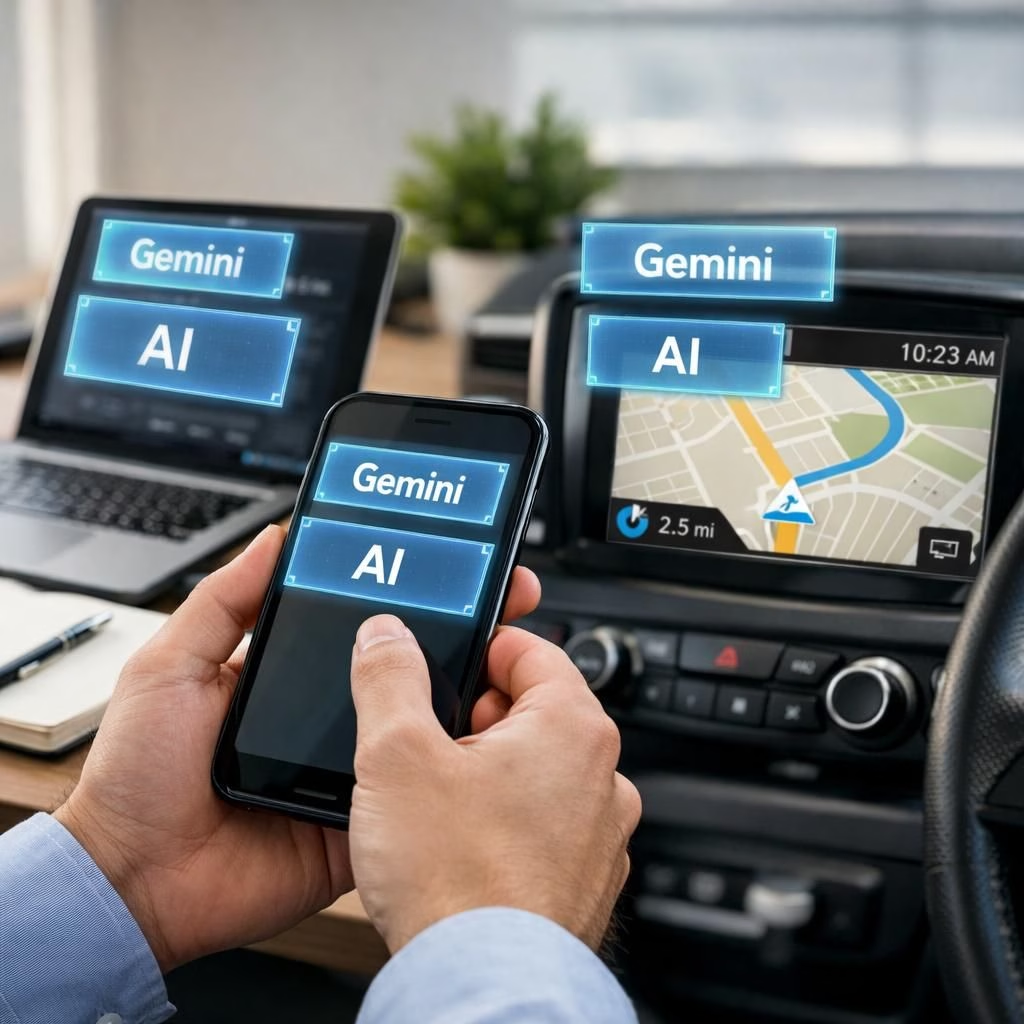
Welcome to our practical, lightly satirical look at Google’s March 2026 Gemini AI roundup. Gemini is getting smarter about context, turning devices into proactive helpers. In short, the update makes everyday tech act more like a helpful roommate.
Taken as a whole, the changes aim to be practical, friendly, and a touch cheeky. For AI-driven updates, Gemini remains focused on saving you taps, empowering your choices, and preserving your autonomy in a world where automation often feels loud but rarely personal.
Gemini AI: Context-Aware Updates Across Devices
Search Live has rolled out globally to more markets, inviting back-and-forth conversations by voice or camera for quick troubleshooting, travel tips, or brainstorming on the go. The upgrade centers on context: it tries to infer your schedule, tasks, and shopping habits and offers to help before you ask. These AI-driven cues help Gemini anticipate needs while you stay in control.
Within this wave, the workspace built into Search has evolved to handle long-term plans more gracefully. It now blends notes with drafts and offers writing and basic coding assistance directly in the browser, making the leap from idea to draft smoother than ever. For Gemini users, AI-assisted workflows keep ideas moving from sketch to completion.
Gemini AI: Maps, Personal Intelligence and the New Conversational Help
Maps has a major upgrade with a AI-assisted conversational helper capable of answering tricky questions on the move, suggesting places to stop, estimating travel times, and handling simple reservations as you drive. The navigation experience uses immersive visuals and natural directions to keep focus on the road and the journey rather than the screen.
Personal Intelligence expands to more users, linking with apps like Gmail and Photos to tailor results and itineraries to your life. You control what you connect, and you can adjust settings anytime. The aim is to deliver helpful context without turning devices into overly persistent AI-driven assistants.
To ease migration, new memory and chat history import features let you bring your preferences and conversations from other apps into the system. You can preserve past chats and personalizations, so switching tools feels less like a reset and more like a reunion with familiar preferences. This continuity also helps maintain a steady AI-powered flow across devices.
New device experiences and health-forward features — Gemini updates
The March Pixel Drop adds practical conveniences, including better image-to-product search. It can identify items from a photo and suggest where to buy them. In addition, the AI-driven writing and coding aids inside the browser have grown stronger, enabling faster drafts and smoother experiments within the same workspace. For Gemini, these updates feel like a natural extension of daily tasks.
Health, wellness, and creative exploration — AI tools
During The Check Up 2026, Google shared funding and partnerships aimed at making clinician education in the digital era more accessible and effective. The initiative supports researchers and rural health programs while advancing education and care delivery for better patient outcomes. This effort also highlights AI-assisted research and training for clinicians.
Fitbit enhancements bring more personalized guidance for sleep and activity, and the ability to connect medical records to the Fitbit app. New features for cycle health, mental wellbeing, and nutrition add to a holistic view of health and wellness. These improvements are part of an AI-powered health toolkit.
On the creative side, the music generation model expanded, enabling longer tracks with structured sections, and developers gained broader access through new APIs and production tools, broadening the AI-driven toolkit for artists and developers alike.
Developer tooling and performance — AI-powered tooling
Other updates boost on-device and cloud workloads with faster, cheaper models. New options optimize speed and efficiency for real-time tasks and large-scale deployments without compromising privacy or security. These AI-powered approaches help developers build reliable experiences while keeping user trust intact.
Overall, these updates are designed to feel kinder, quicker, and more capable. The focus remains on understanding context, improving conversations, and reducing friction so you can create, explore, and connect with confidence.
If you have thoughts, questions, or ideas about these updates, I’d love to hear them. Share your reflections in the comments below to kickstart the conversation.
Original article: Google’s March 2026 AI roundup — a big thank you for the original material.
References
Additional sources and context can be found on the official Google AI pages: Google AI and Google Maps, plus updates from Fitbit at Fitbit.