

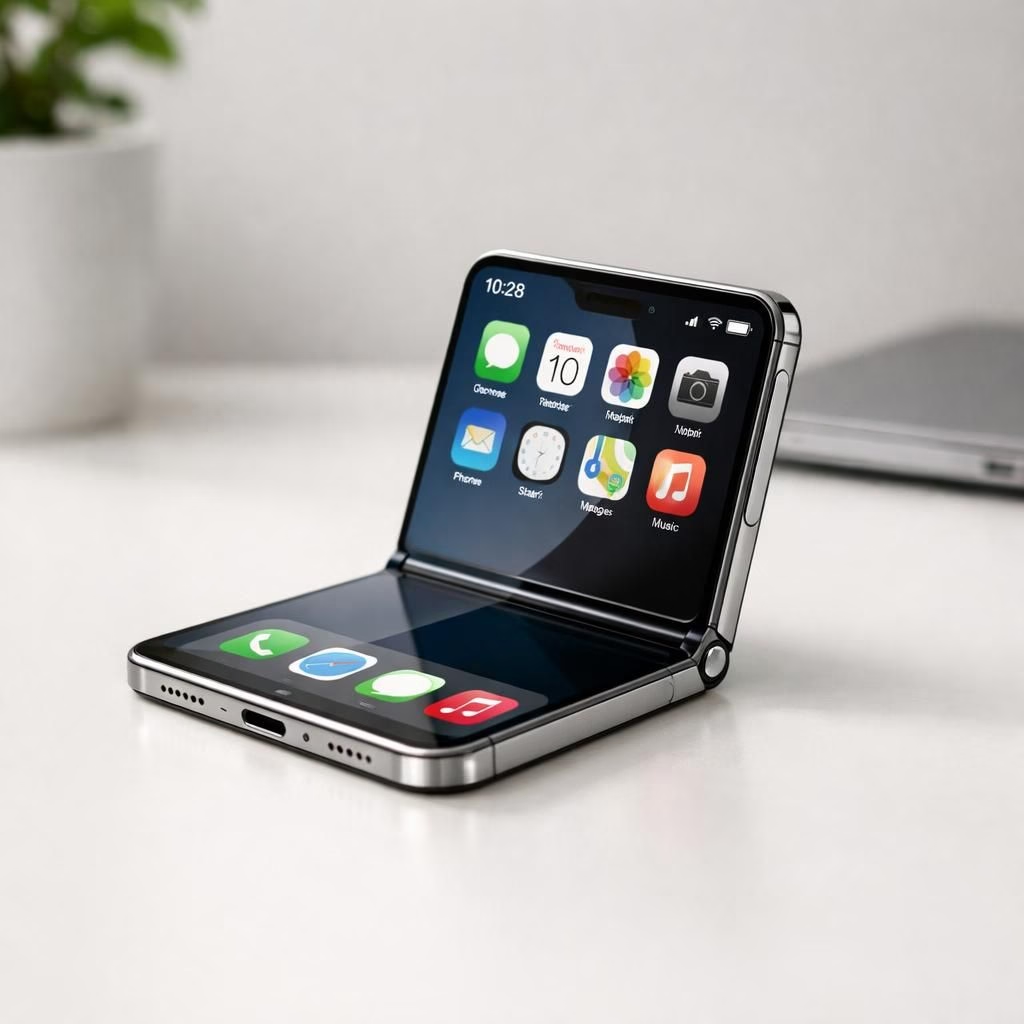
The foldable iPhone narrative is back, with engineers chasing reliability milestones while executives juggle timelines. In 2026, the iPhone foldable remains a work in progress, and Engadget’s report about delays due to engineering snags shows the practical side of hype. The core truth is simple: a device that folds must still work as a phone, a pocketable camera, and a reliable computer. That combination demands hinge durability, panel stability, heat management, and software that blends two modes. When any one of these layers stumbles, the project slows. Several outlets echo the same story: bold ambitions collide with real-world engineering limits, nudging the timeline forward rather than back. The iPhone foldable is not a fantasy; it is a difficult machine with a big job to do in a tiny space, and 2026 promises more patience than perfect progress.
Foldable iPhone: root causes of the delay
At the heart of the delay is a hinge that must survive thousands of folds without loosening, while keeping a seamless screen edge. The foldable hinge must balance strength with thinness, and that means materials choices, micro-sculpted metal frames, and precision tooling. The foldable kit includes a glass-ceramic display laminate, a protective bezel, and a flexible interconnect that carries data and power through every fold. The iPhone‘s internal layout adds stacks of components that must endure a folded posture, without overheating or rattling. The supply chain adds friction: rare alloys, exact tolerances, and just-in-time assembly that can stall if one supplier slips. All of this slows the timetable. Yet the team remains optimistic that real-world use will prove more stable with each iteration, even if the first units arrive later than hoped.
iPhone design goals vs foldable realities
Design criteria for the iPhone are relentlessly practical. Battery life, heat, camera performance, and software polish all ride on the same bus as the foldable concept. A foldable frame must not compromise radio performance or antenna paths. Engineers run edge-case tests for water resistance, dust ingress, and bending stress. The result is a slower but sturdier path to a product that can actually be used daily. In 2026, the team is not chasing a concept car; they chase a field-ready tool. The tension between “cool” and “configurable” is real, and that tension helps separate a showpiece from a durable everyday device. The iPhone team wants a seamless transition between tablet-like and phone-like experiences, but the physics of folding adds friction that takes time to iron out. Foldable ideas mature as reliability improves; the practical version of the iPhone will outlast the hype.
Foldable hinges, frames, and the iPhone experience
A hinge that locks in place after every bend, a frame that resists micro-deformations, and software that keeps the user model consistent across modes: these are the trifecta. Engineers test hinge life with automated cycles, simulate thermal drift, and stress the display to catch creases early. For the iPhone, that means panels must stay bright, touch sensors must stay responsive, and cameras must work whether the device is folded in a pocket or opened on a desk. The journey from prototype to mass production requires alignment across hardware, software, and manufacturing partners. In practice, that alignment slows progress, but it also yields a product that behaves well for real people rather than a laboratory skeleton. Foldable concepts, once nearly imaginary, begin to feel plausible as reliability improves and field data accumulates.
Foldable iPhone timeline for 2026
Count a few milestones: early samples, design freezes, pilot manufacturing, and staged testing. Each stage confirms or challenges the iPhone foldability, forcing teams to re-evaluate chip choices, display suppliers, and assembly lines, sometimes re-architecting to hit a safer, repeatable target. The long arc is simple: better hinge durability, better panel yield, smarter thermal design, and software that gracefully handles folding states. The industry watchers—Nikkei Asia, 9to5Mac, MacRumors, and others—provide a mosaic of expectations, each with its own twist on timing. The net effect is a timeline that moves forward with purpose, not a brittle leap that shatters expectations. In short, 2026 could still bring a iPhone foldable, but likely in a form that feels closer to a refined concept than a rushed launch.
While we wait, the iPhone foldable continues to inspire attention, conversations, and a few jokes about pocket-size origami. The road from concept to consumer device never runs perfectly on schedule, but it often runs true to user needs—ease of use, reliability, and lasting battery life. The tech behind the foldable iPhone is not merely glossy; it’s a test bed for how to blend two distinct device modalities into a single, everyday tool. The more teams learn, the better the final product will be for the masses. And yes, there will be iterations, tests, and clarifications, but the core journey remains about balancing daring design with the reliability people expect from their daily driver.
If you love the future of mobile design, you’ll enjoy watching the foldable iPhone project mature. Have thoughts about what you’d like to see in a foldable iPhone in 2026? Share your thoughts in the comments and join the discussion. For context, the original reporting from Engadget keeps the conversation honest and gives us a clear view of the engineering snags behind foldable ambitions.
Source material and thanks: Engadget report — thank you to Engadget for the original reporting and the insight that helped shape this piece.
What this means for users (practical takeaways)
- Patience pays off: early units may prioritize reliability over feature completeness.
- Two-mode software: expect a seamless switch between a phone-like and tablet-like experience, with gains as firmware matures.
- Durability matters: hinge wear, panel stability, and heat management are focal points before mass production.
Frequently asked questions
-
When might we see a foldable iPhone in stores?
Most observers expect breakthroughs in 2026, with a cautious, staged rollout rather than a sudden global launch.
-
Will it be durable enough for daily use?
Engineers emphasize hinge and thermal reliability, so early models aim to prove long-term consistency rather than a showcase demo.
-
Could the price be a barrier?
Premium pricing is likely, reflecting advanced materials, manufacturing precision, and dual-role software development.
Conclusion: the path from concept to everyday tool
The foldable iPhone project is edging toward a practical, field-ready device rather than a vaporware spectacle. The work is iterative, grounded in real-world testing, and guided by clear constraints on hinge durability, panel yield, thermal design, and software quality. The best result will feel like a natural evolution of today’s phones—fewer trade-offs, more confidence in daily use, and a design that genuinely offers two modes without compromising reliability.