

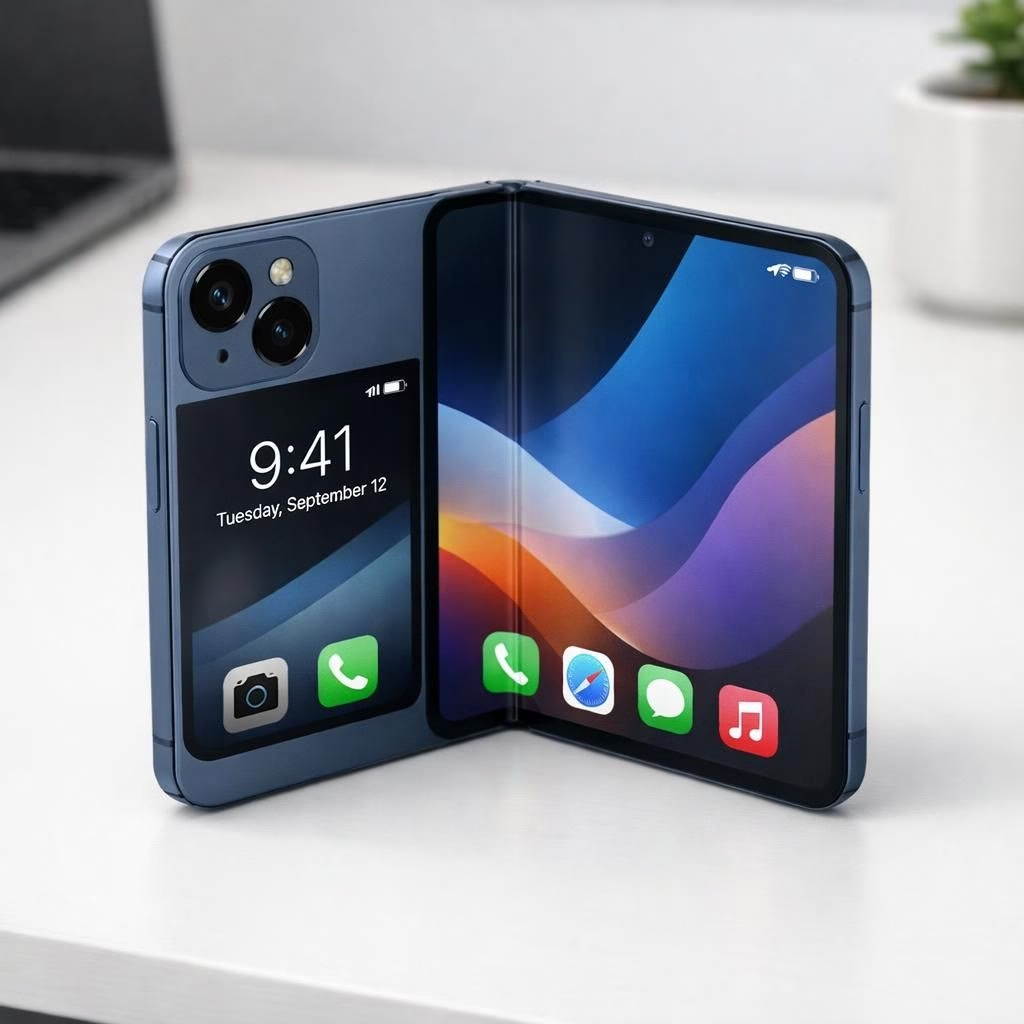
Apple has teased a foldable iPhone for years, and 2026 might finally turn that tease into a daily, pocket-friendly dare. The foldable iPhone would join the iPhone Pro family, a pairing that sounds like a techie punchline but carries real bets on durability, screen real estate, and how we watch videos. In this sunny-tinted forecast, the foldable iPhone is pitched as the first actual form-factor change since the early 2010s, and the iPhone Pro helps ground the conversation in premium cameras, fast chips, and a design language that says, We’ll ship something that feels new without losing the familiar grip. The Bloomberg-powered whispers suggest the two may debut together in September, with hands-on demos that make even the skeptics grin. It’s a playful moment: a phone that folds into a compact slab for commuting and unfolds into a cinematic stage for videos, games, and long emails.
As development progresses, teams focus on reducing the crease, boosting hinge durability, and ensuring everyday use remains friction-free. This pushes the foldable iPhone toward a reliable, all-day companion rather than a gadget you need to baby.
foldable iPhone: Design dreams and practicalities
Design teams lean into an external display roughly the size of a small phone and an internal panel that unfurls to a broader canvas. The goal is a design that disappears in the crease yet survives the bumps of everyday life. Engineers test hinge durability to withstand thousands of flips, drops, and pocket misadventures. The external screen would host quick checks, while the main screen opens up for videos, reading, or multitasking. This is not just a screen parade; it’s a bold claim that future phones could double as compact tablets without becoming a rolling circus of cables and dongles. The challenge remains to balance battery life, heat, and reliability while keeping the glass from turning into a scratch magnet after a few weeks.
iPhone Pro-grade expectations in a foldable world
On the iPhone Pro side, the premium version is expected to deliver top-tier imaging, processing power, and materials. The goal is to preserve the flagship experience when the device is compact for travel and when it’s unfolded for a shoot or a long editing session. Pricing is expected to hover near $2,000, placing this model at the high end and appealing to enthusiasts who want professional-grade performance in a flexible form factor.
Timing may be tricky: a September debut, with shipments arriving in the months after the Pro models launch, as Apple refines supply chains and tests real-world usage. The strategy seems to be about offering the best possible photo and video tools without sacrificing the thin, elegant profile fans expect. If successful, this could redefine who uses a phone as a creative instrument, not merely a social device.
foldable iPhone: Form factor, external display, and crease tech
The foldable device uses a different display stack, anti-crease treatments, and a hinge that can flex thousands of times without fatigue. Expect a modest external panel for notifications and calls and a larger internal screen when unfolded. Face ID may make way for an enhanced fingerprint option or side-button Touch ID, which would be a throwback to earlier Apple, but a welcomed change for some. The dual rear camera system is expected to stay, tuned for improved photography in both folded and unfolded modes. Pricing could press toward the high end, and the path to retail shelves will hinge on supply chain resilience and real-world durability tests more than on hype alone.
iPhone Pro: Cameras, pricing, and timing in 2026
From a iPhone Pro perspective, improvements are expected to emphasize sensors, image processing, and low-light capabilities, alongside software features that leverage the new display form factor. The combination of a foldable structure with Pro-grade imaging would position it as a flagship for enthusiasts who want maximum versatility from a single device. Expect a multi-month gap between the initial reveal and broad shipping, with early units dedicated to fans who value speed and precision over surprise. The Pro name remains a beacon of premium materials, sturdy construction, and a camera system capable of competing with standalone devices in many scenarios.
Availability and shipping timelines suggest buyers may have to wait after launch, while retailers work through demand, manufacturing tolerances, and the inevitable early-adopter quirks. Even so, the prospect of a foldable iPhone that also acts as a portal to an iPad-like experience excites both techies and everyday users who crave bigger screens without juggling a second device. This is the moment where Apple blends nostalgia (touch ID on the side) with modern engineering (a crisper crease and stronger hinge). The result could be a genuinely new category that makes your daily phone routine feel a little more cinematic, and a lot more interesting to explain to friends who still use plain glass phones.
Original article: Bloomberg Power On newsletter — A big thank you to Mark Gurman and the Bloomberg team for the thoughtful briefing that inspired this reflection.
FAQ: Foldable iPhone and iPhone Pro questions
- When is the foldable iPhone expected to launch? Expect an unveiling in September with subsequent shipping in the following months.
- Will the foldable iPhone keep Face ID, or move to Touch ID on the side? Rumors suggest a shift toward an in‑watch-style biometric like side-button Touch ID, but Apple often revises plans before launch. The iPhone Pro line could help anchor the experience.
- How might pricing look compared with the iPhone Pro line? Reports point to a premium price around $2,000, reflecting the new form factor and camera capabilities.
- Could the foldable replace an iPad for some users? In many scenarios, a larger unfolded display can serve as a light tablet, especially for media and editing tasks, while still fitting in a pocket for daily use.
Conclusion: what to watch next
The foldable iPhone, paired with the iPhone Pro, could redefine how we think about flagship devices. If the design holds up through real-world use and supply-chain tests, Apple may deliver a product that feels fresh without losing the familiar Apple DNA.
References
- Times of India — Apple’s first foldable iPhone and the form-factor shift
- Bloomberg Power On newsletter