

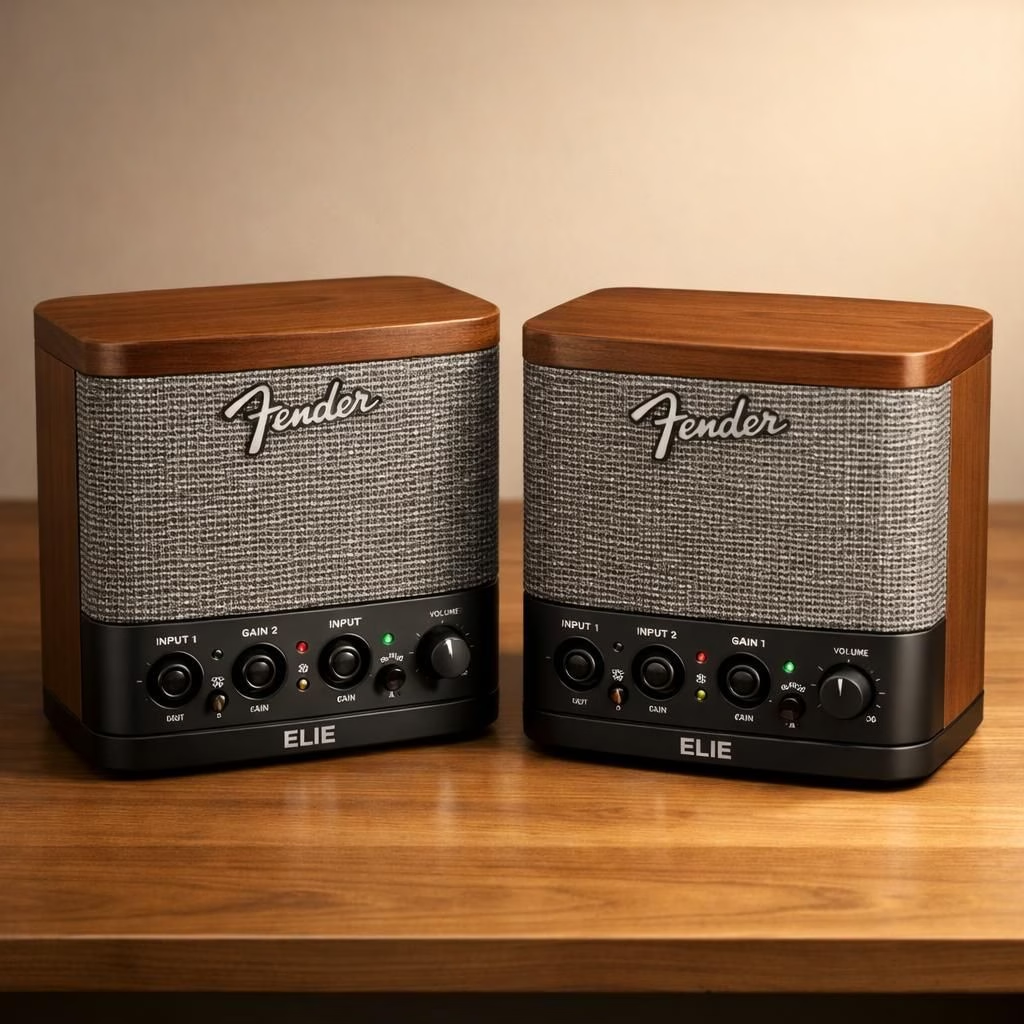
Welcome to Fender Audio’s Elie duo: two portable Bluetooth speakers that moonlight as amps thanks to 1/4-inch/XLR combo inputs and a phantom-power option. The Elie 6 and Elie 12 exist at the intersection of retro flair and modern versatility, featuring wood-toned tops, dual wireless inputs, and a three-way mode switch. Fender calls these a bold first impression: you can grab a pair and, depending on your setup, run mono, stereo, or a multi-speaker rig without a full mixer. If you’ve ever wished a speaker could wear braces and still sound clean, Elie might be talking to you. In short, Fender Audio leans into the idea that high-quality sound doesn’t require a separate stage crew, just the right ports and architectural swagger.
Fender Audio Elie: Design, inputs, and the retro appeal
The design is refined and retro, with tactile controls you can point to and say, “That’s how you know what’s happening.” Both speakers share DNA: a sturdy chassis, a thoughtful mix of metal and wood, and a control scheme that foregrounds physical intuition over app-driven mystery. On the back, you’ll find the star attractions: 1/4-inch/XLR combo inputs with phantom power for mics or line-level gear, two wireless input options to handle mics or another Bluetooth source, and a 3.5mm line out for daisy-chaining into a recording rig or house PA. The combo jack is the party trick that makes these feel more like portable amplifiers than your typical Bluetooth box, and that nod to the brand’s guitar legacy is hard to miss. A physical three-way mode switch—single, stereo, or multi-speaker—puts you in command without chasing Bluetooth callbacks around your kitchen. The fusion of glassy controls and the wood-topped design makes the Elie line feel collectible while still playing nicely with modern devices. Fender Audio’s design ethos is clearly present in both models, emphasizing hardware-first reliability you can see and touch.
The Elie line’s family look is easy to admire from across the room: clean lines, a thoughtful blend of materials, and a tactile surface with a confident click on the knobs. If you’re the type who values finish and the satisfaction of turning a real knob, you’ll appreciate how the controls respond. And yes, Fender Audio’s emphasis on inputs isn’t just gimmickry—these speakers can double as a small PA or a compact keyboard amp, a nod to guitar-legacy roots. This is purposeful design: hardware first, software later, with a focus on the ability to connect a mic, a mixer, or another source without juggling adapters mid-song.
Elie 6 vs Elie 12: performance, power, and portability within Fender Audio
Sound quality stands out for a compact pair. The Elie 6 leans toward vocal clarity and crisp mids, while the Elie 12 uses more drivers and bass for higher volume and deeper lows. In practice, the Elie 12 is louder with more bass, ideal for open rooms or outdoor gatherings; the Elie 6 remains a jewel for intimate listening or spill-prone spaces where bass isn’t overpowering. The larger model delivers 120 watts total, more than the Elie 6, yet both stay clean at reasonable volumes. The extra drivers on the larger unit translate to a wider soundstage where guitars, drums, and vocals seem to float in space, while both maintain clarity and articulation that keep instruments distinct rather than blending into congestion. Industry voices like The Verge and What Hi-Fi have also noted that portable amps with strong input options can deliver surprisingly professional results in smaller rooms.
Portability comes with trade-offs. The Elie 6 weighs about 5.0 pounds, and the Elie 12 clocks in at 8.8 pounds—substantial for a portable speaker, especially if you’re counting trips between gigs or campsites. Battery life lands around 15 hours for the Elie 6 and 18 hours for the Elie 12, which is solid but not class-leading when stacked against some rivals. The larger model’s extra bass and power come at the cost of weight, a fair trade if you need that punch for a crowd that won’t stop requesting “one more tune.”
Fender Audio assigns IP54 ratings for dust and water splashes to both models, which sounds sturdy on paper, but the glossy wood top across the chassis raises questions about real-world moisture. In practice, IP54 implies resilience against splashes and dust rather than rain. The wood surface looks stunning but isn’t meant for constant exposure to water. In short, the Elie duo suits desktop or patio use more than rugged outdoor weather. Still, the IP54 rating gives you confidence in everyday travel and light drizzle, which matches the design energy without turning them into true outdoor speakers. The design language from Fender Audio remains a strong selling point for those who want style with substance.
Controls are tactile: playback is limited to a play/pause button on both speakers, with no dedicated skip button. That’s a minor burden if you’re streaming a playlist, but it preserves the hardware-focused simplicity. The Elie line also lacks a companion app at launch, so you won’t get EQ tweaks or a slick visual interface for multi-source juggling. It’s a trade-off: no app updates breaking settings mid-party, and hardware-first reliability. Fender Audio seems to be inviting early adopters to enjoy the hardware first, with software to follow later, a nod to the brand’s guitar heritage where instruments came first. The result is a charming balance of tactile control and musical clarity that will appeal to users who value hands-on operation.
In a crowded market dominated by bigger names, the Elie speakers stand out for connectivity versatility and a distinctive look. The 1/4-inch/XLR combo inputs are rare in this class and give Elie a unique edge for live setups, karaoke, or quick stage-like sessions. It’s not just about volume; the clarity across genres keeps music musical rather than muddy. Still, the absence of an official app at launch remains a caveat: if you want precise EQ or multi-speaker sync without manual fiddling, you’ll have to wait or rely on external tools. For buyers who want a hardware-centric experience with real knobs and switches, the Elie duo offers a refreshing alternative to software-driven options. Fender Audio delivers a compelling argument for keeping essential controls physical in a era dominated by touchscreens.
Bottom line: Fender Audio has delivered two versatile, eye-catching speakers that pack rare input options, strong clarity, and tangible controls. The Elie 12 brings more bass and volume, the Elie 6 remains precise in a smaller footprint, and both benefit from a design language that feels special, not merely functional. If you want portability without breaking the bank and you’re drawn to a vintage-modern aesthetic, the Elie family deserves a closer look. Will they redefine portable speakers on day one? Probably not, but they make a persuasive case for solid hardware decisions, clear sound, and thoughtful connectivity in 2026. We’d love to hear how you’d use the Elie duo in your setups, from casual listening to live performances.
Share your thoughts in the comments—what would you pair with the Elie speakers, and which model would you take on a road trip?
Original article and inspiration: Engadget — a heartfelt thank you for the original material that sparked this look at Fender Audio’s Elie duo.
Elie: design language that matches Fender Audio’s legacy
The Elie family carries a cohesive design language that echoes guitar workstations without overwhelming a room. The wood-topped chassis and restrained color palette are more museum-display than garage-band gear, yet they stay practical for everyday use. The tactile control layout emphasizes real knobs and switches that respond with a confident click—no hidden menus required.
Fender Audio craft and inputs explained
Beyond the good looks, the Elie speakers offer a rare blend of inputs: 1/4-inch/XLR combo sockets with phantom power, two wireless inputs, and a 3.5mm line out. That means you can run a mic, feed a keyboard, and connect another Bluetooth source all at once. It’s a compact setup that lets you stage light performances, small events, or livestreams without buying a larger, heavier box. Fender Audio proves that thoughtful hardware can simplify setups for real-world use.
Practical usage tips for the Elie duo
- Think about placement: stage-left or center-stage for the best stereo spread, even when used as a mono rig.
- Use the three-way mode switch to switch between mono, stereo, and multi-speaker configurations depending on the room and audience size.
- Take advantage of the phantom-power option for mics or line-level gear to keep the signal clean in live setups.
- With two wireless inputs, you can run a mic and another Bluetooth source simultaneously for karaoke or events.
FAQ
- Do these require a dedicated app?
- Not at launch. Fender Audio has not released a companion app yet, so there are no on-device EQ controls. Hardware controls remain the primary interface.
- How long do the batteries last?
- The Elie 6 is rated around 15 hours, and the Elie 12 around 18 hours, depending on usage and volume.
- Are they rugged enough for outdoors?
- IP54 rating suggests dust and splash resistance, but avoid constant rain and heavy moisture; the wood top is not designed for prolonged exposure to water.
Conclusion
The Fender Audio Elie duo delivers a stylish, hardware-forward experience with rare input flexibility, clear sound, and a timeless look. The Elie 12 brings more bass and presence, while the Elie 6 remains compact and precise. For buyers seeking portability with a nod to guitar-gear heritage, the Elie line makes a compelling case. If you want to pair them with other gear or plan a small performance, they deserve a closer look.
References