

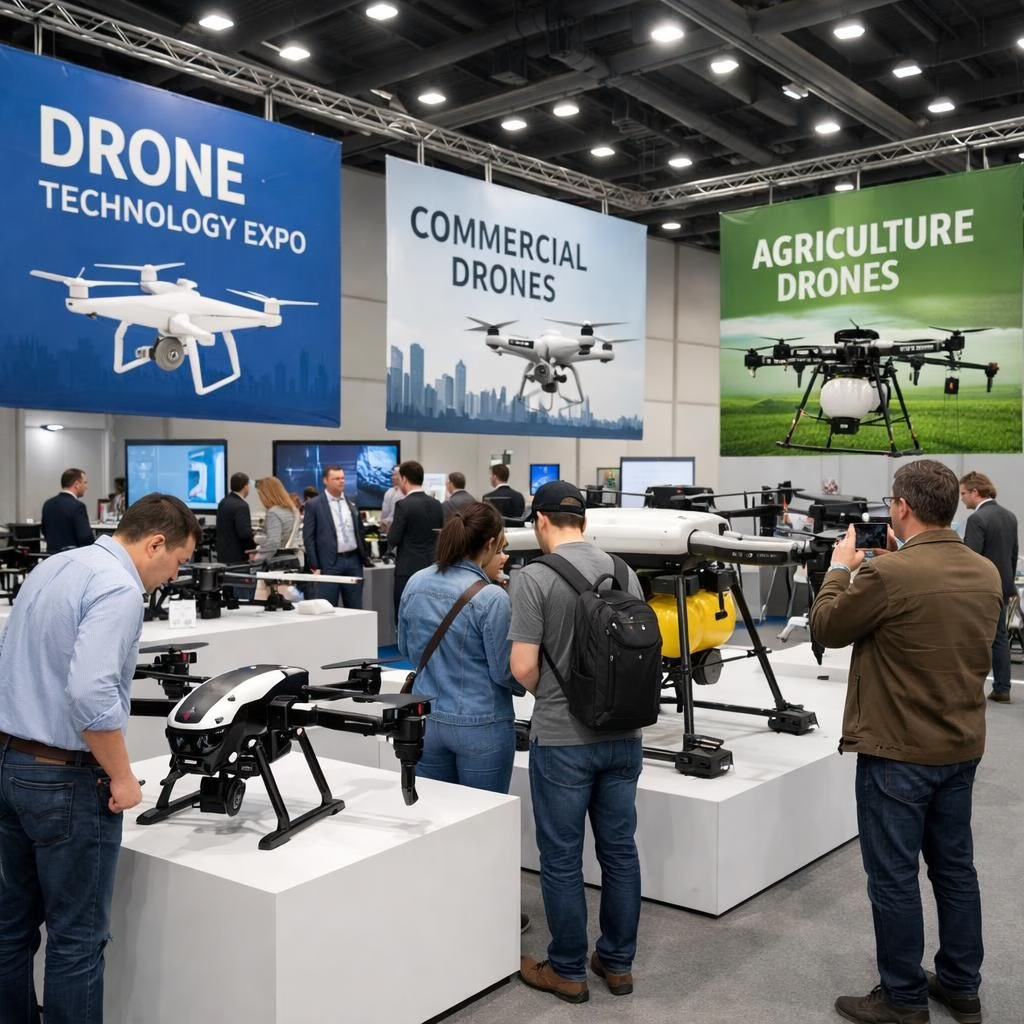
China is accelerating development in drone technology as new innovations highlight the sector’s growing global importance. The scene is not science fiction but evidence on the factory floor, where drones roll off assembly lines into fields, city streets, and live broadcasts. This isn’t a niche hobby; it’s a sprawling ecosystem built around smarter flight control, AI navigation, and energy efficiency — all fueled by the belief that drone technology can multiply productivity and open new markets. In short, China is threading the needle between innovation and export growth with a quiet swagger that makes investors nod and competitors blink in a polite round of amazement.
At the 139th China Import and Export Fair in Guangzhou, two dedicated zones welcome a spectrum of devices, from commercial drones to agricultural sprayers. The arrangement isn’t just about glitzy gadgets; it’s a strategic showcase designed to connect China manufacturers with international buyers and to demonstrate the country’s readiness to scale high-tech exports. The zones group together everything from aerial photography drones to robust spraying systems, highlighting a push to consolidate capabilities under one well-lit roof. CGTN noted that the fair’s layout signals a broader commitment to turning research into road-tested products, and Reuters has underscored that demand for unmanned aerial systems is rising across industries that value precision, speed, and data. This is not a one-off show; it is a deliberate step in a plan to make drone technology a regular fare on the global market menu.
drone technology spotlight at Guangzhou 139th fair
The tech core on display includes sophisticated flight control systems, more reliable communications, precise navigation, and artificial intelligence-based obstacle avoidance. Attendees can also see new energy power systems aimed at increasing endurance and reducing operational costs. In practical terms, these advances translate into drones that can fly longer, navigate complex environments, and make better decisions without constant human input. The emphasis on integration—flight control, AI, and power management—speaks to an industry moving toward turnkey solutions rather than modular experiments. The fair’s organizers expect this convergence to boost confidence among buyers who need reliable performance in logistics, inspection, surveying, and media production. For observers, this is a clear signal that drone technology is becoming a mainstream industrial asset in its own right, not a novelty for hobbyists or niche operators alone.
Real-world applications are already multiplying across sectors. Tourism and live broadcasting lean on consumer models that deliver high-quality imagery in real time, while emergency response teams rely on rugged platforms capable of rapid deployment. In agriculture, drones equipped for precision spraying, seeding, and fertilization promise to raise yields and cut labor costs—especially in challenging terrains where humans find access arduous. CGTN reports that these scenarios aren’t theoretical fantasies; they are early adopters validating the business case for large-scale drone deployment. As a result, the fair becomes a living laboratory where core drone technology meets practical outcomes, and where the line between demonstration and deployment grows increasingly blurry.
The Guangzhou event is also a reminder of China’s ambitions to broaden its export footprint in the high-tech sector. The fair runs in three phases through May 5, reinforcing a steady cadence of product introductions, negotiations, and matchmaking. Reportage from Reuters confirms that China is actively expanding its high-tech exports, with drones playing a starring role in the country’s strategy to diversify beyond traditional manufacturing. The messaging is consistent: invest in R&D, wrap capabilities in export-ready packaging, and cultivate international partnerships that can sustain growth across cycles of demand. This is less about a single blockbuster product and more about a sustainable portfolio of drone technology offerings that can adapt to different markets and regulatory landscapes. In other words, China is not merely selling drones; it is selling integrated solutions that combine software, sensors, power systems, and service models—an approach that many competitors will need to study closely.
drone technology fuels China export ambitions in 2026
Looking ahead, the fair’s impact extends beyond immediate sales. It signals a holistic push to strengthen domestic capabilities while projecting confidence abroad. The emphasis on new energy payloads and AI-enabled autonomy aligns with global trends toward greener, smarter, safer operations. For policymakers and industry leaders, the objective is clear: maintain momentum in drone technology, ensure supply chains remain resilient, and offer attractive, predictable packages to international buyers. This triad—drone technology innovation, reliability, and export-readiness—helps explain why China remains a leading player in the crowded global drone market. It is not just about equipment; it is about the ecosystems that support ongoing development, regulatory alignment, and post-sale service networks that keep customers returning year after year.
Beyond the numbers, the tone at Guangzhou is practical and optimistic. There’s recognition that drone technology can drive productivity, reduce labor demands, and increase safety in a range of operations from agriculture to infrastructure inspection. The zones’ emphasis on a broad product spectrum—economy-focused models for emerging markets alongside premium platforms for critical missions—suggests a deliberate strategy to meet diverse budgets and use cases. In a world where drones are increasingly ubiquitous, the ability to offer adaptable, scalable, and compliant solutions could prove just as important as raw performance metrics.
As the industry gathers momentum, it’s worth noting that the real value may lie in the partnerships formed during this fair. Manufacturers, suppliers, and buyers who establish trust now are likely to reap the benefits as the market grows more complex and more interconnected. The event underscores a simple truth: when you pair cutting-edge drone technology with a robust export framework, you don’t just sell hardware—you seed an ecosystem that can sustain growth through cycles of technology refresh, regulatory change, and evolving consumer expectations.
We invite you to share your thoughts in the comments below. Your insights help shape the conversation about how drone technology and China will continue to influence the global market in 2026 and beyond.
Original article attribution and thanks: Special thanks to CGTN for the foundational reporting on the Guangzhou fair and to Reuters for contextualizing global demand. Original sources: CGTN and Reuters.
Internal and external resources
- Rare earth elements context — our analysis of critical materials in high-tech exports.
FAQ
- What does the Guangzhou fair indicate about drone technology adoption? It signals a shift from niche, hobbyist use to broad industrial deployment, with turnkey solutions and export-ready packages gaining traction.
- How is China leveraging drone technology for exports? By bundling core hardware with software, services, and compliance-ready workflows to meet diverse markets and regulatory landscapes.
- Which sectors are seeing the most drone adoption? Agriculture, logistics, inspection, media production, and emergency response are among the fastest-growing uses.
- What should buyers watch for in 2026? Durable supply chains, robust post-sale support, and technologies that combine AI autonomy with energy-efficient power systems.
References
- CGTN: CGTN
- Reuters: Reuters
- ICAO drone operations: ICAO Drone Operations
- FAA UAS information: FAA UAS
- Original source linkback: https://www.dagens.com/technology/china-pushes-forward-with-new-advances-in-drone-technology