

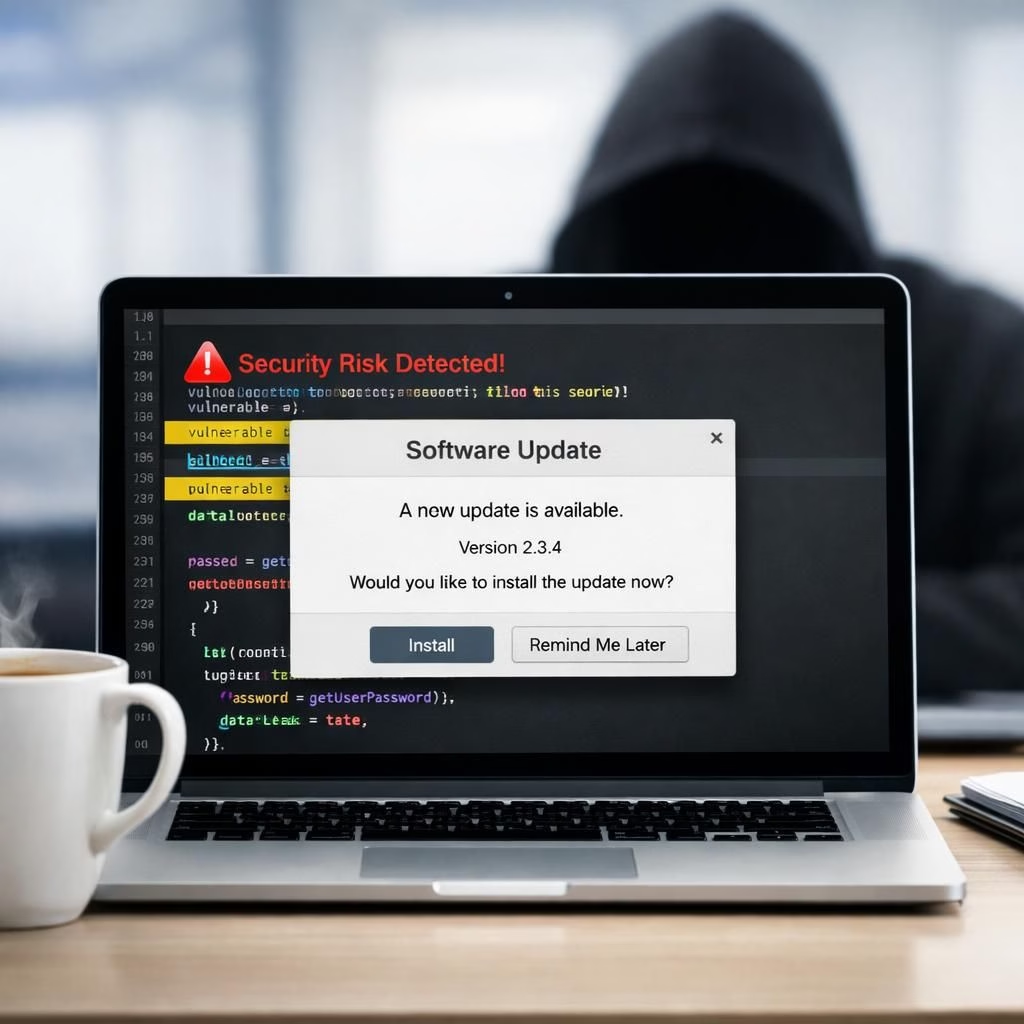
In the world of cybersecurity, a north-korea linked breach hits Axios’s back-end software. Google reports hackers manipulated a recent Axios update to inject malicious code. The goal: expose login credentials and enable more data theft. The chain shows how trust travels with software and updates. A routine patch became a gateway. It reminds us that code is only as trustworthy as its supply chain.
cybersecurity lessons from Axios breach
The incident is a textbook supply-chain attack. Attackers didn’t break into Axios’s servers with flashy exploits. They exploited the patch path to reach users and inserted malicious code during shipment. The result is a leak that travels with an update, not a stand-alone intrusion, and for cybersecurity teams, review provenance and signatures, testing patches before production.
north-korea angle: crypto risk and funding implications
The breach has been linked to a group known for targeting the crypto sector. The U.S. government notes that these activities fund north-korea weapons programs. This context matters for analysts tracking north-korea campaigns. It reframes the event from a mere bug to part of a broader ecosystem where money, power, and technology intersect. When a crypto-focused attacker is involved, the stakes rise for exchanges, wallets, and users who trust that patches stay clean. It’s not just about code; it’s about the financial and geopolitical consequences that ripple outward.
cybersecurity: practical defenses for teams and individuals
What should be done next is concrete. First, elevate supply-chain risk management. Treat vendor assessments, code provenance, and build-signing as ongoing practices, not box-ticking tasks. Use reproducible builds and runtime protections to catch odd behavior after deployment. Second, implement robust authentication and least privilege to reduce the impact of a compromised update. Third, improve incident response so your team can detect, contain, and recover quickly. For individuals, enable multi-factor authentication, update devices promptly, and stay alert for unusual login activity. In practice, cybersecurity is a team sport that rewards proactive checks and rapid learning from near-misses.
As of 2026, supply-chain threats remain a top concern for digital safety. The Axios case illustrates how routine maintenance can become a risk vector. The path forward is collaborative: better controls, clearer reporting, and faster remediation. We need stronger transparency from vendors, more rigorous testing, and smarter monitoring. The aim isn’t fear; it’s resilience. When patches come through, organizations should be ready to verify, validate, and communicate clearly what changed and why it matters.
For readers, the practical takeaway is simple: treat every update as a potential entry point. Make integrity checks part of the daily routine. Sign and verify patches, monitor for unusual behavior after deployment, and keep credentials rotating whenever suspicious activity appears. In crypto and fintech, trust is the currency; every breach that originates in the supply chain erodes that trust. The antidote is robust governance, rapid response, and a culture of security-minded skepticism that still lets teams ship value quickly.
Original article attribution: Axios — thank you for the original reporting that inspired this post and helped shed light on how supply chains can twist in unexpected ways.
Want to share your thoughts? Please post them in the comments below so we can discuss practical steps your teams are taking to harden updates, verify integrity, and protect login credentials in 2026 and beyond.
Further reading
- 6 signs the AI race just entered a new phase
- Apple’s passport-based Digital ID lands on iPhone and Apple Watch
References
- CISA — Supply chain risk management
- NIST — Supply chain risk management
- Original source (DevDiscourse) article