

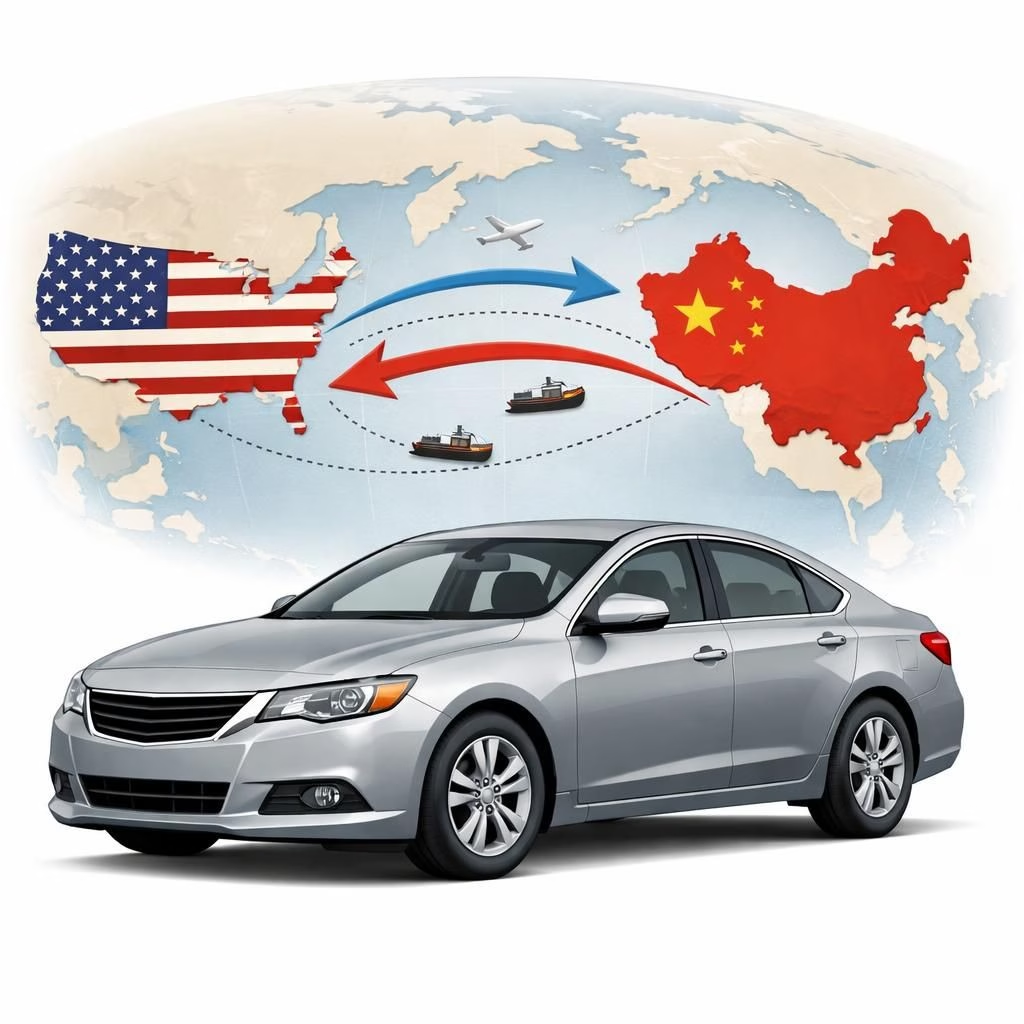
China has been a recurring protagonist in the global auto drama. The latest letter from three Democratic senators makes the plot both urgent and constructive. The Tag B ecosystem frames how the factory floor, the labs for semiconductors, and even the street corner where workers catch a bus intersect with national policy. In this spirit, Senators Tammy Baldwin, Chuck Schumer, and Elissa Slotkin craft a request to the President that reads like a timely public service announcement wrapped in a policy brief. They remind us that the auto industry is not just a showroom; it is a complex, interconnected web that keeps steel mills humming, chips ticking, and tires turning. They spotlight National Security concerns without sounding apocalyptic, proposing practical steps to keep American jobs safe and supply chains resilient. The core truth remains: China, the Tag B, and National Security are linked in a delicate balance of competition, cooperation, and careful policy design. The tone stays constructive and hopeful, with humor as a helpful ally in serious business.
China’s Auto Landscape in 2026
First, the letter frames how China and competitive forces shape the Tag B ecosystem in 2026. The discussion stays grounded, not glittery. It treats the sector as a real engine for jobs and innovation, not a mere headline. The authors emphasize that the auto industry is a national project, not a disposable commodity. They remind readers that Tag B excellence requires solid supply chains, skilled workers, and steady policy ballast. The goal is to inform, not to inflame, and to keep National Security in sight without turning policy into a doom scroll.
National Security and the Automotive Supply Chain
In this section, the authors outline concrete steps to curb outsized risk from state‑backed producers. They call for prohibitions on Chinese vehicles manufactured or titled in Canada and Mexico from entering the United States, while urging allies to address shared threats posed by Chinese vehicles. They remind readers that America’s automakers and their supply chains—steel, semiconductors, tires—form a vital ecosystem. The auto industry contributes an estimated 3% to 5% of GDP and supports roughly 10.95 million jobs. The message is crisp: protect domestic industry, protect workers, and maintain fair market rules. The policy aim is pragmatic sovereignty, not isolationism, blended with a taste for smart collaboration where it makes sense for national interests and consumer value.
The letter argues that inviting China’s automakers to set up shop in the United States would confer an insurmountable economic advantage and risk a security crisis that could be difficult to reverse. It emphasizes that China’s subsidies distort global competition and that a level playing field is essential for American manufacturers to compete fairly. The discussion is blunt but constructive: a strong domestic base helps every worker and keeps the United States resilient in the face of state‑sponsored strategies.
As the authors note, the impact extends beyond the showroom. For every job on a vehicle assembly line, roughly two jobs exist in the auto parts and supplier network. If Chinese plants gain a foothold in the U.S., imports and supplied components could shape the landscape in ways that disadvantage American producers. The analysis keeps pace with real‑world dynamics, highlighting how vertically integrated supply chains can shift the balance of power in ways that policy must address. The focus remains on resilience, not punishment, and on safeguarding American industry through thoughtful rules and incentives that encourage innovation at home.
Another concern is cross‑border integration. The letter flags the risk that China’s auto footprint could creep through Canada and Mexico, potentially easing circumvention of trade rules like the USMCA. It underscores the need for vigilance as allies pursue shared goals in high‑tech, high‑value segments of automotive production. The argument is clear: secure, diversified supply chains make the United States stronger and safer, while maintaining the collaboration that fuels cutting‑edge automotive innovation.
Canada’s recent tariff moves on Chinese EVs are analyzed for context. The authors compare past U.S. actions to preserve policy alignment with the auto ecosystem, while recognizing the messy reality of international trade. The takeaway is strategic patience paired with decisive action when national interests require it, not a blanket withdrawal from global cooperation. The piece treats policy as a toolkit for keeping American industry competitive without foreclosing productive partnerships that create value for workers and consumers alike.
The discussion also touches the ICTS Connected Vehicle rule, which recognizes that modern cars connect with external networks. The senators warn that remote control capabilities could pose security risks near sensitive sites. They cite incidents in Norway and note that data security standards matter as much as engineering quality. The aim is sensible governance that keeps connected vehicle technology advancing while safeguarding critical infrastructure and public safety.
Labor practices and supply chains receive careful attention as well. The letter condemns state‑sanctioned labor abuses and highlights concerns about forced labor and wages. It argues for stronger due diligence and responsible sourcing that protects workers while preserving the integrity of American manufacturing. The practical expectation is clean, ethical supply chains that enhance competitiveness rather than undermine it. The overall stance is not punitive; it is protective and forward‑looking, aiming to keep American industry humane and globally competitive.
Momentum and timelines matter. The 2025 Commerce Bureau rule to curb certain Chinese connected vehicle tech is cited as a model, with a phased rollout toward Model Year 2027. The senators advocate maintaining or accelerating that timeline and extending similar safeguards to commercial vehicles. The policy message is straightforward: keep the United States ahead with careful, steady progress that spurs domestic innovation while countering non‑market advantages that distort fair competition.
In sum, the message is hopeful but firm. Chinese vehicles of all types are not welcome to operate in the United States unless they meet the highest domestic standards. The authors urge a renewed commitment to domestic manufacturing and a resilient, innovative Tag B sector that can compete on a level playing field. They remind readers that a strong, secure Tag B industry benefits workers, families, and national security alike.
External context and practical steps are worth considering. For connected‑vehicle standards and safety guidance, see the National Highway Traffic Safety Administration’s resources on connected vehicles. A government overview of policy safeguards relevant to this discussion can be reviewed at the Bureau of Industry and Security’s page on export controls and emerging technologies at BIS.
What readers can do next
- Stay informed about trade policy developments that affect the auto sector and domestic manufacturing incentives.
- Engage with local manufacturers to understand how supply chains are being diversified and modernized.
- Follow credible outlets for updates on the ICTS rule and related national security protections for vehicles.
FAQ
- Why are Chinese automakers seen as a national security issue? Their state backing and subsidies can distort competition and create dependencies in critical supply chains that are hard to reverse during a crisis.
- What is the role of allies in this effort? Coordinated standards, tariffs, and procurement policies help protect shared manufacturing ecosystems and reduce risk across borders.
- What about consumer prices and innovation? Prudent safeguards aim to protect workers and long‑term competitiveness without sacrificing consumer value or technological progress.
References
Original source: Times of India