

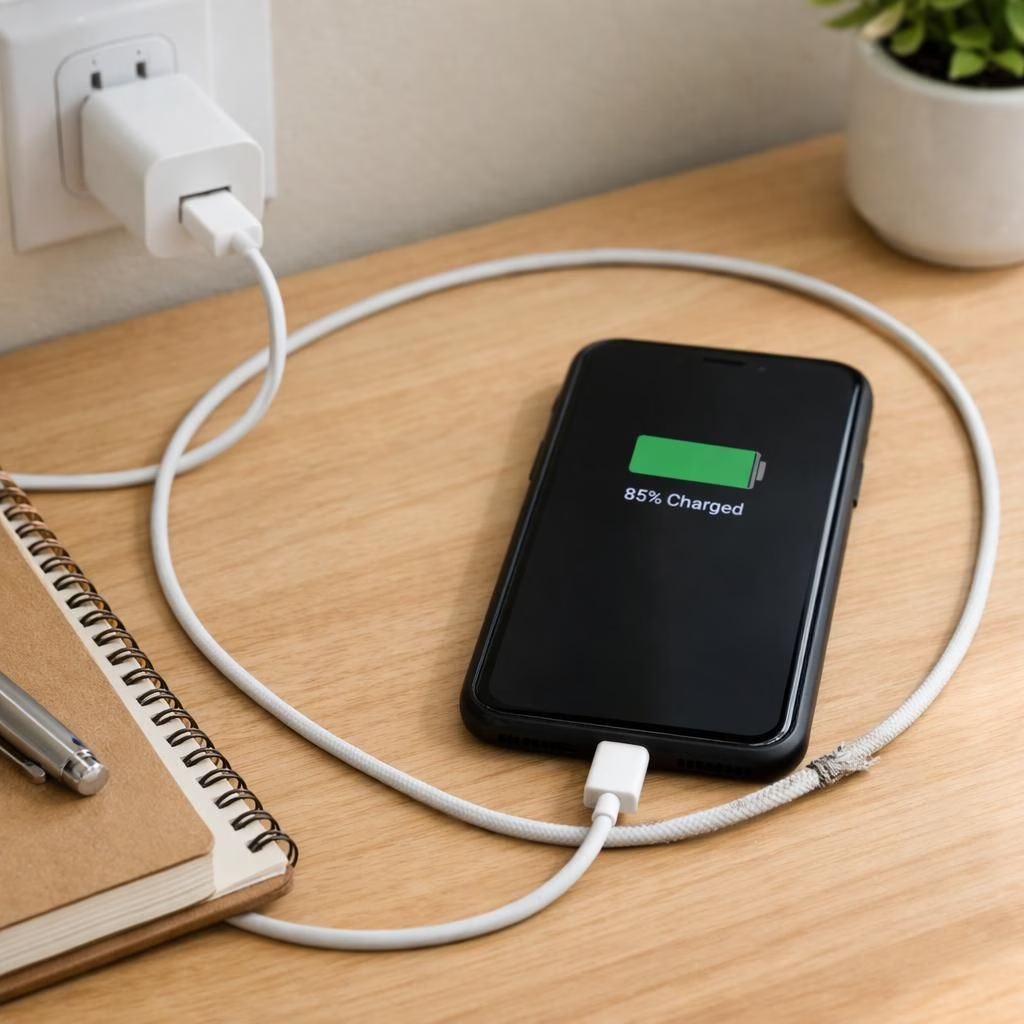
As you read this, your day-to-day rituals around charging devices reveal a truth we rarely admit: charging-cables suffer from our bad-habits. We yank, twist, coil, shove, and bury them under cushions, treating them as expendable accessories rather than everyday tools. In 2026, the old excuses still apply: cheap plastic, flimsy connectors, and the illusion that cables will endure anything. But the truth is simpler and kinder: we can be better cable caretakers. This article looks at why bad-habits shorten cable life and how you can flip the script with small, practical steps; you’ll save money, frustration, and a few arguments with your phone’s battery gauge.
Most damage comes not from a dramatic snap but from a steady drip of small mistakes. A single rough yank can loosen the solder, a stubborn bend can crack the shielding, and years of sitting in a bag or drawer can grind the protective jacket into thin, vulnerable plastic. The good news is that these are habits we can change with minimal effort. Treat each charging session as a tiny ritual of respect for the workhorse you rely on every day. The goal is simple: fewer frays, less downtime, and a longer relationship with your charging-cables.
charging-cables: Smart habits for a longer life
Start with the bend: never curl the cable into a sharp radius. Your cables deserve gentle curves, not corkscrews. When you unplug, grip the connector, not the cord near the plug. It reduces stress at the most fragile point and prevents a slow, sneaky pull-apart. If you must coil, do it loosely and store it in a way that avoids kinks. A small cable holder or clip can keep things tidy without squeezing the life out of the sheath.
Quality matters more than you think. A solid, well-made cable with thicker jackets and sturdy connectors costs less in the long run than the cheap option that frays in a season. Look for official or certified cables that meet safety standards. A good cable is not a luxury; it is a long-term investment in reliability and safety for your devices. If you travel, consider a compact, braided model. It resists wear and looks nicer on a desk than a limp, pale plastic snake.
Heat is the silent enemy. Don’t leave a charging cable under a seat, in a hot car, or wrapped around a phone that’s actively charging on a radiator. Excess heat speeds insulation fatigue and weakens shielding. A simple habit: place the device on a cool, flat surface while charging, and keep cords away from heat sources. You’ll notice fewer temperature alarms and fewer headaches.
Protection is cheap insurance. A small protective sleeve or a bit of heat-shrink tubing at the ends can shield the most vulnerable spots. If you’re a pet owner, train your furry friend to avoid chewing the cords, or use a pet-safe barrier. If you’re a commuter, a compact cable clip can keep the cord tethered to your bag or desk, preventing the end from taking the brunt of every move you make. Small steps add up to substantial durability for your charging-cables.
bad-habits to kick for a sturdier charging-cables future
Letting the cable dangle while you work or watch videos is a bad-habit that invites a slow bend to form at the connector. When you pull to move your phone, you yank the joint that holds everything together. Break that pattern: treat the end as the point of contact, not a stress point you ignore. A gentle tug when removing your device, followed by a store-and-go routine, keeps the cable healthy and happy.
Another common misstep is using the cable as a substitute for a repair tool. Don’t twist, twist, twist or twist again in the same spot hoping for magic. If you notice resistance or a wobble at the plug, stop using it. It’s telling you something is wrong. Replace the cable or seek a certified repair. The small cost now saves bigger headaches later with a dead connector and a sleepless night.
Cheap cables tempt fate in crowded spaces: bags, backpacks, and seat pockets are all test benches for wear. If your cable travels with you, give it a little space. Loosen the tangle, tuck the ends away, and avoid crunchy noises from the shielding when you move. The result is a cable that still feels flexible after months of daily use.
When warmth enters the scene, warn yourself. Hot car interiors and sunlit desks can accelerate aging. Always try to charge in a climate-controlled spot. If you must use wireless charging, be mindful of the case thickness; thick cases can cause extra heat and degrade performance over time. Small, consistent choices beat big, dramatic fails every time.
Finally, resist the urge to treat cables as decorative accents. A tidy desk, a dedicated charging station, and a single, reliable cable for each device reduce the temptation to mix and match. A little organization yields fewer mis-steps and a calmer workflow. Your future self will thank you for the calm, the longevity, and the fewer frantic trips to the tech shop for replacements.
In 2026, these habits are easy to adopt. They require nothing more than a bit of mindfulness and a few smart accessories. The payoff is clear: fewer frays, less frustration, and a reliable lifeline for your devices when you need it most. Your charging-cables will thank you, and so will your devices’ batteries. If you’ve slipped into bad-habits, reset now with a simple, repeatable routine.
Original article: BBC — Your bad habits are destroying your charging cables. Thank you to BBC for the original reporting: BBC News.