

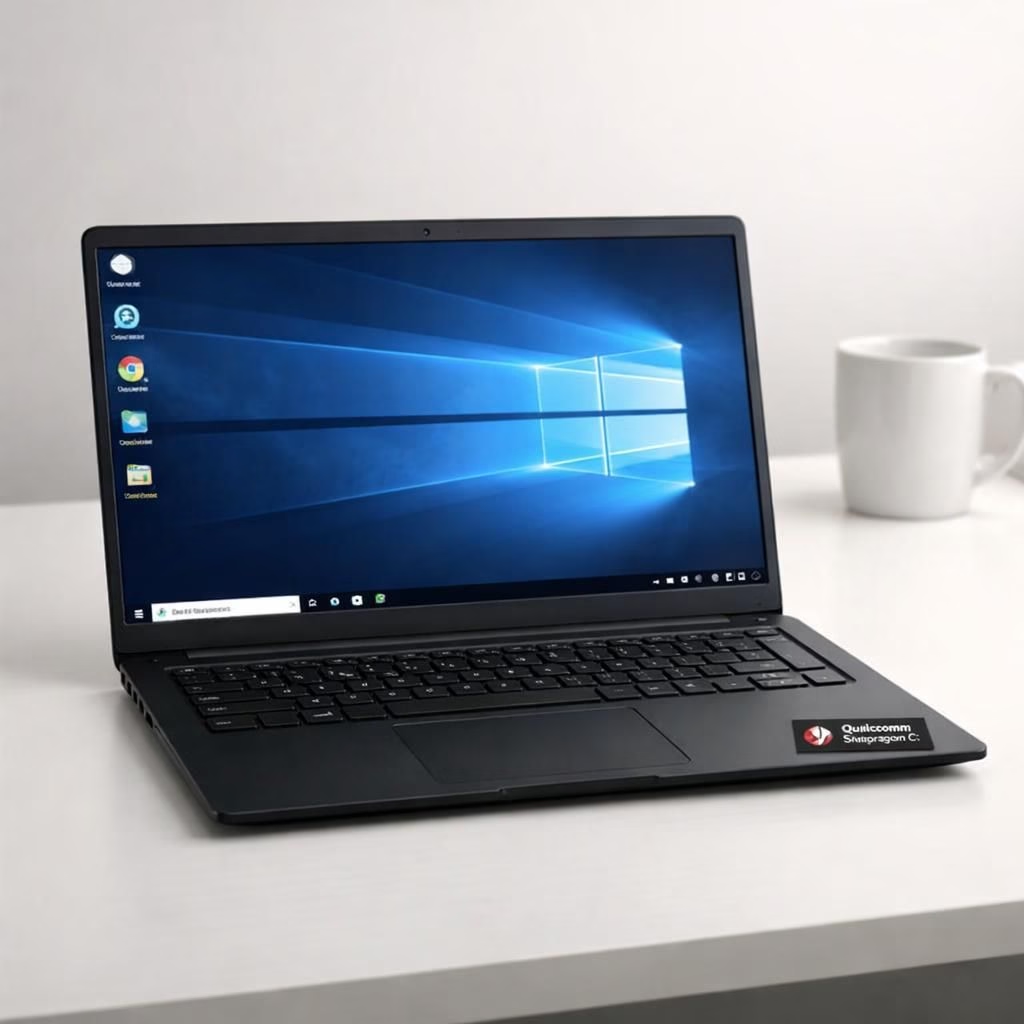
budget laptops have danced through cycles of price drops and RAM storms, and the latest season arrives with a twist from Qualcomm. The company this year introduced Qualcomm Snapdragon C, a budget laptop platform pitched as the spark that could finally make entry-level Windows machines feel like real computers. The pitch is simple and ambitious: a responsive system, lag-free browsing, smooth video calls, streaming, and multitasking. The bigger promise is a price tag that could dip toward $300 as the year unfolds.
budget laptops: The New Platform and Tradeoffs
The platform isn’t a magic wand. Qualcomm isn’t sprinkling fairy dust on a future MacBook Neo-sized dream. Instead, Qualcomm Snapdragon C uses the Kryo cores from older phones and Chromebooks, not the newer Oryon cores that power its premium chips. The decision is all about cost discipline, fan noise, and battery life, with a nod to basic productivity and online play. In every tier, Qualcomm Snapdragon C promises an on-device neural processing unit, or NPU, to handle AI tasks locally. That means tasks like on-device photo edits or small language tasks can run without a cloud round trip, which is nice for privacy and speed. But Qualcomm is frank: this budget line won’t meet Microsoft Copilot Plus PC requirements for the full AI tool suite right now. That caveat matters for power users, but it keeps the Snapdragon C family practical for everyday use.
Acer, HP, and Lenovo are lined up as the first partners. Acer is unveiling a model today: the Acer Aspire Go 15 AG15-Q31P. It’s a 15.6-inch, 1080p laptop with up to 8GB of RAM, 512GB of storage, two full-function USB-C ports, a USB-A port, HDMI 1.4, Wi-Fi 6E, a 1080p webcam, and a 53Wh battery. The rest of the specs, including exact chip configurations and price, weren’t fully disclosed yet. HP and Lenovo likewise held back details for launch day, but they’re expected to ship in 2026. Qualcomm isn’t sharing all the Qualcomm Snapdragon C platform details yet either, promising more clarity in a few months as more laptops reach shelves.
Qualcomm Snapdragon C: What it means for buyers
What this budget strategy changes is the math of getting more for less. The Qualcomm Snapdragon C platform isn’t chasing the premium experience; it’s chasing ubiquity. You’ll get a system that feels snappy for everyday tasks, but you should temper expectations for sustained heavy multitasking or demanding creative workloads. The on-device AI niceties are real, but they aren’t a silver bullet for every Copilot-style workflow. For many buyers, the real win will be long battery life and a surprisingly quiet chassis. In other words, a laptop that stays cool, lasts a workday and does not irritate you with fan noise—quite the selling point for students and light professionals.
As with any budget entry, there will be compromises. Some configurations may limit RAM to 8GB or storage to 512GB in the base tier, and performance will hinge on the chosen Kryo-based CPU core set. Those who want buttery-smooth video editing or heavy gaming should temper expectations. For note-taking, web browsing, streaming, and light coding, the experience should feel credible and practical. The price target is what makes this interesting: crossing the $300 line can broaden the audience for Windows laptops that don’t feel like glorified Chromebooks in disguise.
To be fair, the market is hungry for affordable Windows machines, and there’s always a risk of corner-cutting. Yet Qualcomm Snapdragon C is framing Snapdragon C as a legitimate platform with a roadmap, not a one-off. The team is clearly signaling that more models with evolving specs will appear, and some might bring more memory, better displays, or improved connectivity. The pace of updates will matter for reliability and software compatibility, so buyers should monitor firmware and driver updates as they shop.
For buyers who want the most value, the practical take is straightforward: prioritize RAM up to 8GB if you can, check the storage, and look for a display that doesn’t insult your eyes. Also consider battery capacity and the real-world battery life you observe in typical usage—browsing, video calls, office apps, and light multitasking. If the plan is to use Copilot or similar AI tools extensively, budget laptops powered by Qualcomm Snapdragon C may not be the best fit yet, but they can still be very serviceable for the core tasks people perform every day.
budget laptops: Practical buying tips
As the year unfolds, there will be more models to evaluate. Early impressions suggest these machines will ship with Windows 11 or Windows 11-ish experiences tuned for efficiency and cool operation. The absence of the latest Oryon cores might deter enthusiasts chasing raw benchmark scores, but it also keeps the price accessible and the form factor lighter. The real question remains: can a $300 laptop maintain a robust enough experience to justify its place in a student’s backpack or a remote worker’s set of tools?
In the broader picture, the Snapdragon C push is part of a larger trend: companies attempting to extend elasticity of hardware budgets without sacrificing core usability. If the approach pays off, we could see more vendors joining in, with more price-conscious options that still feel modern. That would be a welcome shift for buyers who want a practical, reliable machine that doesn’t demand a mortgage at checkout.
And yes, the future holds potential for upgrades and more advanced models. If the family of budget laptops grows, we might eventually see configurations with more RAM, better displays, and improved AI features—all priced under $400 or $500, still well short of premium-class devices. For now, the first wave is about proving that cost-effective hardware can still deliver the basics well and do so quietly, gracefully, and with decent battery longevity.
All in all, the $300 target is a provocative promise. It’s not a miracle, but it’s a signal: the market recognizes that thousands of users want capable Windows machines without extravagant price tags. If Qualcomm Snapdragon C meets expectations in practice, it could change how people buy laptops for school, travel, or daily work. If Qualcomm Snapdragon C meets your needs, it could be a practical starting point for budget-conscious buyers.
What are your thoughts about budget laptops powered by Qualcomm Snapdragon C? Do you see this as a practical entry point for students and remote workers, or do you fear performance trade-offs? Share your insights in the comments below.
Source and thanks: The Verge’s original coverage on Snapdragon C and the Acer Aspire Go 15 AG15-Q31P. Thank you to The Verge for the original material and the thoughtful reporting that inspired this piece. Original article: The Verge.