

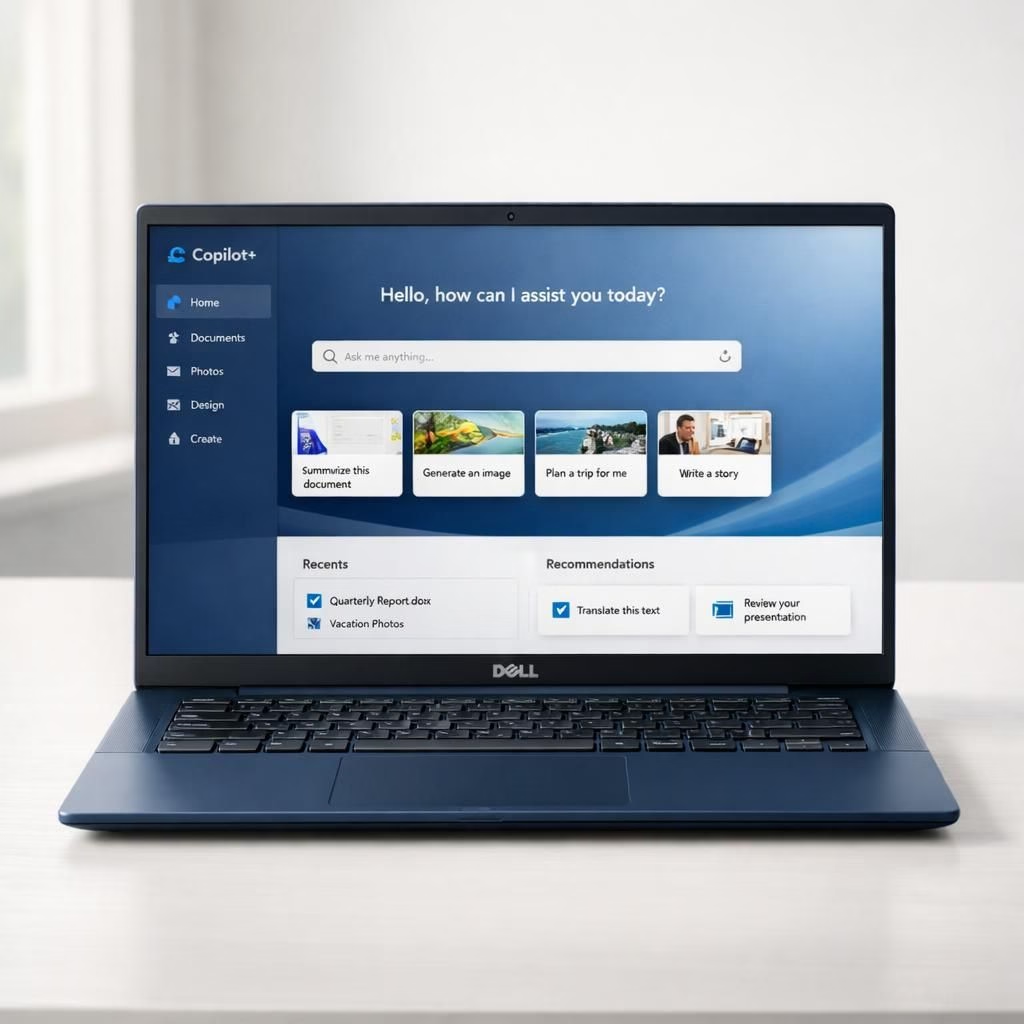
AI and Dell meet mid-range ambition in a bold reboot of the laptop lineup. The maker designed the 14S and 16S for real-world workloads, not showroom demos, and they sit below the revived XPS family but above the ancient Plus lineup in spirit if not in name. After a 2025 brand reshuffle that rattled loyal fans—XPS, budget lines, and a few rebrands—the company walked back its decision at CES 2026, reintroducing the XPS badge while keeping a fresh mid-range backbone. With on-device AI acceleration dubbed Copilot+, these machines offer faster app switching, smarter multitasking, and less lag when you juggle spreadsheets, browser tabs, and video calls. You get a choice of powerful CPUs, robust battery life, and a range of displays, including OLED. All told, these laptops aim to bridge the gap between “workhorse” and “wow” without forcing you to choose between performance and portability.
AI for Everyday Dell Productivity
At the heart of the lineup are two capable paths. Buyers can opt for Intel Core Ultra Series 3 processors, up to Ultra 9 386H, with built-in AI acceleration that Dell says makes multitasking almost twice as snappy as before. If you prefer AMD, the Ryzen AI 400 Series is also in the mix. Both options ship with Windows 11 and are Copilot+ PCs from the maker, complete with dedicated shortcut keys that execute AI tasks on-device. In the chassis, the maker keeps the thermals predictable and the chassis slim, so the machines stay comfortable to carry through a full day. The combination of on-device AI and solid CPUs means you can render, edit, and switch between apps with a confidence you typically reserve for higher-tier machines, but at mid-range prices. In short, the 14S and 16S aim to deliver AI-assisted productivity without rewarding you with sticker shock.
Dell Battery Life in Real-World Use
Display options on the 14S and 16S from Dell are practical without pretending to be a cinema project. The standard FHD+ panels deliver 400 nits of brightness, plenty for most offices and coffee shops. Upgrade paths include QHD+ displays with 120 Hz, 500 nits brightness, and Dolby Vision for color accuracy. For the purists who crave deepest blacks and contrast, OLED panels are available. The OLED option pairs well with on-device AI features; you can preview Copilot+ results or real-time annotations without sacrificing battery life. The laptops offer a pair of colorways, Celestial Blue and Frost Blue, and come with memory configurations of 16GB or 32GB and storage between 512GB and 2TB. The emphasis remains practical: you get crisp visuals for work and streaming, not a display halo that screams logo-candy.
From the maker’s view, battery life is a strong selling point; the 14S promises up to 24 hours of productivity on a single charge and about 18 hours of streaming. The 16S extends streaming life to around 26 hours, with daily tasks dragging the clock to about 14 hours. Weight and build reflect the balance between portability and endurance: the 14S weighs 3.2 pounds, while the 16S weighs about 3.9 pounds. Memory and storage scale from 16GB/512GB to 32GB/2TB, letting you keep large projects local for faster access. In the US, prices start at around $1,270 for the 14S and about $1,320 for the baseline 16S. If you specifically want AMD Ryzen versions, the Ryzen AI 400 Series models will be available later this month. The brand emphasizes reliability and battery longevity, with Copilot+ AI shortcuts designed to reduce repetitive tasks during long work sessions.
These Dell Laptops are built for professionals who value AI-powered efficiency without carrying a brick. They strike a balance between performance, portability, and practical price, which makes them appealing for students, remote workers, and road warriors alike.
In the end, the Laptops show the brand’s willingness to blend on-device AI with sensible specifications in a mid-range package. They’re not trying to out-Chef the XPS line; they’re trying to do the job you actually do every day, with less waiting and more flow. If you want to see how AI can make your daily routines smoother, these machines deserve a closer look.
Linkback attribution: Thank you to the original article for the base material: CES 2026 coverage. Your material helped shape this update, and I appreciate the thoughtful reporting.
Have thoughts? Share them in the comments below. If you found this recap helpful, feel free to share with friends who want a practical mid-range workhorse.
For more on display tech and mid-range laptops, credible sources like CNET’s laptop section offer practical context: CNET – Laptops and Tom’s Guide’s laptop picks: Tom’s Guide – Best Laptops.