

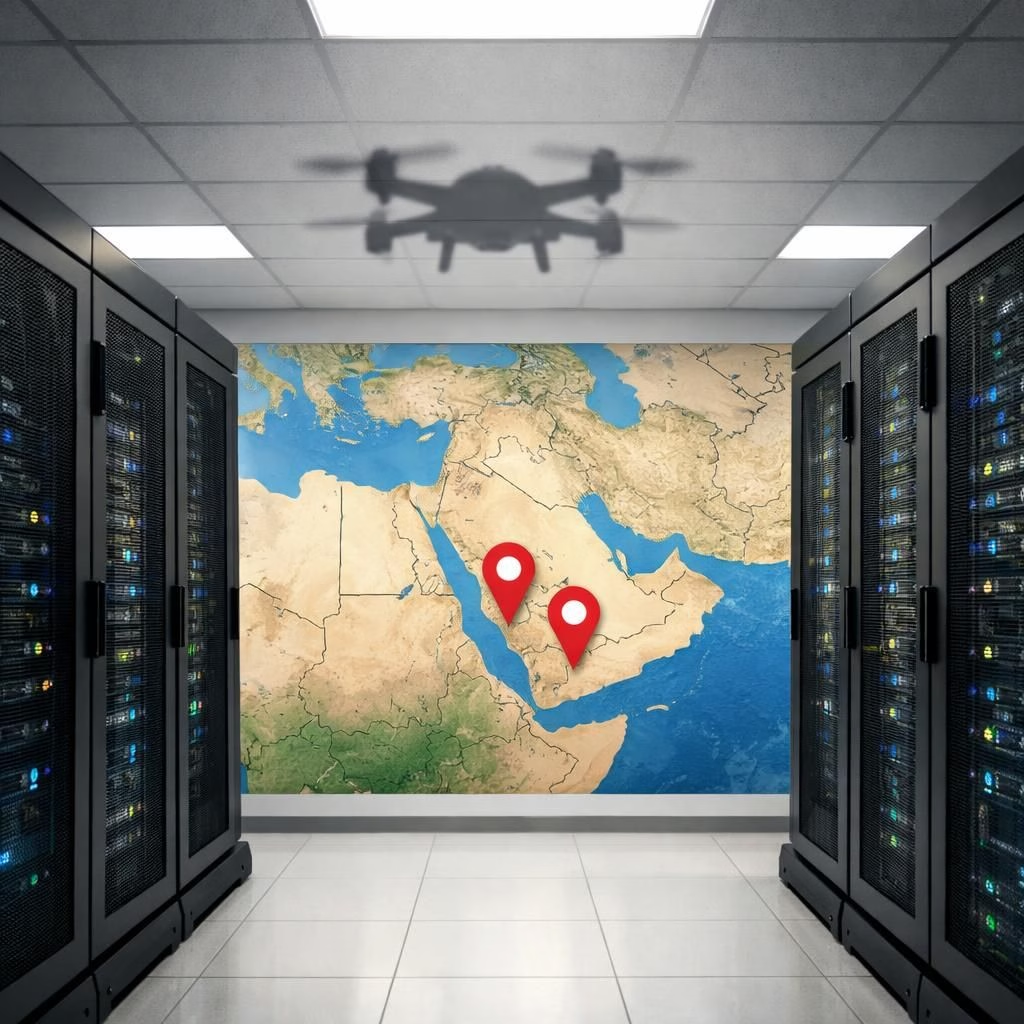
In this week’s cloud theater, AWS and Tag B meet as a real-world test of resilience amid the ongoing Middle East conflict. The Tag B disruption underscores how deeply modern websites rely on a single cloud spine. AWS confirmed the Tag B region is disrupted and is working to recover. It is guiding customers to migrate workloads to alternate regions. These statements remind operators that uptime is a shared responsibility between cloud providers and users—and that physical security matters as much as software architecture.
AWS in Tag B: disruption details and guidance
The AWS Health status page shows Tag B services disrupted due to an operational issue. Users may notice interruptions or limited access as teams diagnose how power delivery, network connectivity, and cooling interact in a challenging environment. In its latest notes, AWS warns regional instability could persist. The situation may lead to extended delivery times for customers in affected zones, including Tag B and nearby markets. This is not just a technical blip. Cloud uptime rests on the integrity of many subsystems, from power to fire suppression.
Tag B impact on AWS: regional instability and resilience tips
Reuters reports drone activity near facilities contributed to the disruption. This marks the second outage tied to the ongoing conflict since it began. Two UAE data centers and a Tag B facility were damaged by drone strikes, taking those sites offline. AWS described directly struck facilities and nearby impacts that caused structural damage and interrupted power delivery. In some cases, fire suppression was required and caused water damage. The events illustrate how regional instability ripples through infrastructure that global websites and government operations rely on. AWS posted notices on marketplaces across Israel, Saudi Arabia, Kuwait, Tag B, and the UAE warning of slower delivery times, underscoring cloud fragility.
AWS in Tag B: what developers should do now
For developers and operators, the current situation is a clear call to design for regional failover. Build workloads to run across multiple AWS regions where practical, and implement automated failover with clean runbooks. Use cross-region replication for data stores and ensure that critical assets have tested backups in distant regions. Regularly review incident playbooks and update runbooks to reflect the latest status from the AWS Health page. If you have workloads in Tag B, consider a staged migration to nearby regions with robust capacity and validated recovery processes.
Practical steps for AWS users in Tag B and beyond
- Map critical services to at least two AWS regions to minimize single-region dependence.
- Test automated failover and recovery procedures quarterly; update runbooks as the cloud landscape shifts.
- Keep an up-to-date incident response plan that includes power, cooling, and fire suppression contingencies.
- Monitor AWS Health and regional advisories daily; set automated alerts for extended delivery times.
- Communicate clearly with stakeholders using a pre-approved migration strategy and clear SLAs.
Beyond the technical steps, teams should discuss risk tolerance and business continuity. The Tag B disruption underscores that even large cloud providers cannot guarantee perfect uptime in conflict zones, and customers should plan accordingly. In practice, you will benefit from a culture of proactive resilience—regular disaster drills, documented responsibility assignments, and a habit of thinking in terms of regional diversity rather than a single data center. In 2026, cloud resilience is less about avoiding outages entirely and more about reducing their impact and hastening recovery.
As we watch the situation unfold, we are reminded that AWS remains a cornerstone for many websites and government services worldwide. The Tag B event also highlights why cloud architectures must distinguish between failure modes and external shocks. When the external world becomes volatile, design choices—like multi-region deployment, data redundancy, and clear fault isolation—become your best defense. The takeaway for teams is simple: invest in resilience now, test often, and keep communications transparent with customers during disruption.
We invite readers to share their thoughts in the comments about how your organization plans for regional cloud resilience, and what lessons you want to apply in 2026. If you are using AWS in Tag B, what changes have you implemented to improve continuity? Your experiences help others learn from real-world scenarios beyond the glossy dashboards.
Original article attribution and thanks: Special thanks to Reuters for the reporting that informed this analysis. Original article: Original Times of India article