

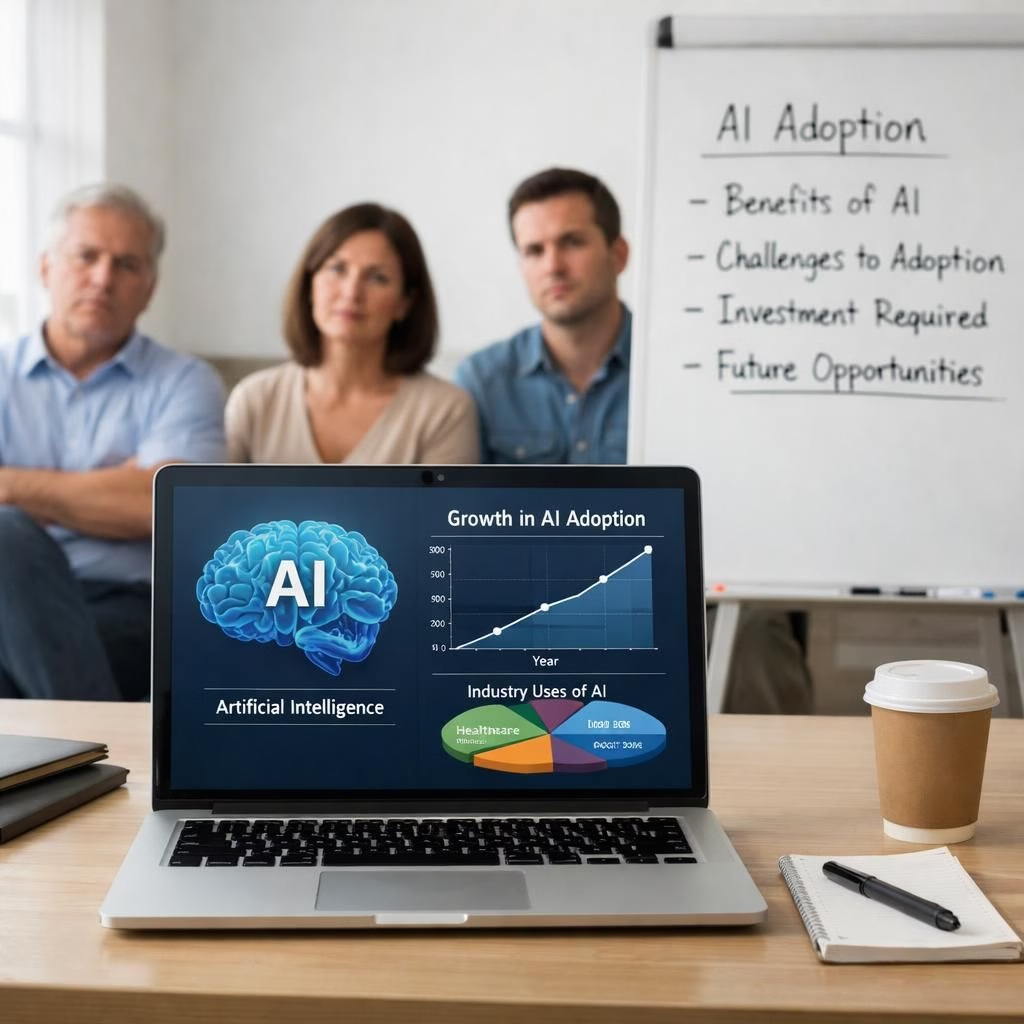
People pitched Artificial Intelligence as the electricity of our era, promising to power decisions, jobs, and even jokes. Yet Tech leaders are learning the public mood is more meh than wow, even in 2026. The hype machine hums, dashboards blink, and people sip skepticism with quiet curiosity.
Artificial Intelligence: A tempered reading for 2026
Historically, new tech claims a transformative leap. The radio promised perpetual peace; television promised empathy. The public is wary this time, and the crowd isn’t signing up on day one. Patience, not bright optimism, may be the quiet driver of change.
Public nerves show up in surveys. You.gov found that more than a third feared Artificial Intelligence could end human life on earth. Many would not pay extra to add Artificial Intelligence features to their devices. The National Bureau of Economic Research found that 80 percent of firms report no noticeable impact on productivity or employment yet.
Tech leaders and the slow burn of hype
Sam Altman admitted there is more resistance to diffusion than he expected. He said at an AI conference, ‘Looking at what’s possible, it does feel sort of surprisingly slow.’ Jensen Huang echoed a similar worry: the battle of narratives might be won by critics, even if the tech remains compelling in labs.
For Tech leaders, the challenge is to translate lab progress into everyday usefulness and durable value. The path to scale looks less like a single breakthrough and more like a sequence of small, verifiable gains across industries.
So what does this mean for 2026? The realistic forecast includes small, steady gains. Across industries, Artificial Intelligence helps with routine tasks, supports decision-making, and enables new services, but it does not instantly rewrite every payroll slip or coffee order.
Artificial Intelligence: Real gains, real limits
- Small wins add up: automation of repetitive tasks saves time and reduces errors.
- Decision support, not decision maker: humans stay in the loop for critical choices.
- Better tools for research: faster data synthesis without sacrificing nuance.
- Cautious governance and privacy considerations: ethics and policy matter more than ever.
- Transparent messaging from Tech leaders: clarity beats hype in the long run.
What to watch in 2026 includes education, workforce training, and thoughtful regulatory frameworks. Educators and workers will see Artificial Intelligence-powered learning tools that tailor materials and pace to individual needs, a change that can widen access to opportunity. Businesses will experiment with pilot programs, measure real impact, and share learnings. Everyday users will notice small conveniences—quick summaries, smarter search, and helpful reminders—that improve life without stealing the show from people.
Keep in mind: this is not a doom-and-gloom prophecy. It is a patient, practical path that rewards steady progress. The best case blends curiosity with caution, hype with healthy skepticism, and ambition with good governance. The journey may be incremental, but it can still steer large organizations toward better outcomes.
Linkback attribution: Special thanks to David Streitfeld for the original reporting. See the source here: The New York Times. If you found this summary helpful, I’m grateful for the inspiration and welcome your thoughts.
Have you got thoughts on this AI hype cycle? Share them in the comments below. And if you enjoyed the read, feel free to share this post with friends.
FAQ
- What is the main takeaway about Artificial Intelligence in 2026?
- The pace is slower and more cumulative than flashy; practical gains accumulate across tasks, decision support, and education tools.
- Do Tech leaders control the speed of AI adoption?
- Not entirely; market readiness, governance, and real-world value shape how quickly organizations scale.
- What should individuals expect in daily life?
- Smaller conveniences such as faster search, better summaries, and personalized reminders, without overwhelming users.
- How should policy respond?
- Policies should focus on privacy, accountability, and transparent communication about capabilities and limits.
Conclusion
Artificial Intelligence will likely unfold more through patient, incremental wins than dramatic overnight shifts. The practical path values learning, governance, and careful experimentation. If you’re an employee, manager, or student, look for small, measurable improvements in your daily tasks and upskill accordingly.
References
Original reporting from David Streitfeld in The New York Times: The New York Times.
External sources
- Pew Research Center: Public opinion on artificial intelligence
- MIT Technology Review: Artificial intelligence
- NIST: AI risk management framework