

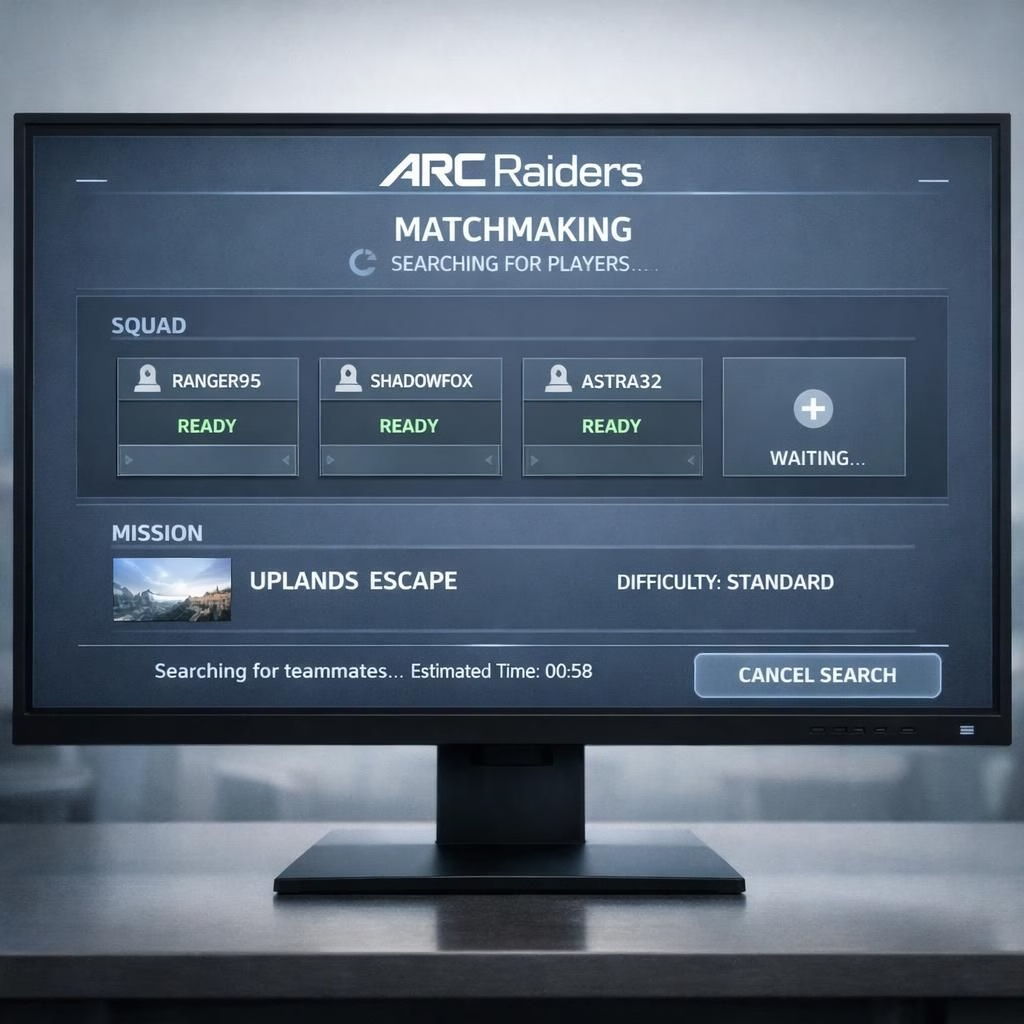
arc-raiders and the matchmaking-system share one stubborn truth: humans are impatient, and robots excel at fairness. In this friendly analysis, we explore how the system pairs players. What metrics does it use, and why does latency feel like a sampling of fate? The goal isn’t to bless or curse a queue. It’s to give you a clearer sense of what’s happening behind the scenes in 2026.
arc-raiders: The Matching Logic
In arc-raiders, the core idea is to assemble teams with roughly equal skill, compatible roles, and similar latency. The system assigns a numerical rating to players, tracks recent wins and losses, and sometimes tests several candidate matches before locking in a battle. It’s not magic; it’s a careful blend of statistics, heuristics, and a dash of game-specific flavor. The result should feel fair and readable, so you can focus on the strategy rather than the suspense meter.
The arc-raiders matching logic also considers party size. Solo queue has a different rhythm than a four-person squad. The system aims to avoid a situation where a group with a heavy advantage stomps a lone player because the numbers align behind the scenes. When things go well, you notice it as smooth starts, even teams, and a sense that every round is winnable for both sides.
Key metrics include the Elo-like rating, recent performance windows, and regional proximity. Regional constraints reduce cross-continental lag and keep data lighter. The process often runs multiple candidate matches and uses a tiebreaker, such as the lower estimated skill gap or the blend of roles in the lineup. arc-raiders feels more like a well-balanced pick-up game than a roulette wheel with a few lucky numbers.
For game developers, arc-raiders offers a template: measure what matters, test with real players, and calibrate your models over time. The system should adapt to new strategies without becoming predictable. When the community discovers a pattern, it’s time to tighten the rules and refine the heuristics, not chase a perfect score that never changes.

matchmaking-system Realities for Players
The matchmaking-system is a toolbox for players, not a magic wand. You want fast queues, stable ping, and teams that feel evenly matched. In practice, you will see shorter waits during off-peak times, and longer ones when players flood the servers after a patch or a double XP event. The system prioritizes fairness and speed in roughly equal measure, which means occasional compromises you can live with as a gamer.
Latency matters, of course. A ping spike can tilt a round, but the system tries to compensate with regional pools and smart routing. If you play from a far corner of the map, you might see a queue longer than your download speed, yet the match still aims to keep the action crisp. The reality is that no system is perfect, but a well-tuned matchmaking-system makes the wait feel shorter and the play feel fairer.
Quality of rinse: the system uses role balance, so you’re not stuck in a game where every player brings the same loadout. It also respects premade teams and welcomes solos by mixing players with compatible playstyles. It’s not about punishing solo players; it’s about creating a world where together, teams have a fighting chance across a spectrum of maps and modes. The arc-raiders ethos survives: keep the matches honest and the players engaged.
From a player’s perspective, the best practice is to queue with a plan and a pinch of patience. If your squad is flexible on roles, you’ll ride smoother waves: the system can slot you into better-balanced games more often. If you queue with a clearly defined meta, you’ll notice the system grinds to a halt when your party is out of step with the rest of the pool. The trick is to adapt, not to demand the system bend to every whim; this is the real-life lesson behind the arc-raiders matchmaking-system balance.
Practical tips to improve your experience include playing in a region with lower latency, ensuring your hardware isn’t bottlenecking your frame rate, and coordinating voice chat with your team. You can also queue during off-peak hours to reduce wait time without sacrificing quality. Remember, the arc-raiders system rewards teams that communicate and adapt, not teams that spam the same build over and over.
As a player, you can think of arc-raiders as a living system that evolves with play patterns, much like any good matchmaking-system that learns from data. The more you play, the better your chances to see a fair match recur. The arc-raiders approach thrives on balanced ladders and healthy competition, a combination we can all appreciate in 2026.
In short, arc-raiders and the matchmaking-system strive to deliver fair, fun experiences without making you wait for the stars to align. The math is not a bullet point; it’s a living part of the game you’re playing. So, keep playing, give feedback, and enjoy the ride in 2026.
Share your thoughts in the comments below about your experiences with arc-raiders and the matchmaking-system in 2026. Your stories help others understand the system better and spark ideas for improvements.
Original source and gratitude: Notes on The Matchmaking System — many thanks for the inspiration from ARC Raiders.
Practical steps to improve your queue
- Queue in a region with lower latency and let the matchmaking-system do the balancing work for you.
- Coordinate voice chat to boost team synergy within the matchmaking-system context.
- Play during off-peak hours to reduce wait time and keep the matchmaking-system honest.
- Keep flexible roles to help the matchmaking-system fill gaps in the pool.
- Avoid cycling builds; the matchmaking-system rewards variety.
FAQ
- What is arc-raiders’ matchmaking approach? It combines skill ratings, recent performance, and team composition to assemble balanced rounds. The goal is consistent, fair gameplay rather than perfect predictions.
- Does latency affect match quality? Yes. Latency shapes how tight a round feels, but the system uses regional pools and routing to keep play smooth where possible.
- How can I improve my odds of better matches? Be flexible with roles, communicate clearly with your team, and queue from a nearby region during less crowded times.
- Will premade teams always win? Not always. The system mixes players with compatible playstyles to preserve balance across maps and modes.
Takeaway: arc-raiders’ matchmaking is a living, data-driven process. Your feedback helps refine rules, and your willingness to adapt keeps the ladder healthy.
References
- Notes on The Matchmaking System — original source
- Valve: Matchmaking (Valve Developer Community)
- Matchmaking in video games (Wikipedia)