

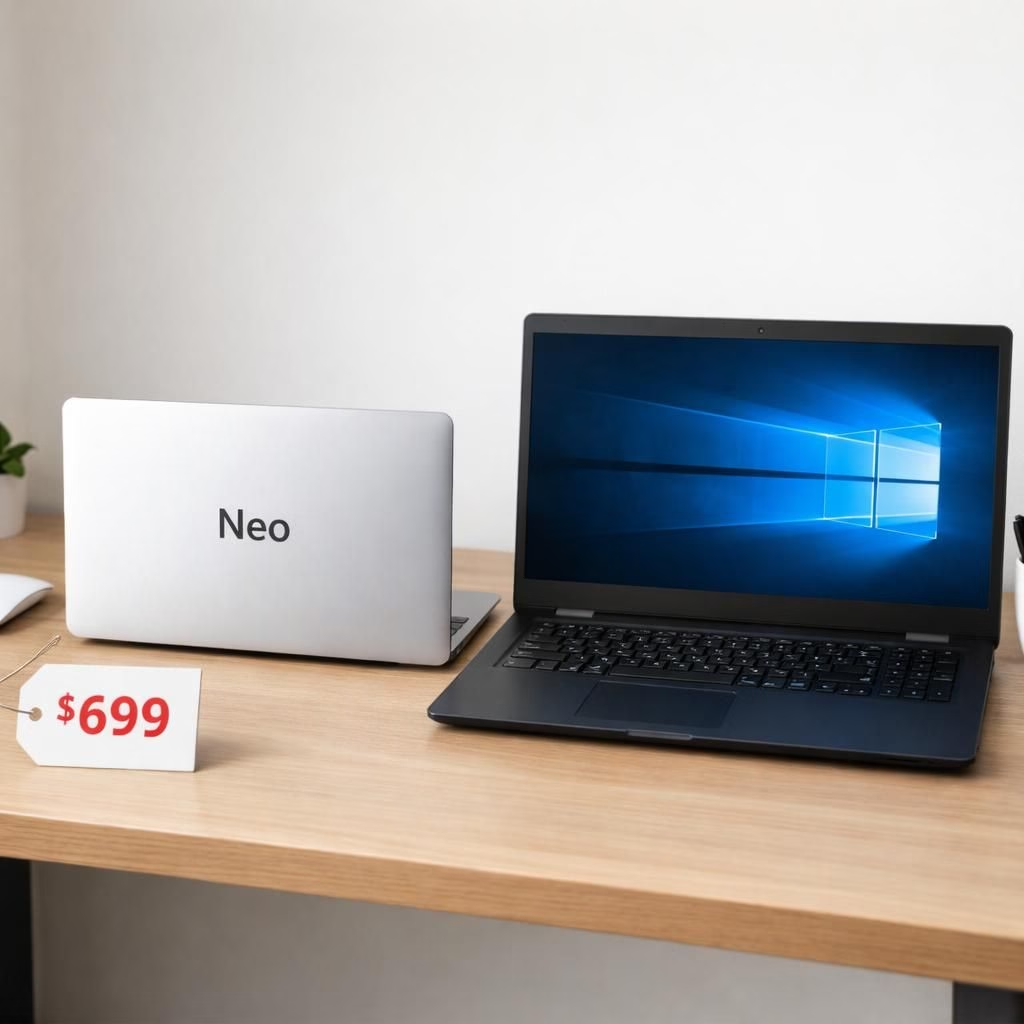
In 2026, Apple quietly slipped into the budget laptop scene with the AppleMacBookNeo, a move that has the PCMarket2026 crowd buzzing and the Apple loyalists nodding at its audacity. The device is pitched as a budget-friendly option that signals intent without pretending to be a powerhouse. The broader audience will watch closely, because this is the kind of move that shifts the conversation more than it shifts the spec sheet.
AppleMacBookNeo meets PCMarket2026: a budget shock with clever kinks
On the earnings call for the fourth quarter of 2025, S.Y. Hsu, co-CEO of Asus, described the MacBook Neo as certainly a shock to the entire market, while also listing the device’s meaningful limitations in the same breath. He suggested the price itself was the real shock—an aggressive positioning that reminded everyone the budget game can be just as strategic as the premium one. In other words, the Neo arrives with a mic drop, but the mic might also be the key to a smaller demo reel than a full production.
Hsu added that the news of shipments leaking in during the second half of 2025 wasn’t a rumor so much as a signal: PC makers knew something big was coming, but they did not anticipate Apple’s willingness to price it aggressively. The market’s initial reaction wasn’t a panic, but a cautious nod. The shock, as he framed it, isn’t only about what the Neo can do, but about how much price flexibility competitors must concede to keep up with the PCMarket2026 landscape.
RAM and upgradeability in AppleMacBookNeo
The most talked-about spec is memory. The MacBook Neo ships with 8GB of RAM, and crucially, that memory cannot be upgraded after purchase. “For example, the memory is not upgradeable, and it only has 8GB of memory. This may limit certain applications,” Hsu said. This isn’t a Scooby-Doo reveal; it’s a real constraint. It signals that Apple designed the Neo for a specific use case and a specific user—one who spends more time streaming, browsing, and juggling lightweight apps than pushing heavy workloads.
From a design perspective, the Neo seems to be positioned more toward content consumption than heavy-duty productivity. It’s the one-liner of the notebook world: ideal for reading, streaming, and the occasional spreadsheet dance, but not exactly the workstation a video editor might worship. Some observers joked that it feels more like a tablet that pretends to be a laptop, a hybrid that knows its sweet spot and politely avoids pretending to be a power tool.
PCMarket2026 impact on Windows loyalties and price debates
Beyond the hardware, Hsu pointed to a broader psychology: most laptop buyers know Windows well, and flipping to a different OS remains a nontrivial decision. Price alone rarely persuades a Windows user to switch ecosystems for good. The Neo’s appeal, so the logic goes, may lure a subset of buyers who want a cheap, lightweight machine for media, emails, and light productivity, but it won’t automatically convert the entire market to macOS or a new app strategy.
“Many vendors are already looking for ways to compete with the Neo,” he noted, adding that the real impact on the overall PC market will take some time to resolve. The conversation isn’t only about hardware; it’s about value, ecosystem, and the supply chain of perks—like software bundles, faster updates, and a sense of premium branding that rarely shows up on a $499 price tag. The Neo nudges the market to reframe what “budget” means in a world where memory is fixed and upgradability is a feature for future devices, not for this one. PCMarket2026 sits at the heart of that change.
From a consumer perspective, the MacBook Neo’s entry changes the narrative on what users expect at the low end. It squeezes the space between “affordable” and “capable,” forcing rivals to rethink RAM configurations, upgrades, and the tradeoffs they’re willing to make to chase price-sensitive buyers. The long-run question remains: can Apple sustain a price-sensitive strategy without undermining the perception of durability, service, and the software advantage that typically accompanies its devices?
In the broader scene, PC makers may respond with cheaper configurations, transparent upgrade paths, or better support for Windows, Chrome OS, or their own ecosystems. The market may see a ladder of devices that sit between casual consumption and professional work, with the Neo occupying a middle rung that’s accessible but not as flexible as its Windows rivals. It’s a reminder that the laptop market isn’t a simple price ladder; it’s a web of expectations around memory, upgradeability, and a user experience that’s more about habits than headlines.
Ultimately, this isn’t a catastrophe for Windows loyalists or a guaranteed victory for AppleMacBookNeo fans. It’s a nudge—a reminder that the budget segment can be cunning, that price wars are real, and that an upgradable dream still has a robust following in the higher end. The real winners may be buyers who learn to weigh memory, upgradeability, ecosystem support, and the real-world tasks they actually perform.
We invite you to share your thoughts in the comments. Do you see the PCMarket2026 shifting the landscape for budget laptops, or will the RAM ceiling and conservative upgrade path keep it from becoming a long-term player? Your perspective matters, and your experiences with budget laptops help others understand what to believe in 2026.
Original article: Thanks to Tom’s Hardware for the original reporting on the MacBook Neo and the budget-laptop pricing conversation. Source: Tom’s Hardware: Apple MacBook Neo budget laptop
Relevant industry context has also been covered in other outlets, including a broader look at how technology pricing shapes buyer expectations and upgrade cycles. For example, see discussions of ESOP tax relief and data-center clarity in tech budgets, which can influence how vendors price and package hardware in the mid-market segment. You can explore related reports via the internal links above.
Practical takeaways for buyers
- RAM matters for multitasking: 8GB is lean for heavy workloads but workable for light use. If you run many browser tabs, expect limitations.
- Upgrade paths are scarce: Expect fixed RAM and storage on the Neo. If future-proofing matters, factor that into your decision.
- Software ecosystem counts: The value of bundled software, updates, and cross-device continuity can offset raw specs at the entry level.
- OS considerations: If Windows familiarity matters, assess how you’ll manage OS-specific tasks, virtualization, or dual-boot options in your daily workflow.
FAQ
-
Is the AppleMacBookNeo a good choice for students?
For light coursework, web work, and media consumption, it can be attractive due to price and portability. If your courses demand heavy video editing or 3D workloads, you’ll likely want more RAM and upgrade flexibility.
-
Can I run Windows on the Neo?
Apple Silicon devices traditionally rely on macOS, with Windows possible via virtualization or official Boot Camp-style setups depending on support. Expect a smoother experience with macOS-native apps unless you’re prepared for virtualization trade-offs.
-
What about upgrading later?
Upgrades aren’t available post-purchase. If you anticipate growing needs, consider models that offer RAM upgradeability or larger base configurations.
-
How does the price affect perceived durability?
Budget pricing can raise questions about materials, service, and long-term reliability. Weigh the price against warranty terms, service networks, and expected software longevity.
References
- Original article: Times of India linkback — https://timesofindia.indiatimes.com/technology/tech-news/asus-co-ceo-says-apple-macbook-neo-certainly-a-shock-but-has-limitations-it-feels-more-like-a/articleshow/129472380.cms
- Tom’s Hardware reporting on the MacBook Neo and budget-laptop pricing conversation — https://www.tomshardware.com/news/apple-macbook-neo-budget-laptop