

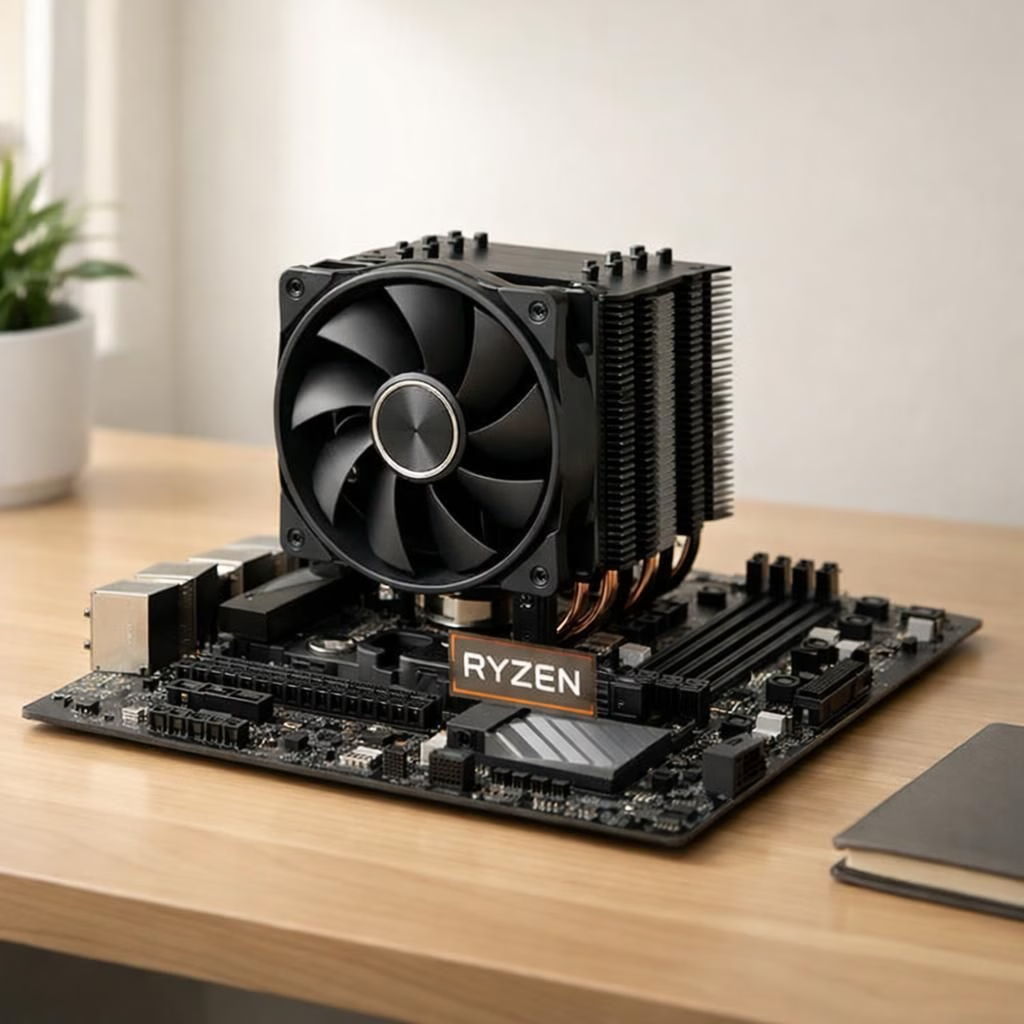
AMD, the chipmaker behind the AM5 platform, continues to shape budget builds in 2026. With RAM costs stubbornly high, the Ryzen 7 5800X3D—an older favorite—has resurfaced at a price that beats many new options. It’s a pragmatic path for gamers who want to stretch a budget rather than surrender to sticker shock. The story remains practical: you can keep a working platform, gain cache-rich performance, and avoid a full platform upgrade.
AMD AM5 Budget Reissues: The 5800X3D Redux
Starting June 25, you can snag one of the reissued 5800X3D units at about $350. That tag undercuts the launch price by roughly a hundred dollars, a clever move in a market that sometimes treats scarcity as a feature. In the same breath, the newer eight-core, 16-thread challenger asks around $500, a reminder that not all generations are created equal when it comes to price-to-performance.
The 5800X3D first shipped in 2022, a time when the processor ecosystem looked very different and memory prices were not yet a running joke. Its return feels less like a relic revival and more like a curated thrift-store treasure: solid performance, reasonable price, and a sense that you’re not paying to relive the entire socket history. If you’re browsing the resale market, you’ll see the older chip tagged in the mid-to-high range, sometimes approaching the original street value on a good day—and that’s a sign the market still remembers its cache-rich timings.
In the meantime, the chipmaker is trying to boost value for buyers who aren’t ready to upgrade a GPU. The GRE family has been rolled out as a bridge card with a $550 price tag and 12GB of VRAM. It’s designed to be more affordable entry into usable gaming performance, a reasonable compromise for those who want a smoother frame rate without paying for the latest flagship. The GRE sits alongside the 16GB VRAM flagship, offering a more approachable option while remaining broadly compatible with a wide range of builds. And yes, the company hints that this price point may not stay fixed for long, making this a moment where timing matters just as much as silicon choices.
A note for AM5-based systems, the GRE option helps keep costs predictable.
For builders who still run older platforms, the strategy looks like a practical limbo: push just enough to keep playing, but don’t throw away a working motherboard if it still boots reliably. If you’re eyeing an AM5 upgrade later, the plan is not a dramatic leap forward; it’s a careful extension of the current hardware ecosystem. The market is starting to look more like a gallery of clever compromises than a race to the next big upgrade cycle. If you’re holding onto DDR4 RAM or a mid-range GPU, you’re not alone—there are more folks than you’d expect choosing sidegrades to upgrades in 2026, chasing a balance between performance and cost that feels sane rather than spectacular.
Beyond the hardware duet, the company has signaled a longer-term commitment to its platform. There’s talk of continuing the AM5 path through 2029, which helps explain why RAM prices and availability feel less like a sprint and more like a marathon. It’s not a guarantee of perpetual novelty, but it is a promise that AM5‘s base platform will remain viable longer than a typical refresh cycle, giving builders room to plan without panic. In short, the plan isn’t to rush you into a full rebuild every couple of years; it’s to offer a sustainable upgrade path for those who value compatibility and reasonable cost as much as raw performance.
AM5 Realities: The AMD Path Through 2026
From the graphics side, the market sees a similar pragmatism. AMD’s GRE-branded cards aim to fill a gap between “playable” and “premium” without breaking the bank, a strategy that helps gamers who can’t or won’t upgrade their entire rig at once. This year, the GRE card sits at a price point that gives the average budget build a much-needed nudge toward stability, with the option to move to a higher tier later if the budget allows. The idea is not to outpace the rest of the market with bleeding-edge hardware, but to create a smoother, more accessible upgrade curve for AM5 families and independent builders alike.
Platform longevity remains a theme. The older AM5 sockets and the newer AM5 path are not simply competing narratives; they are part of a longer, more deliberate plan to keep systems usable for longer while still enabling meaningful improvements. The market’s current mood leans toward “sidegrade wisely, upgrade later,” which makes sense given RAM prices, GPU pricing volatility, and the desire to avoid endless shopping trips that end in a credit card revolt. It isn’t flashy, but it is practical—exactly what many enthusiasts crave when the hardware world feels a little too eager to push you along a path you don’t want to take.
Comparing prices across the board, it’s clear that the return of 5800X3D is not a dramatic reset, but a strategic nudge. The mix of older CPUs, new-but-not-quite-new GPUs, and the promise of continued platform support creates an ecosystem that respects both budget and performance. The message is loud and a touch playful: you don’t have to empty your piggy bank to get a fair amount of gaming grunt in 2026. You need to be selective, patient, and a little bit thrifty—exactly the kind of consumer behavior that makes tech budgets stretch in the right direction. For those with AM5 builds, this path is even more compelling.
Original article: Gizmodo: AMD’s plan to fix RAM costs and bring back bygone CPUs.
Have thoughts? Share your experiences and questions in the comments below. It’s a space to weigh whether the old silicon still hums loudly enough to justify a current upgrade plan.
Practical upgrade steps for 2026
- Inventory what you own: confirm your RAM type and motherboard support; a quick BIOS check can unlock this path without a full rebuild.
- Consider a staged upgrade: drop in a 5800X3D on AM4 and pair with a GRE GPU for steadier frame rates before any major shell exchange.
- Map a budget-friendly AM5 plan for later: use the time to save and assess compatibility with long-term motherboard and memory options.
FAQ
- Is the 5800X3D still worth buying in 2026?
- Yes, if you’re aiming for a budget-friendly upgrade that’s cache-rich and memory-friendly. It’s especially compelling when RAM and GPU prices are volatile, and you don’t want a full platform swap.
- Will AM5 stay relevant through 2029?
- AMD has signaled a continued AM5 path through 2029. While not a hard guarantee, it indicates a longer-supported platform that favors compatibility and gradual upgrades rather than forced changes.
- What about the RX 9070 GRE?
- GRE cards offer a balance of performance and price, targeting smoother gameplay for mid-range builds without costing a flagship-like price. Availability and pricing may shift, so timing matters.
- Should I move to AM5 now or wait?
- For many, waiting makes sense if you can hold off on a full rebuild. If you’re already on AM4, a staged approach with a 5800X3D and GRE could extend your life while you plan a future AM5 upgrade.
Conclusion
In 2026, AMD’s AM5 pathway continues to shape affordable upgrades by blending older chips with newer memory and GPU options. The revival of the 5800X3D and the GRE family provides practical, budget-friendly routes for builders who value compatibility over constant churn. The takeaway is simple: be selective, patient, and thrifty, and you can enjoy solid gaming performance without prematurely chasing the next big platform swap.