

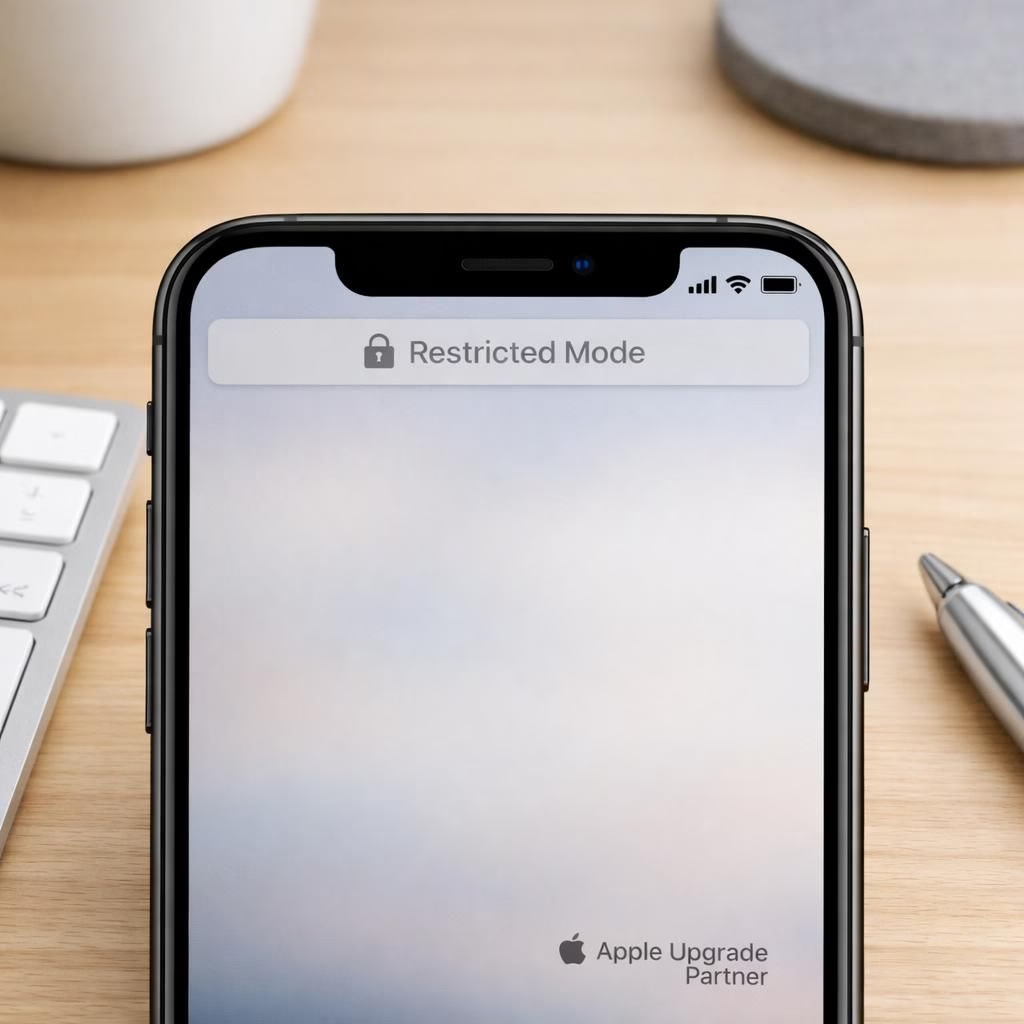
Apple Upgrade: Financing devices with a wink and a warranty
In a sunlit corner of tech news, we examine two ideas shaping how devices reach you: Apple Upgrade and Restricted Mode. In 2026 previews, a beta of iOS 27 has surfaced in code, hinting at a financing-first path that could tie your shiny iPhone to good standing, or at least to a notification ping when payments slip. The reporting from Bloomberg earlier this week, later echoed by 9to5Mac, describes a potential Apple Upgrade program for device leasing and a playful, if chilling, concept called Restricted Mode. This is all in a beta: features may change or vanish before a public release, and Apple did not respond to a request for comment. The tone here is practical and a touch amused, because the idea of devices watching your wallet—yet still claiming to respect user choice—remains a rich, if uneasy, punchline for modern tech storytelling.
The Apple Upgrade concept would provide a financing pathway to obtain new iPhones on a leasing basis, potentially reducing upfront costs. In plain terms, you could access the latest hardware while maintaining an ongoing obligation to stay in good standing with payments. The beta code mentions an App Managed Features system that can repeatedly verify whether a financed device remains paid up. In practice, this could mean background checks that influence service access without interrupting core usage. Supporters see it as a modernization of how carriers, retailers, and financing partners collaborate, while critics worry about friction and the sense of being constantly monitored. If Apple moves forward, the balance between consumer freedom and financial partnerships will be a delicate policy dance.
From a product perspective, Apple Upgrade could offer clearer upgrade cycles and lower upfront costs for many users. Yet financing raises questions about ownership, device lifecycles, and how much control a financing partner should retain after a sale. The beta suggests coordination with partner apps and services to verify standing without exposing sensitive data. The practical takeaway: any rollout would need to demonstrably improve user experience and avoid turning devices into continuous debt reminders. Developers would want clarity on how such a framework affects app distribution, updates, and trust. Overall, Apple Upgrade might broaden access to newer hardware for some, while others could see added friction or a sense of ongoing verification.
Restricted Mode: What would be blocked, and why it matters
Restricted Mode is described in the beta as a software-level lockdown tied to financing status. In practice, a financed iPhone in Restricted Mode would reportedly lose access to nearly all apps, leaving only basic functions such as Phone, Settings, and the App Store. The mechanism is described as an App Managed Features system that enables financing partners to continually confirm the device remains in good standing. A separate feature called Partner Finance Lock would supposedly prevent erasing, reselling, or stripping a restricted device for parts. The surprising detail is that, although the feature sits within Find My, it wouldn’t grant partners access to location data. In short, it’s not about tracking you in real time; it’s about enforcing the financing terms at the software layer. This approach aims to balance a financing relationship with user trust, but it also raises questions about autonomy and the line between service rights and consumer freedom. And yes, everything here is speculative and could change before an official release, since the iOS 27 beta is a testbed, not a final blueprint.
From a security and user-experience standpoint, Restricted Mode prompts a broader conversation: what should happen when a payment is missed, and who decides which features stay accessible? The beta signals a careful, policy-forward approach rather than a punitive one. Yet the idea of tying everyday functionality to financing status forces readers to consider consent, transparency, and possible redress for errors or delays in reporting. Would a temporary lapse trigger an automatic restriction, or would a grace period apply? The practical design must be fair, offer clear controls, and ensure critical features remain usable. The tension between risk management and user trust will likely stay central as devices grow more entwined with payment ecosystems.
Find My, privacy, and the betas you don’t yet know
One reassuring aspect of the beta is that Find My remains a host for these ideas without granting financing partners location access. The privacy boundary—keeping location data separate from financing logic—helps preserve core protections even as device access is managed by payment terms. For developers and privacy advocates, this separation matters: it keeps the focus on what is monitored—payment status and device eligibility—without broad surveillance. If iOS 27 ships with these ideas, the public conversation will likely center on consent, user control, and redress when something goes wrong, such as an inaccurate credit report or a temporary service hiccup.
Beta reality: what to expect, what to question
The core truth of the iOS 27 beta is that it provides a concrete look at how a major ecosystem might blend device financing with software permissions. It’s not a guarantee that Apple will ship any of these features, but the presence of code drafts and policy concepts makes the discussion timely and real. If Apple pursues an Apple Upgrade model, it will require robust safeguards, transparent messaging, and straightforward recovery paths for funding mishaps. If Restricted Mode becomes a real option, the company would need to balance financing partnership goals with preserving a usable device experience. Regulators, journalists, and users will watch for fairness and clarity. The upside could include clearer upgrade paths and expanded access to hardware, while the downside could be sustained friction or a perception of coercion. Since beta code evolves, readers should treat these ideas as possibilities rather than guarantees.
As with any beta leak or speculative feature, the best stance remains informed curiosity. Read Bloomberg coverage and follow-up reporting with a critical eye for how Apple frames user choice, controls, and communications. For developers, note any APIs or app-management hooks that could affect behavior in a financed ecosystem. For users, consider opt-out options, privacy protections, and how financing terms might influence software access. This is a complex scenario, but open discussion helps everyone envision what a more financing-friendly future could look like—and what that means for personal autonomy in the pocket-sized world of iPhones.
Original article: Bloomberg reporting. Special thanks for the original reporting that sparked this discussion.
We’d love to hear your thoughts on this concept. Do you think Apple Upgrade would help more people access current hardware, or do you worry about creeping complexity and locked features? Share your perspective in the comments below.
Practical steps for readers
- Follow official statements from Apple and Bloomberg to verify how financing features evolve.
- Consider how Apple Upgrade might affect your device ownership and upgrade cadence.
- Evaluate privacy implications and look for opt-out options where available.
- If you’re a developer, monitor any API changes that affect app behavior in financed contexts.
FAQ
- What is Apple Upgrade? A proposed financing framework that could allow leasing or installment access to new iPhones with ongoing terms managed by a partner app system.
- What would Restricted Mode do? It would restrict most apps until payments are up to date, while basic services remain usable, under a financing-driven policy.
- Would location data be shared with financing partners? No. The beta describes a Find My-based separation that preserves location privacy while monitoring payment status.
- When could this appear in public versions? These are beta concepts; Apple would need to publish clear terms and safe-guarded controls before any public release.
References
- The Verge: Apple Restricted Mode in iOS 27 beta
- Bloomberg coverage on Apple financing and device strategy
- Apple Newsroom
Original article retained for reference: https://www.theverge.com/tech/969596/apple-restricted-mode-ios-27