

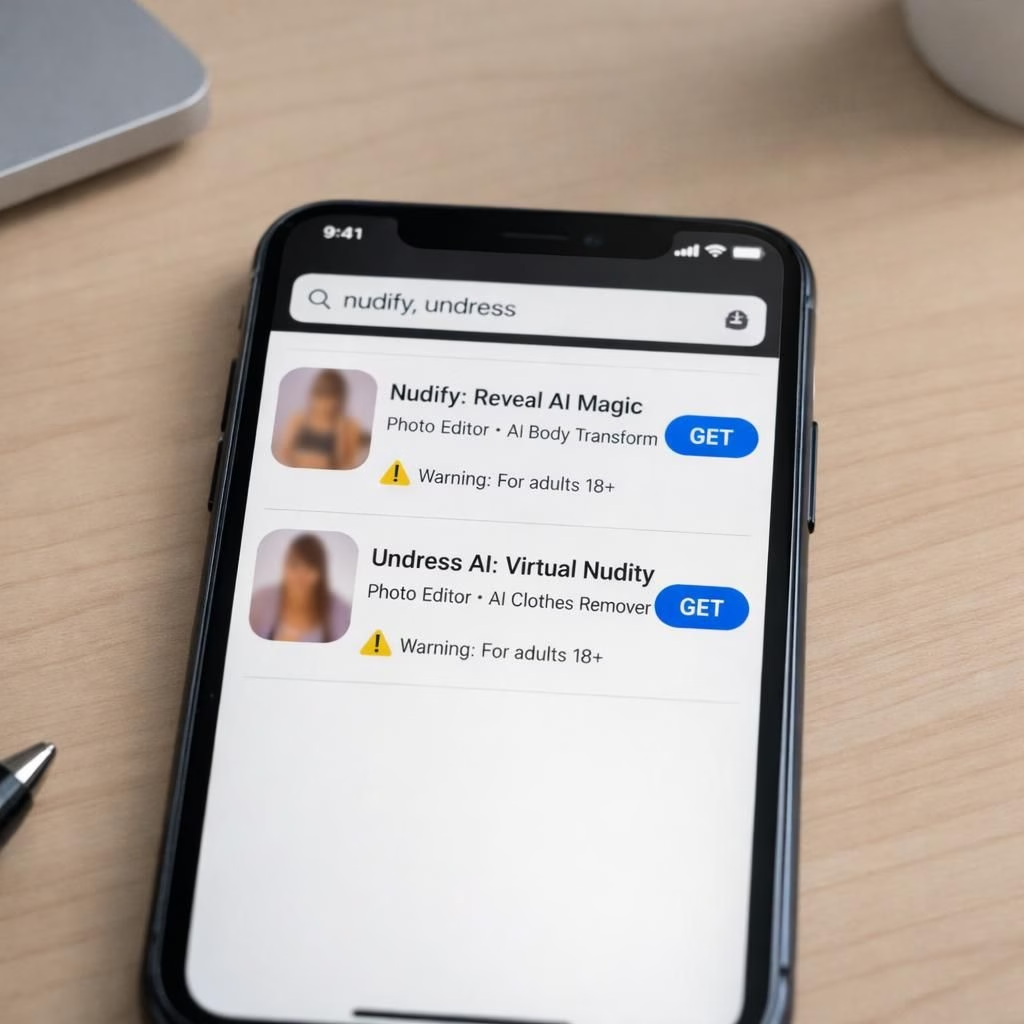
Apple and Google find themselves back in the spotlight over nudify apps in 2026. The Tech Transparency Project flags that some mobile tools in their stores can alter images to appear nude or partially undressed, despite explicit policies banning such content. This isn’t a niche issue; it reveals how discovery, policy, and ads intersect in two of the world’s largest app ecosystems.
In practice, app stores often resemble busy marketplaces, where new tools appear at breakneck speed and claims compete for attention. The Tech Transparency Project’s analysis shows that certain nudify-related search terms can surface apps that offer to alter celebrities or public figures’ images. The finding is less about individual apps and more about how discovery, monetization, and policy enforcement come together in large ecosystems. With clearer signals and faster action, 2026 could bring stronger safeguards for consent and privacy.
Apple Nudify Risk in 2026
The core issue remains: even with clear rules, search results sometimes diverge from a safe, respectful app landscape. The Tech Transparency Project mapped how the Apple App Store handles sensitive toolkit apps, showing that searches for image-manipulation terms can surface software that could depict nudity or partial nudity. This is not alarmism; it’s a concrete policy and enforcement question with real consequences for victims and bystanders alike. The gap between policy language and live enforcement is a human-scale challenge that platforms must address.
Apple App Store Nudify Terms in Practice
For Apple, the focus is on speed and rigor in review workflows. The report suggests that some nudify tools slip through cracks or ride edge cases that slow automatic flags. Apple has long promoted privacy-forward and consent-respecting policies, yet the pace of new tool creation and rapid updates can outstrip manual checks. The hopeful takeaway is that Apple’s review framework can adapt withSharper real-time scanning, better signals shared with developers, and clearer examples of prohibited behavior. When Apple aligns policy with current threat models, developers respond with safer features and responsible design.
Google Nudify Search and Ads
Google faces a parallel challenge. The Play Store hosts tools that can modify images in ways that might violate privacy or consent, and ads sometimes appear for nudifying apps in search results. This overlap between discovery and monetization underscores the need for more granular ad controls, clearer policy enforcement, and faster takedown processes. Google has built a robust platform to push updates quickly, refine moderation signals, and provide transparent reporting to users. The bottom line: users deserve a store experience where consent, safety, and respect are as visible as feature lists and viral hooks.
What this means for users, developers, and policy teams in 2026
For users, the takeaway is practical: stay vigilant, review permissions, and rely on built-in privacy protections. If you encounter terms like nudify or undress in a store search and the results feel off, pause, report, and seek safer alternatives. For developers, platform operators, and policy teams, the report offers a blueprint for tightening review queues, deploying machine learning classifiers, and articulating clearer rules that reduce harm while preserving legitimate image-editing capabilities. A healthier ecosystem requires collaboration among store operators, watchdog groups, and the public, plus ongoing feedback from real users who care about consent and security. The community benefits when guidelines are explicit and enforcement is timely.
From a design perspective, this is more about shaping expectations than punishing behavior. When Apple and Google align their app review cycles with user safety goals, developers tend to follow with safer feature sets and more transparent practices. Clear policy summaries with concrete examples help everyone navigate what counts as consent violation. In 2026, a public, transparent stance on policy enforcement is not punitive; it’s practical and humane. It protects reputations, user trust, and the integrity of platforms that thousands rely on daily for communication, creativity, and problem solving.
Practical steps for readers and creators
- Be cautious about image manipulation tools that claim to enhance content without consent.
- Enable device privacy controls and limit photo access for apps you don’t trust.
- Check policy statements from Apple and Google and watch for clear, recent updates.
- Support stronger guardrails in store search and ad placements to minimize exposure to harmful nudifying apps.
As we navigate security tips in 2026, readers are invited to reflect on how we can demand accountability from large platforms while continuing to enjoy the benefits of mobile software. The core message remains hopeful: with the right incentives and sharper moderation, Apple and Google can turn exploration into safe, respectful expression rather than risky shortcuts. If you have thoughts, consider sharing them in the comments to spark a constructive conversation about the path forward.
Acknowledgments and attribution: a big thank you to the Tech Transparency Project for the original report. To learn more, visit their site: Tech Transparency Project.
References
- Bloomberg: Apple, Google Nudify Apps Despite Policies
- Apple App Store Review Guidelines
- Google Play Developer Content Policy
- Tech Transparency Project