

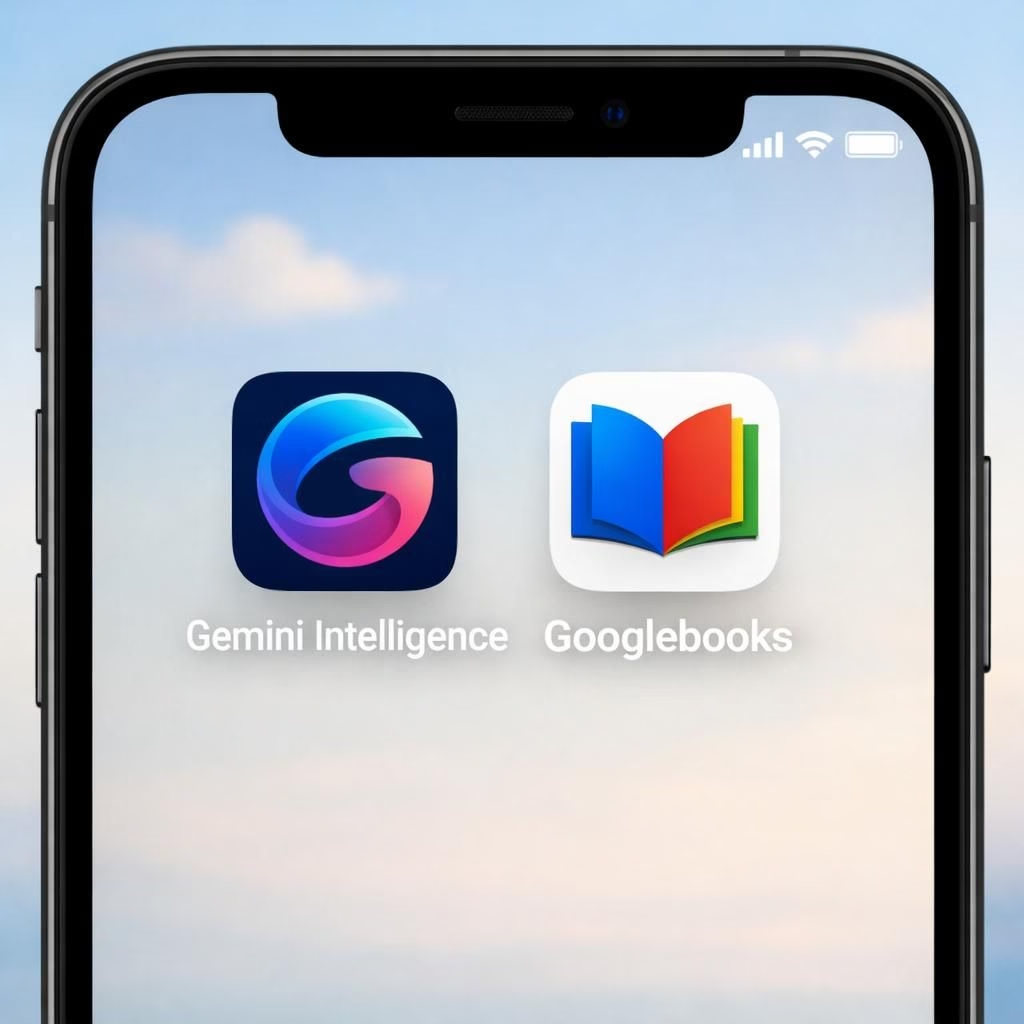
Welcome to a breezy, upbeat tour of the Android Show and its Gemini Intelligence wave—the tech party you didn’t know you needed this year. Yes, we’re leaning into optimism, but we’ll also keep our feet on the motherboard and our feet out of trouble. Expect a smile, a few clever quips, and a clear sense of what Google might be up to with Googlebooks, smarter widgets, and a toolkit that could actually make your device feel a touch less moody. The Android Show isn’t a single product drop so much as a parade of ideas: practical tweaks, shiny demos, and plenty of curiosity about what will land in the hands of users in 2026. And yes, we’ll name drop Gemini Intelligence often, because this isn’t a stealth mission—it’s a showcase about smarter software with a human-friendly bent.
In this take, we’ll blend the headlines you saw with a reader-friendly lay of the land. If you’re here for the headlines, you’ll find them in the sections below. If you’re here for the longer form, you’ll find the little jokes and the occasional nerdy aside that keep things lively while still informative. And if you came for Googlebooks, yes, we’ll give that its moment in the sun, because a library in your pocket is exactly the kind of quiet revolution we can all appreciate before breakfast. The bottom line is simple: Android Show is pivoting toward systems that feel useful, not just flashy, with Gemini Intelligence acting as a guiding star and Googlebooks quietly reshaping how we access information on the go.
Android Show Highlights
Let’s start with the big picture: the Android Show has become a curated gallery of what users actually want for day-to-day life. The show leans into practical AI features that aim to lighten cognitive load without turning your phone into a personality crisis. When the host demos Gemini Intelligence in action, the emphasis is on reliability and privacy-forward design rather than a sprint to the-edge-of-reality gimmicks. This is where Android Show meets everyday life: smarter interruptions, better predictions, and a smoother handoff between apps. The message is clear: we’re not chasing novelty for novelty’s sake; we’re building helpful, repeatable experiences. And yes, Googlebooks earns its own moment here—think of it as a lightweight learning companion that slots neatly into your routine, whether you’re planning a trip, writing a report, or trying to memorize a new recipe without losing track of your to-do list. The Android Show also emphasizes developers’ ability to innovate while keeping a strong line of sight on user privacy, battery life, and accessibility. It’s not perfect, but it’s a step toward a more thoughtful Android ecosystem.
From the vantage point of a user who loves a good widget and a clean notification shade, the show signals a future where Googlebooks live next to your calendar, Gemini Intelligence suggests smarter context, and the whole experience feels more intuitive than a maze of settings. We’re talking about a platform design that invites curiosity without demanding a PhD in gadgetry. The emphasis on Googlebooks isn’t just a gimmick; it’s a signal that information should be more discoverable and more portable. Imagine searching your own notes the way you search the web—fast, relevant, and without a detour into an app you didn’t know you installed. That’s the vibe the Android Show wants to radiate, and it’s the kind of momentum that can push the UX from “fine” to “frankly delightful.”
Gemini Intelligence Deep Dive
Gemini Intelligence isn’t merely a flashy name drop. It’s positioned as a beacon for smarter app behavior and more meaningful automation. Think of Gemini Intelligence as a co-pilot that helps you navigate busy days with less friction. It’s about predictions that actually help you plan, rather than predictions that spam you with irrelevant reminders. The Gemini Intelligence approach emphasizes on-device processing, privacy safeguards, and selective cloud contribute-and-learn cycles that respect user control. The long view is simple: better prediction quality, better power management, and a more human-centric assistant that knows when to step back and when to step in. The show’s demos suggest a future where Gemini Intelligence helps with routine tasks—organizing schedules, suggesting context-aware actions, and offering suggestions that align with your behavior patterns—without turning every interaction into a tiny lecture about “how you should live your life.” It’s a gentle, practical take on AI augmentation rather than a loud parade of untested capabilities. And yes, the synergy with Android Show is intentional: a cohesive system that makes the AI feel like a helpful extension of the user rather than a party trick.
Gemini Intelligence is also shown in collaboration with Googlebooks in some scenarios, where your reading habits and search patterns feed into a richer, more seamless knowledge pool. It’s not about surveillance; it’s about relevance. If you crave a quick, human-friendly metaphor, Gemini Intelligence is like a seasoned co-pilot who knows when to pull up a map and when to switch to coffee mode—keeping you focused on the task, not on the devices barking at you. The show frames this as part of a broader push toward a more cohesive ecosystem where Gemini Intelligence, Android Show features, and Googlebooks fold together into a smarter everyday experience.
Googlebooks, Widgets, and the Everyday UX
Googlebooks appears in the conversation as more than a prop. It’s pitched as a practical tool for compiling, annotating, and retrieving snippets of knowledge without leaving the current task. The underlying philosophy is straightforward: information should be accessible, searchable, and useful when you actually need it. In practice, this means faster search within your own notes, smarter recommendations for what to read next, and a more natural correlation between what you’re doing now and what you might want to do next. The show’s treatment of widgets is similarly pragmatic. Widgets are no longer tiny, optional add-ons; they are streamlined, context-aware shortcuts that respect your screen space and battery life. The idea is to empower users to personalize their home screens without turning customization into a full-time job. When Googlebooks meets the widget framework, you get a cohesive experience that nudges you toward productivity while remaining pleasantly unobtrusive. It’s refreshingly practical in a landscape crowded with grand promises and marketing stunts.
As the Android Show threads together Gemini Intelligence, Googlebooks, and improved widgets, the overarching narrative becomes clear: the future is about usefulness that stays out of your way. This isn’t about chasing the next viral demo; it’s about delivering consistent, reliable improvements that feel earned. The synergy between these elements hints at a more approachable AI-assisted mobile lifestyle—one where features feel integrated, not isolated, and where user trust remains the centerpiece. It’s a forward-looking, hopeful stance that still leaves room for witty humor and friendly skepticism about where all this is headed next.
What This Means for 2026 and Beyond
The broader implication of the Android Show lineup is a shift toward a more balanced, human-centered mobile experience. Gemini Intelligence is framed as a tool that respects your time and preferences, rather than a force that demands your attention. Googlebooks invites us to rethink how we interact with information, turning reading into a more fluid, in-context activity. And Android Show’s emphasis on practical features—like smarter automations, better widget ergonomics, and thoughtful privacy controls—says the industry is listening to real-world needs. It’s not a radical upheaval; it’s a measured evolution. The goal is clear: empower users to get more done with less friction, while keeping the experience friendly, accessible, and a touch entertaining. If we’re honest with ourselves, that’s exactly the kind of progress we want to see in 2026 and beyond.
Readers who enjoy the occasional wink will appreciate the humor embedded in these announcements, but the heart of the matter remains practical: smarter assistants that respect privacy, smarter access to personal knowledge through Googlebooks, and an Android Show framework that makes all of this feel coherent rather than chaotic. The result could be a more confident, capable smartphone ecosystem—one that helps you stay organized, informed, and amused, all at once.
We’d love to hear what you think. Share your thoughts in the comments and tell us which feature excites you most about Android Show, Gemini Intelligence, or Googlebooks in 2026.
Original reporting and thanks: a big thank you to the original coverage that inspired this piece, including 9to5Google and The Verge for their Android Show reporting. You can read the source here: Everything announced at The Android Show: Gemini Intelligence, Googlebooks, and more, with gratitude for the original material that sparked this thoughtful recap.
Want to join the conversation? Please share your thoughts in the comments below. And if you found this helpful, consider sharing the article with friends or colleagues who are curious about the Android Show era and its Gemini Intelligence journey.
References: you can explore the primary reporting here: 9to5Google: The Android Show 2026.
Frequently asked questions about Android Show
- What is Gemini Intelligence? A smarter, on-device assistant that helps with routine tasks while preserving privacy.
- How does Googlebooks fit into the Android Show? It acts as a knowledge hub, enabling faster search and contextual reading.
- Will widgets improve battery life? Yes—widgets become more contextual and efficient, not cluttery.
Key takeaways
Android Show signals a practical, user-first evolution for 2026, with Gemini Intelligence as a guiding companion and Googlebooks driving smarter access to personal knowledge. The focus remains on trust, usability, and meaningful automation that respects your time.