

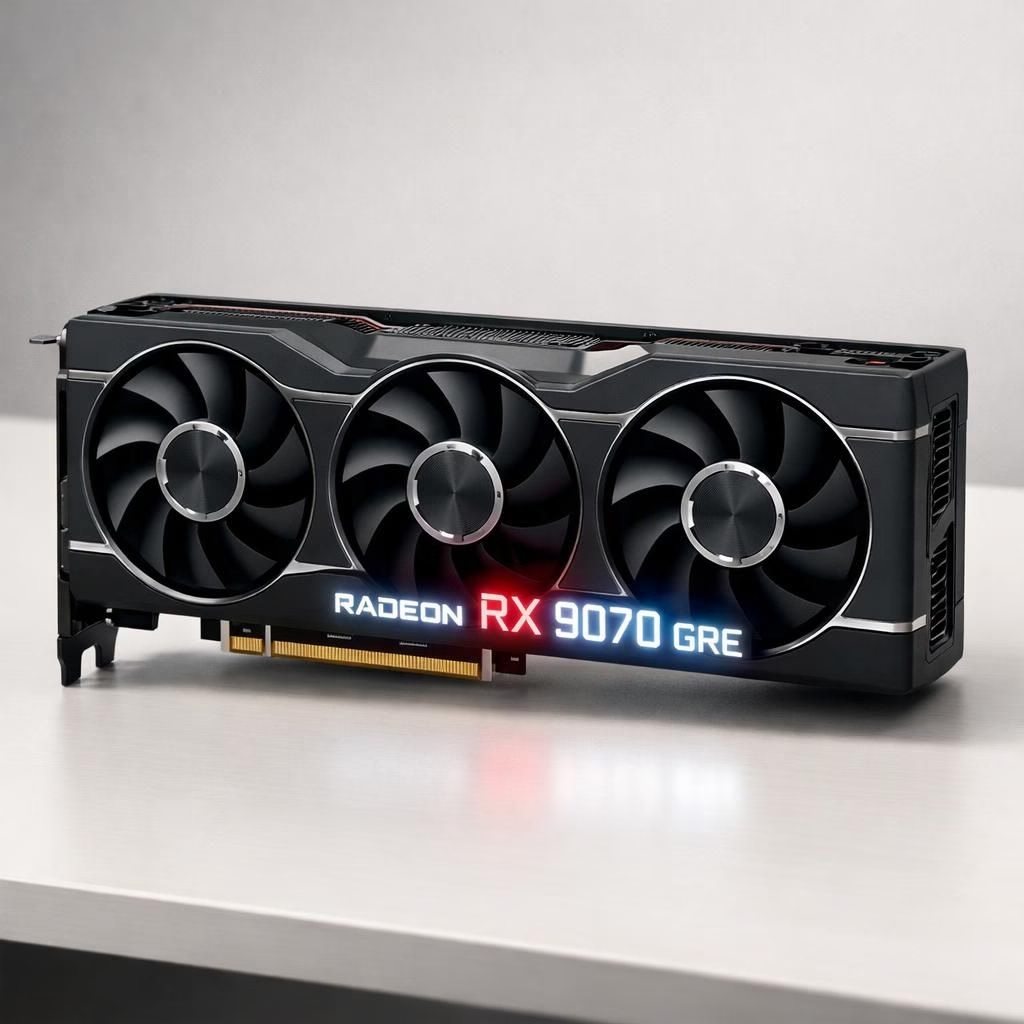
AMD RX 9070 GRE is shaping up for a global launch in 2026. If you chase silicon headlines between coffee sips and price guesses, you already sense a shift toward more shader power, smarter power management, and a steadier supply line. The mood around AMD RX 9070 GRE centers on efficiency and higher performance per watt, not just clock speeds.
AMD RX 9070 GRE and the global launch Landscape
The world of a true global launch is less a single press event and more a coordinated dance of supply chains, retailers, and driver teams. If the RX 9070 GRE actually hits shelves widely, expect multiple AIB partners to roll out cards in more regions and through more channels than before. This broader approach should translate into better stock, quicker restocks, and fewer stories about carts that vanish faster than a sunset. Pricing is never guaranteed, but the hope is that the global launch framework intensifies competition with rival GPUs, which usually means more value for enthusiasts and a dash of healthy skepticism for spec sheets. In practice, a global launch signals that AMD isn’t testing water with a single pool; it’s laying out a whole pool party for gamers, content creators, and institutional buyers alike.
What a global launch could mean for AMD RX 9070 GRE users
The RX 9070 GRE is rumored to include more compute units, faster memory, and improved ray tracing with AI-assisted features that help throttle or push when needed. The memory subsystem is likely to see faster GDDR6X or similar tech, giving gamers and creators a steadying supply of bandwidth during data-heavy tasks. If true, these improvements should translate into higher frame rates at 1440p and a comfortable foothold at 4K, with smoother gameplay in titles that lean on ray tracing or DLSS-like upscaling. The AMD RX 9070 GRE would not just be a speed bump; it would be a faster wheel for the PC builder’s cart, paired with smarter power management that keeps temperatures manageable even when the room is warm and your coffee is cold. In short, this release aims to balance raw horsepower with practical efficiency so your rig doesn’t turn into a space heater with a fan attached to it.
From a buyer’s perspective, the global launch plan matters. Wider availability can ease stock shortages across regions and unlock a broader price range, helping upgrade budgets without paying a premium for scarcity. Driver parity and game-ready optimizations tend to improve when a product lands across markets, giving users a steadier experience rather than a roller-coaster of driver hotfixes.
All of this speculation thrives on one simple fact: a genuine global launch brings more testers into the feedback loop. More testers usually mean faster bug squashes and more robust feature integrations. For creators who push content pipelines, the RX 9070 GRE’s potential memory bandwidth and compute density offer headroom for video encoding, real-time rendering, and AI-powered workflows. And yes, price discussions follow the same pattern, balancing memory, bandwidth, and Hz against workload.
In any case, if you’re curious about timing, availability, and price, official announcements will shape the narrative as 2026 unfolds. The story tends to shift quickly when a major launch approaches, and even small changes in supply or driver optimizations can tilt the value proposition. The bottom line remains: the AMD RX 9070 GRE aims to balance performance with practicality, and a true global launch could amplify that balance for more people around the world.
For readers who want to dive deeper, or compare notes with others watching this space closely, I invite you to share your thoughts in the comments. And as always, a big shout-out to the original material that sparked this exploration.
Original article and coverage: VideoCardz.com original article. A heartfelt thank you for the original source material.
External sources