

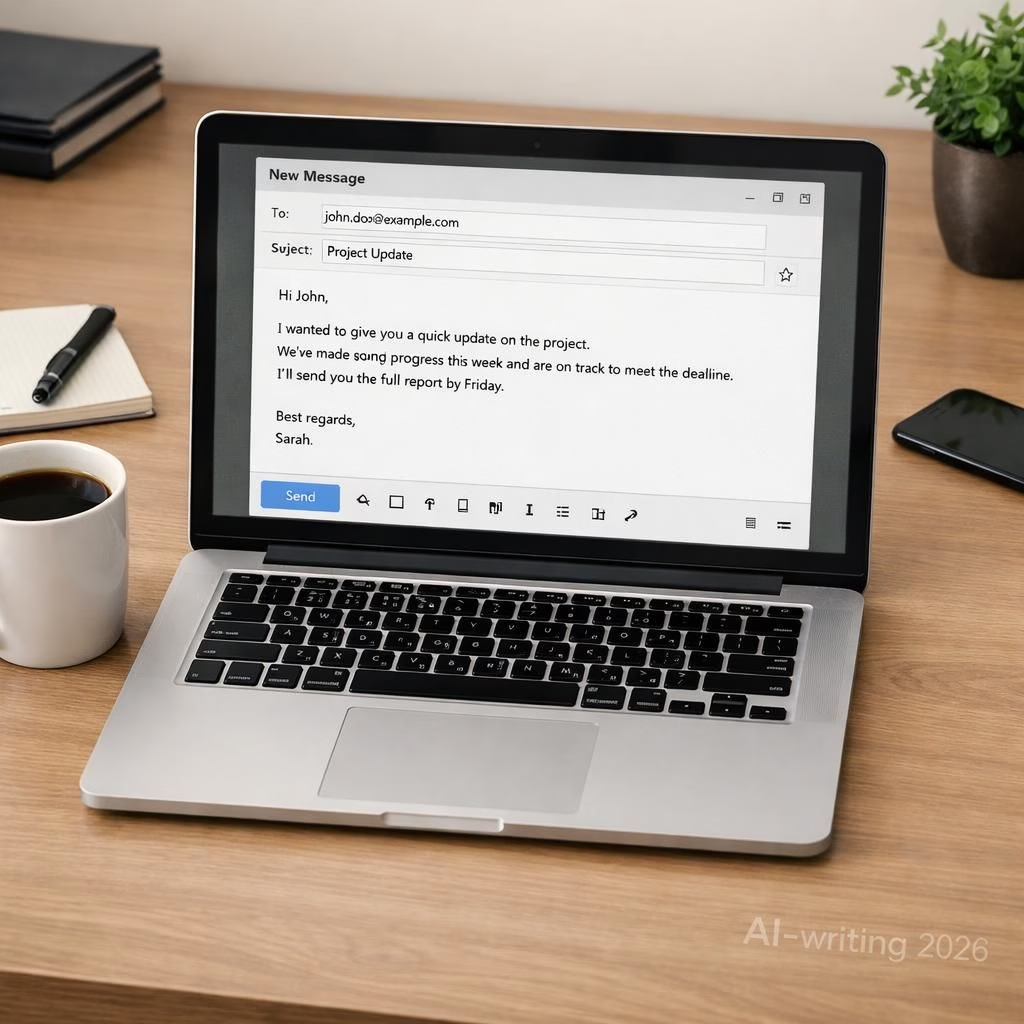
In 2026, a playful lineup of tools promises to ‘un-AI’ your writing by leaning into the quirks of human typing—specifically AI-writing quirks and typos—to produce messages that feel, well, more human. The core idea is simple: if an algorithm can draft a clean sentence, a tiny nudge of imperfection can make it read like a person who just hit send after a second thought. This approach isn’t about lowering standards; it’s about balancing clarity with character to earn reader trust. It also invites open discussions about when AI helped craft a message and when a human should take the wheel to ensure email-authenticity. In short, it’s a playful push toward more trustworthy inbox communication in 2026.
AI-writing in the wild: from draft to human-like note
Some tools in this space quietly inject typos or deliberate pauses into AI drafts, turning them into more ‘human-sounding’ emails. The anti-Grammarly vibe flips the expectation from perfect syntax to personality. The result is a note that feels less produced and more casual, yet still clear. It’s a playful balancing act that respects readers who crave authentic tone.
typos as a feature in email-authenticity
When designed well, typos become a feature, not a bug. A missing comma in a friendly update can signal a human moment. A short, imperfect sentence can feel like a quick reply: fast, sincere, and a touch imperfect. But there is a line: too many mistakes can obscure meaning and erode credibility. Builders and writers alike point to email-authenticity as a spectrum, where a dash of imperfection helps trust without confusing intent. Harvard students have even prototyped Chrome extensions that humanize AI emails, mixing automation with warmth. In practice, users can toggle the level of perceived imperfection to suit their audience and purpose.
What you do next matters. Use AI-writing to draft, then add a personal gloss to preserve voice. If a team agrees on a shared voice, it becomes easier to maintain consistency while still feeling human. The world of email is a practical test ground for this balance in 2026, where speed and security must coexist with readability.
To make these ideas work well, here are some practical tips. Start with small, deliberate tweaks rather than wholesale chaos. Short sentences, occasional mild typos, and a conversational rhythm keep messages approachable. Consider a cadence that fits your audience and the topic. A few well-placed exclamations or a casual sign-off can soften a formal update without undermining professionalism. The trick is to keep intent clear while letting a bit of personality breathe.
Alongside these ideas, the tech press has chronicled real experiments. Harvard students have built Chrome extensions to humanize AI emails, showing that human touches can be layered onto AI drafts without dropping efficiency. Engineers and designers continue to iterate on analytics that show when readers engage more with content that feels human, versus content that feels machine-made. The overarching lesson is practical: you can harness AI advantages and still preserve trust with your audience.
Security matters, too. Security tips in 2026 emphasize keeping sensitive data out of drafts and being mindful of how much automation you rely on for critical communications. A thoughtful blend of AI efficiency and human oversight reduces risk and protects credibility. The goal is to boost readability and trust, not to blur accountability.
In summary, this trend isn’t about letting bots run wild. It’s about designers giving writers a choice: lean into AI-writing to speed up the rough draft, then apply a human touch to preserve voice and email-authenticity. The outcome is a more resilient workflow that respects both efficiency and readability, and that supports clearer, friendlier inboxes.
Internal attribution note: Mashable’s coverage sparked this discussion and helped clarify how a touch of humanity can coexist with AI drafting. See the original Mashable article for more context.
FAQ about AI-writing, typos, and email-authenticity
- What does the idea of “un-AI” writing mean in practice? It means using AI to draft quickly, then applying a human touch to preserve tone and intent.
- Do typos really boost trust in emails? When used sparingly, typos can signal a human moment, but too many errors hurt clarity.
- How should teams balance AI and human input? Establish a shared voice, review processes, and safety checks to keep messages clear and responsible.
- Are there privacy concerns with AI-assisted writing? Yes—guard sensitive data, limit automation on critical messages, and audit data flows.
Conclusion: A practical path forward
In 2026, the goal is not to let bots run wild but to empower writers with a measured toolkit: draft fast with AI-writing, then apply a human gloss to preserve voice and email-authenticity. This approach can boost productivity while maintaining trust and readability. If teams align on voice and review, inbox communications become clearer, friendlier, and more credible.