

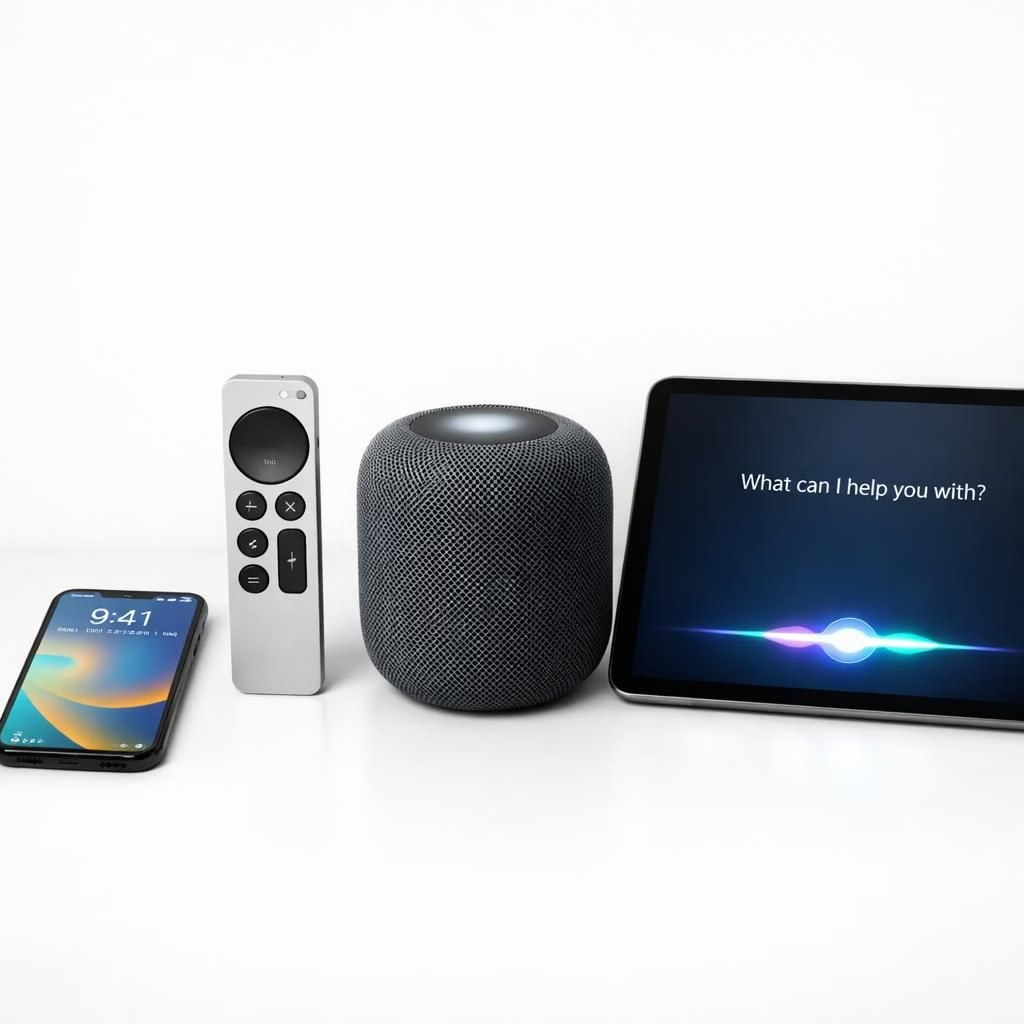
AI and Siri are lining up for Apple’s next wave of devices, a patient strategy that plays out like a long-running gag. Apple reportedly has four products in late-stage production: a refreshed Apple TV 4K, HomePod 3, HomePod mini 2, and a smart home display tentatively dubbed “HomePod Touch.” Each device is ready in shell and chassis, with the central upgrade—Siri powered by AI—still awaiting a green light. Hardware is polished; software is in progress; the warehouses wait for the software team to finish the job.
In practical terms, Apple treats Siri as the hinge of this lineup. The next Apple TV 4K could host a more capable chip—A17 Pro or even A18—enabling AI-driven features and improved wireless connectivity via a dedicated networking chip. A built-in camera is possible but not confirmed. Meanwhile, the HomePod family is getting upgrades. The HomePod mini could be powered by a newer S-series CPU (S9 or S10), enabling on-device AI tasks and a more natural, conversational Siri. A refreshed full-size HomePod would likely follow suit, with better connectivity, possibly Wi‑Fi 7, to support a mesh-smart-home ecosystem.
AI-driven devices and Siri’s role in the near future
The HomePod Touch is pitched as a hub with a 7-inch touchscreen, a front camera for video calls, built-in speakers, and perhaps a rechargeable battery for inside-the-home portability. The software could debut a new operating system, homeOS, with a widget-based interface that resembles an always-on standby display. The goal is to make Siri the centerpiece of everyday life rather than an afterthought. AI features would be processed on-device for privacy and speed, with cloud help for more demanding tasks. The device remains minimal in design, but the brain inside is becoming more capable, enabling smarter routines for daily chores.
Siri upgrade and the smart home: the AI-powered ecosystem
On the business side, Apple has teamed with Google to bring advanced AI models into Siri. The collaboration suggests a broader, more capable assistant that can handle cross-platform tasks. In practice, that could mean better natural language understanding, more contextual replies, and smoother interactions with home devices. It will test the balance between privacy and convenience, a line Apple has typically walked with care. For users, the payoff could be a more intuitive home: fewer taps and more context. You may feel devices understand your day before you finish your coffee.
However, the upgrade timeline remains a moving target. The 2024 developers conference showcased a next-gen Siri set for a 2025 rollout, but performance and reliability concerns pushed that back. The current plan is to roll Siri out through iterative software updates rather than a single global launch. In the meantime, Apple’s ecosystem becomes more AI-enabled each quarter. The delay underscores how central Siri has become to Apple’s strategy. As AI models improve, Apple can rely on Siri to unify experiences across devices, apps, and home automation.
For developers and enthusiasts, the coming months will bring more opportunities to integrate with homeOS, on-device AI, and the evolving voice interface. If you’re curious about compatibility, stay tuned for software updates and the new HomePod Touch’s official specs when they drop. In the meantime, industry observers note that Apple’s approach blends hardware readiness with an expanding AI software layer to create a seamless ecosystem around the Siri platform.
For official details about the voice assistant, see Apple’s voice assistant to provide context for Apple’s direction.
Share your thoughts in the comments below to join the conversation about how you expect Siri to shape your smart home and daily workflows in 2026.
Frequently asked questions
- When will the AI-powered upgrade roll out? Apple has signaled a staged, iterative release rather than a single global launch, with ongoing updates expected over the coming quarters.
- Which devices are in the pipeline? A refreshed Apple TV 4K, HomePod 3, HomePod mini 2, and the HomePod Touch hub are the primary items referenced in reports.
- Will on-device AI become standard? Local AI processing is a goal for privacy and speed, with cloud support for more demanding tasks as needed.
- How does Google fit into this? Apple has pursued collaborations to enhance AI capabilities, aiming to improve natural language understanding and cross-device interactions.
Conclusion
In short, Apple is prioritizing an AI-enabled Siri upgrade to unlock a more cohesive smart home. The devices in the pipeline are hardware-ready; the software is catching up, and the ecosystem may become more seamless with each quarterly update.
References
External context: Apple’s voice assistant and coverage from The Verge provide background on ongoing AI work in consumer tech.