

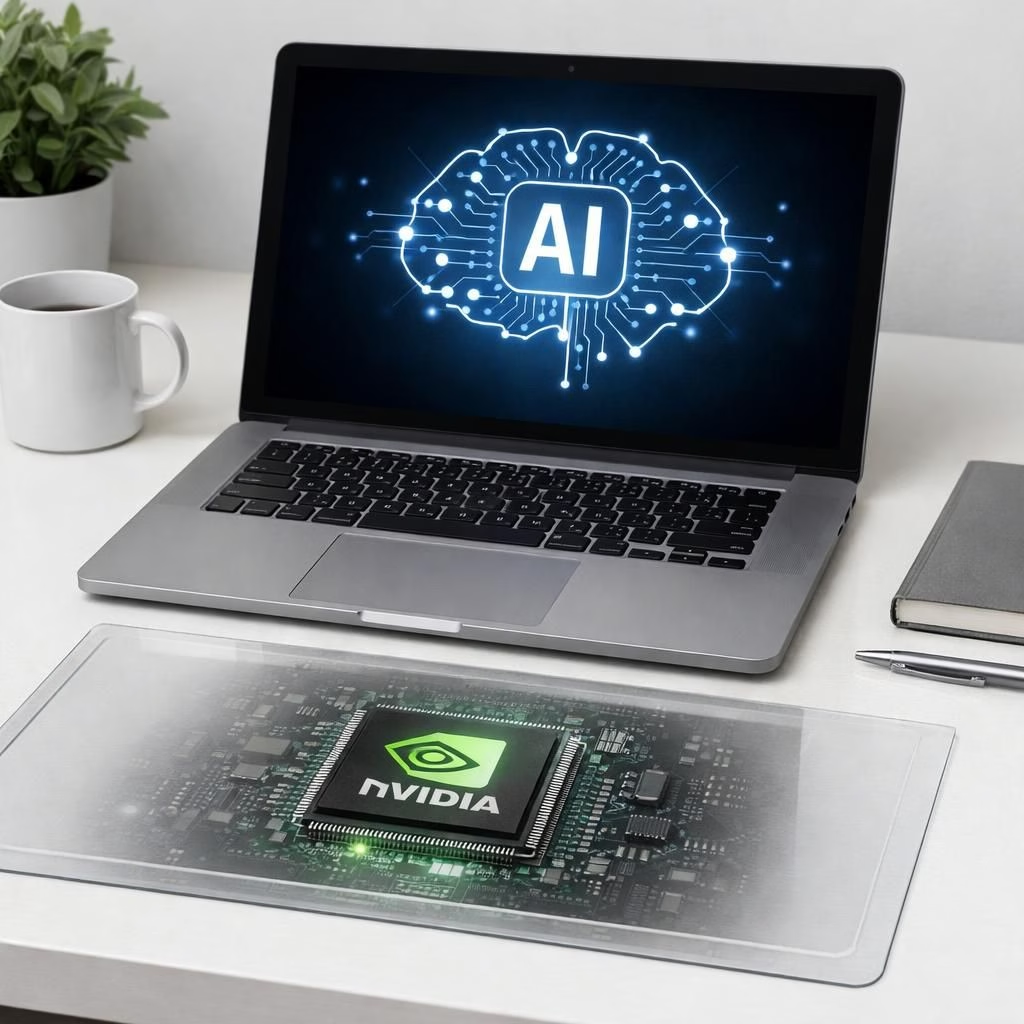
Take a coffee break and consider how AI laptops could reshape daily work. NVIDIA superchip is set to push that idea forward by packing a lot of AI power into laptops and PCs, so you can run prompts, render scenes, and push projects ahead without always pinging the cloud. The audience isn’t limited to data centers anymore—it’s you, your desk, and a battery that doesn’t whine at 3 p.m. This isn’t fantasy; it’s an Arm-based chip tuned for Windows PCs backed by a lineup of partners that includes Microsoft, Dell, and HP. The NVIDIA superchip is designed to handle on-device AI workloads with a level of efficiency that would make a caffeine-fueled barista nod in approval. The headline looks flashy, but the real win is smoother workflows: lower latency, privacy gains, and the ability to push creative tasks in half the time. The tech is sophisticated, yet the takeaway is practical: you get speed when you need it without sacrificing silence or battery life. And yes, the demos sparkle; the marketing sings; but the everyday benefit will be a warmer, calmer desk for creators.
AI laptops: practical implications for 2026
As the chip lands in devices from Microsoft, AI laptops become more than gadgets; they are colleagues. Latency is shrinking; you see results almost instantly. On-device inference helps privacy because data stays on the machine. Battery life gets serious attention, not a marketing line. For creatives, data scientists, and students, AI laptops become essential tools that travel light and work hard. The platform design emphasizes Windows compatibility, helping apps adapt to the chip’s accelerators. You can expect better real-time editing in video and image work, smoother 3D previews, and quicker AI-assisted drafting. Software teams are already cooking optimized drivers, toolchains, and sample models that fit the chip’s architecture. The result is a friendlier learning curve for AI experiments and a clearer path for developers to ship features without cloud dependencies. In short, AI laptops move from niche devices to everyday workhorses, especially for tasks that mix creativity and computation.
Practical steps for evaluating AI laptops with the NVIDIA superchip
- Check battery life and sustained performance for typical workloads, like real-time editing or 3D previews.
- Look for Windows-optimized drivers and app compatibility that leverage the chip’s accelerators.
- Evaluate memory bandwidth and RAM configurations for large models or datasets.
- Consider privacy features and whether offline workflows are a priority for your team.
NVIDIA superchip: architecture notes and expectations
The NVIDIA superchip relies on ARM cores and a custom accelerator stack tuned for on-device AI tasks. This design balances thermals and performance in thin AI laptops as well as robust desktops. Expect specialized cores for transformer workloads, a fast memory subsystem, and tight hardware-software co-design that makes popular tools feel nimbler. For developers, the chip promises better porting paths, with optimized libraries and sample models. For IT teams, the on-device compute simplifies deployment and reduces cloud costs in the long run. The story is not just speed; it’s reliability, quiet fans, and predictable performance when you push models at the office, in labs, or at home. The NVIDIA superchip also asserts a friendly energy profile, so you can render a complex scene or run a large language model without a noisy data center nearby. In practice, this means a future where creative work, research, and tinkering happen on compact machines rather than vast server rooms.
Want more nuance? Here are quick takeaways: on-device AI means less cloud dependency, faster feedback, and more privacy by default. The collaboration with major PC makers signals a broad wave, not a one-off gadget. The engineering discipline behind the NVIDIA superchip—drivers, libraries, and model samples—still invites developers to contribute and experiment. The practical impact for users is clear: laptops that feel more capable on day one, with room to grow as tools and models improve.
Original reporting and gratitude: The Guardian’s coverage on Nvidia’s AI-powered hardware. Thank you to The Guardian for the original article. NVIDIA superchip and AI laptops — The Guardian
Share your thoughts in the comments below so we can keep the conversation constructive and caffeinated.
Frequently asked questions
- What is the NVIDIA superchip?
- A compact ARM-based processor block paired with a bespoke AI accelerator, designed to run on-device AI tasks on laptops and desktops.
- Will this affect battery life?
- Yes. The design prioritizes efficiency and quiet operation, especially for prolonged AI workloads.
- Will common Windows apps run well?
- Expect optimized drivers and libraries that help popular apps take advantage of the accelerators with minimal changes.
- When will devices ship broadly?
- Manufacturers are rolling out first wave devices with Windows compatibility; broad availability will vary by model and region.
Conclusion: AI laptops powered by the NVIDIA superchip offer a practical path to faster, more private, on-device AI work. For creators and teams, the move promises less cloud reliance and more usable power on the desk.
References
Original reporting and gratitude: The Guardian’s coverage on Nvidia’s AI-powered hardware. Thank you to The Guardian for the original article. NVIDIA superchip and AI laptops — The Guardian