

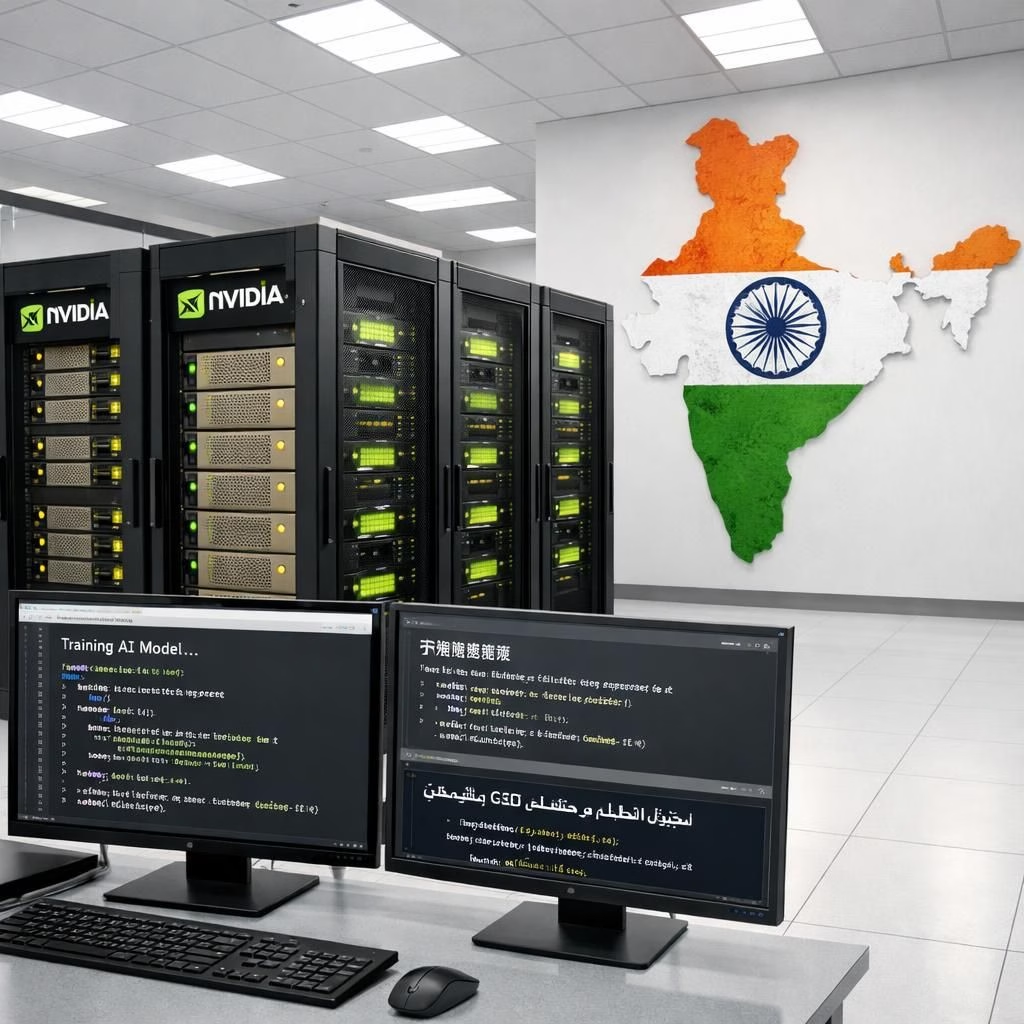
AI in India: NVIDIA Drives Innovation
AI in India is becoming a headline we can celebrate, as NVIDIA positions the country as a central hub for AI innovation. The push is powered by a deep developer pool and smart partnerships—no voodoo, just GPUs and grit.
Vishal Dhupar’s virtual briefing sets the stage: India is not merely a market but a thriving test bed for AI that touches daily life. The pride of place goes to a robust developer base and a web of partnerships with Indian tech leaders. NVIDIA quietly becomes the kind of partner who helps a nation imagine bigger, and then go out and build it. The result is a mix of ambition and practicality that feels less sci‑fi and more server room reality.
In this story, the AI future is not reserved for red carpets in silicon valleys. It grows in India university labs, startup garages, and government-backed pilot programs. The core truth is simple: active collaboration with local developers accelerates AI adoption. NVIDIA supplies the hardware, software stacks, and the know‑how; Indian teams supply the use cases, language diversity, and the gritty pace of execution. The two sides dance in sync, and the music is the hum of GPU fans and the clack of keyboards.
India’s AI Infrastructure Powered by NVIDIA
The partnership with cloud players such as Yotta and L&T shows that AI compute is not a luxury; it is a necessity. India organizations are leveraging NVIDIA’s Nemotron to develop AI applications supporting public services and financial systems in various languages. The result is a more accessible government, faster civic services, and smarter banking tools that can talk to people in their own tongue. It’s not magic; it’s a practical strategy that blends hardware, software, and policy.
Alongside these collaborations, NVIDIA’s presence at events like the India AI Summit demonstrates a network of more than one hundred partners who are actively building AI infrastructure. Data centers around the world are being equipped with NVIDIA GPUs, reinforcing the company’s role as a key enabler of AI and technology progress. The narrative is clear: with the right GPUs, the right software, and the right local partnerships, India can surge forward as a global AI hub while delivering tangible benefits at home. This AI infrastructure push matters for the economy and for citizen services.
Why does this matter? Because AI is not a fringe capability but a core tool for public services, education, finance, and everyday productivity. NVIDIA’s approach in India puts a premium on multilingual support, on‑site training, and regional customization. The result is faster deployment cycles for pilots, a healthier ecosystem for startups, and more predictable performance for enterprises. The emphasis on partnerships also signals a practical shift: local expertise ensures solutions are tuned to local needs, not just translated from English-language models. This is the punchline: AI in India is becoming accessible, reliable, and scalable thanks to a pragmatic collaboration between global GPU giants and local champions.
For readers curious about the technical side, the story features high‑performance GPUs powering data centers and AI workloads that range from natural language processing in regional languages to real‑time analytics in government operations. NVIDIA GPUs are not simply tokens in a brochure; they are the workhorses behind robust AI pipelines. The combination of the Nemotron toolset, accelerated compute, and keep‑it‑simple deployment practices means developers can iterate faster and deliver results that matter. The emphasis on language coverage and user‑friendly interfaces reduces friction for non‑English users and engineers alike, widening the pool of talent who can contribute to AI‑driven solutions. This AI infrastructure mindset is not mere jargon; it is a practical path to scalable impact.
As the ecosystem expands, the conversation shifts toward sustainability, cost‑effectiveness, and longevity. NVIDIA advocates efficient cooling, modern data centers, and transparent pricing models so that public sector bodies and private firms can plan budgets with confidence. The India angle also highlights how a strong base of developers, entrepreneurs, and researchers can push the AI envelope without losing sight of local needs and cultural contexts. It’s not just about flashy demos; it’s about reliable, repeatable outcomes that improve everyday life while keeping a smile on the engineer’s face—because GPUs like to run hot when the workload is real, but they also deliver consistent results when used wisely. This AI infrastructure perspective reinforces the practical backbone of the initiative.
In short, NVIDIA’s involvement in India signals a sustained, practical commitment to AI that benefits businesses, governments, and citizens. The collaboration with Indian tech leaders sharpens capabilities across sectors, while cloud partnerships expand access to cutting‑edge compute. The global AI race remains intense, but the India track, with NVIDIA at the helm, looks both competitive and constructive—an environment where innovation is paired with implementation, and where multilingual projects stand a better chance of reaching the people who will use them daily. The emphasis on AI infrastructure shows a matured plan rather than a one‑off sprint, and that matters when you’re building something meant to last.
We’d love to hear your thoughts. Share your insights and questions in the comments below.