

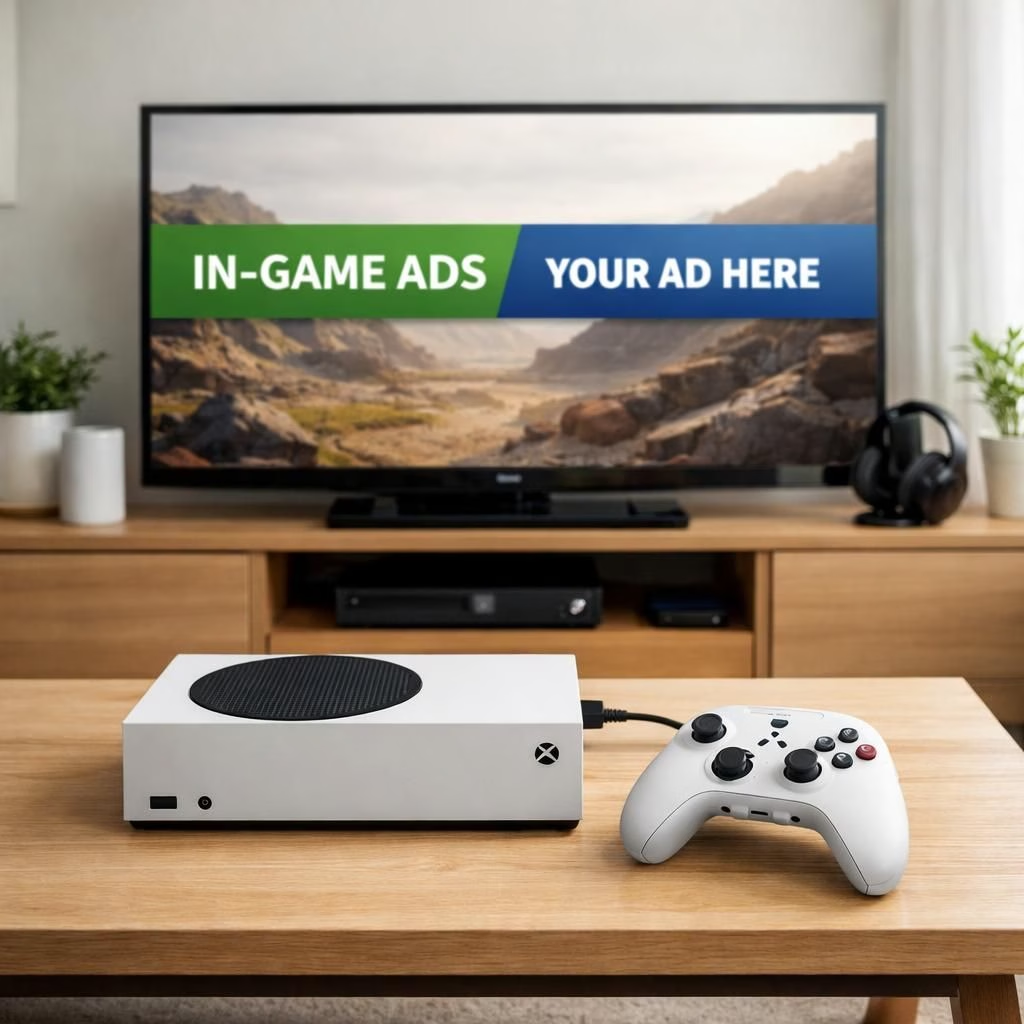
In 2026, Xbox and in-game-ads are quietly reshaping how players experience the living room arcade. The math behind this approach is surprisingly practical: targeted, tasteful in-game-ads can subsidize development and maintenance without turning the whole thing into a wallet-heavy lecture. The Xbox CSO framed it plainly: in-game-ads may help keep our products affordable, a line that lands with pragmatism and a hint of cheeky confidence.
Across the industry, the big argument isn’t doom; it’s evolution. In a thorough discussion about the market, the takeaway is clear: the console scene is not dying; it’s adapting. Matthew Ball’s takeaway—summarized as, yes, the console market is not dying—highlights a broader truth: players still crave powerful hardware, great exclusives, and a vibrant ecosystem, even as in-game-ads and hybrid pricing creep into the margins, subtly changing how people pay for their favorite titles.
Xbox Strategy: in-game-ads as a value play
Let’s be pragmatic: if in-game-ads can help keep prices fair without turning a game into a wall of banners, developers win, players win, and the platform wins. The philosophy isn’t about banner-based unlocks; it’s about a balanced model where ads are integrated with care, transparency, and relevance. When done right, in-game-ads become a quiet subsidy for the core experience, allowing Xbox to push meaningful updates, new features, and more frequent content drops without squeezing players at every checkout. In practice, this means smarter ad placement, contextual relevance, and a commitment to not interrupting the flow of play. Xbox stays gamer-first, with in-game-ads acting as a financial lever rather than a loud intruder.
External voices emphasize that the model must stay transparent and optional where possible. Official channels from the industry encourage balancing revenue with a high-quality user experience, and independent coverage highlights how ad-supported models can coexist with strong games and services. For broader context, see coverage from BBC News and ongoing analysis at The Verge.
in-game-ads and the price debate: Xbox’s flexible future
Pricing is a hot topic, and the recent chatter around a high-cost console isn’t the whole picture. The rationale is straightforward: inflation, continued competition for components, and the reality that hardware alone can’t shoulder ongoing investment in services, cloud features, and content. The plan isn’t to blame players for higher costs but to share the value across hardware, software, and services. In this light, in-game-ads contribute a practical piece of the puzzle—enabling more frequent game updates, better online infrastructure, and expansions that extend the lifetime of a box that remains, at heart, about fun and community. The result is a model where the price you pay is tied to a broader, evolving ecosystem rather than a single upfront number.
Xbox’s leadership team has underscored that change isn’t about a single product move but a portfolio approach. The possibility of bundled offerings, streaming-first options, and mixed monetization models offers flexibility for different budgets and gaming styles. See official commentary on services and devices in Xbox News and related analysis in outlets such as The Verge.
in-game-ads: what it could mean for the gamer experience
The idea isn’t to flood every scene with ads but to weave them into worlds in ways that feel earned. Think contextual promotions tied to events, cosmetic partnerships that don’t alter core gameplay, and opt-out choices for players who want a largely ad-free experience. For a thriving ecosystem, the aim is to keep in-game-ads from dominating the user interface, while still providing a steady revenue stream to support updates, online services, and new content drops that keep communities engaged.
Practical steps for in-game-ads
- Prioritize contextual relevance: ads should align with the game world and never feel intrusive.
- Label clearly: let players know when an element is sponsored and provide opt-out options if possible.
- Test and iterate: start with small, opt-in experiments and measure impact on retention and satisfaction.
- Offer alternatives: ensure a path to a similar experience without ads for players who want it.
FAQ
- What are in-game-ads? An umbrella term for promotions woven into games and platforms, not interruptive banners.
- Will Xbox price or value change because of ads? Ads may help subsidize ongoing development, potentially broadening access or extending updates, while keeping base hardware costs in check.
- How could ads affect gameplay? The aim is to minimize disruption by using contextual and non-intrusive placements tied to the game world.
- Can players control ads? Ideally, players would have opt-out options for an ad-free experience where possible.
Want to share your thoughts? Jump into the comments and tell us how you feel about Xbox’s evolving models, the role of in-game-ads, and the balance between price and value in the 2026 gaming landscape.
Original article attribution: A big thank you to the original source material for the ideas and context that inspired this rewrite. Read the original article here: Original article.