

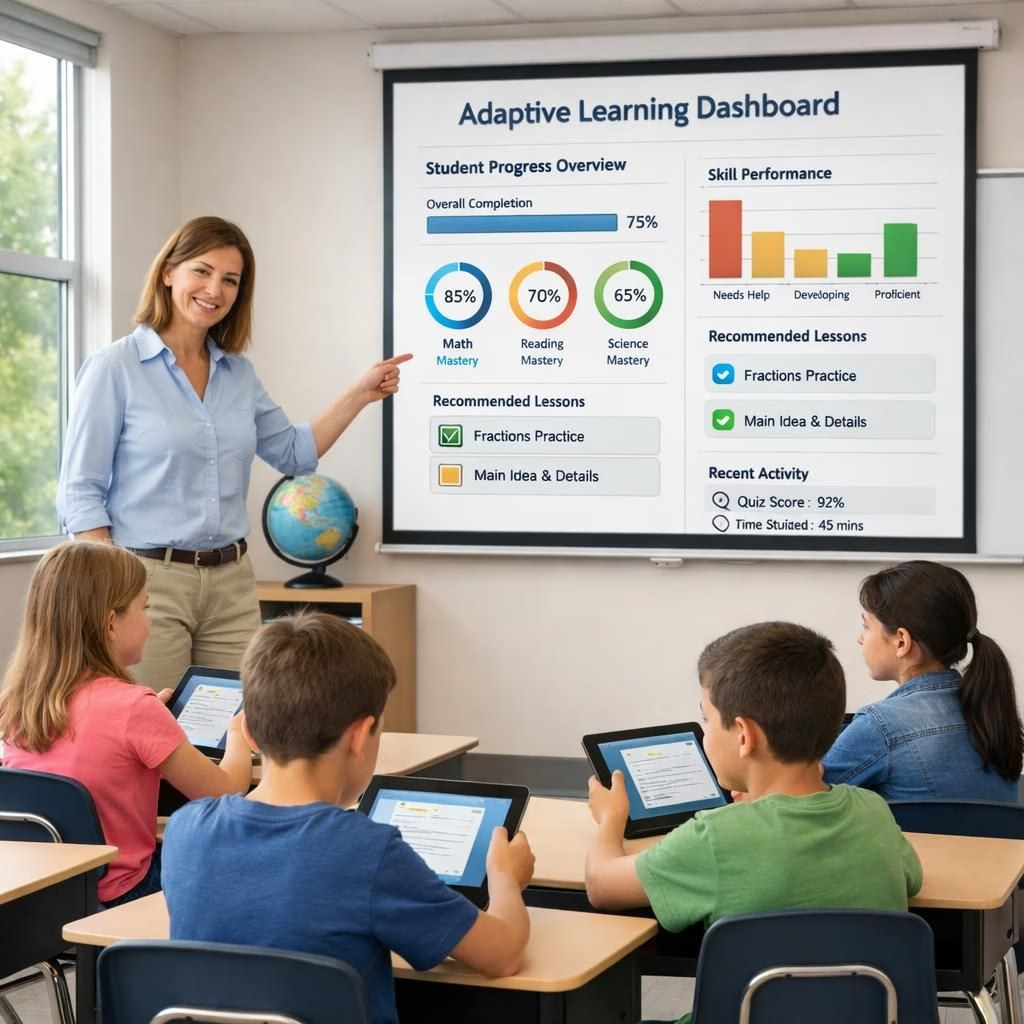
AI in Education is no longer a sci-fi dream; in 2026, Skill Development gets a turbo boost from adaptive learning, real-time feedback, and a smarter classroom economy where teachers mentor and machines handle routine assessments. This is not a distant promise but a growing reality across Indian schools, where policy, pedagogy, and infrastructure must move in step. The fusion of AI in Education with hands-on Skill Development creates a pipeline of industry-ready talent in AI, data science, and robotics. District dashboards show progress by learner, class, and school, turning a year of schooling into a coordinated effort rather than a scramble to cover pages.
AI in Education: The 2026 Playbook
Adaptive platforms begin with a diagnostic assessment and finish with mastery-based practice, guiding students toward meaningful milestones rather than the next page in a workbook. In a country as diverse as India, where gaps hide in plain sight, a live skills map reveals what learners can truly do and where they stumble. Teachers stay central: they plan, motivate, and troubleshoot, while intelligent systems offer hints, track progress, and tailor feedback. This partnership reduces repetitive overhead and frees teachers to mentor higher-order thinking. The result is a more inclusive classroom where every learner receives a pace, path, and support that reflect their starting point. AI in Education becomes the practical engine behind this shift, not just a slogan.
In Andhra Pradesh’s PAL pilot, students who used adaptive, mastery-based tasks showed meaningful gains, illustrating the practical value of scalable technology in real classrooms. This evidence matters because it bridges theory and impact, reminding decision-makers that the ability to learn faster and deeper is not a gimmick but a real capability that can be scaled thoughtfully in Skill Development.
Skill Development for 2026 and Beyond
Policy and budgets are following the classroom’s lead. The Union Budget 2026–27 allocates 1.39 lakh crore rupees to education, signaling that learning is a form of human-capital infrastructure. A dedicated Education to Employment and Enterprise Committee will explore how AI can be woven into schooling from the ground up, while strengthening teacher training. Within this envelope, digital learning becomes a clear budget line, and AVGC labs are set up in thousands of schools and hundreds of colleges to meet growing demand for content creators and technologists by 2030. The government also funds Centres of Excellence in AI and AI for Education to ensure that infrastructure keeps pace with practice, and that teachers and students alike stay current in a fast-moving technological world, with Skill Development playing a central role.
Rural digital access remains a challenge, and the work to close that gap must be deliberate and sustained. We need reliable connectivity, affordable devices, and offline-friendly AI tools so that students in remote areas can participate alongside their urban peers. As with any large technology shift, quality assurance matters: platforms must be tuned to regional needs, languages, and curricula. Teachers need ongoing professional development to blend new tools with traditional pedagogy, ensuring that AI acts as a trusted ally rather than a replacement.
From the classroom to the global stage, the right mix of policy, pedagogy, and infrastructure can turn a digital divide into a competitive edge. When schools empower teachers and pair them with smart machines, AI literacy and Skill Development empower Indian students to think, create, and solve problems with confidence, preparing them for global careers in AI, software, and beyond. A deliberate focus on AI literacy and Skill Development will ensure that progress translates into real opportunity.
Looking ahead to 2026 and beyond, the combination of policy, pedagogy, and infrastructure will decide whether progress in AI in Education becomes a true equalizer or another buzzword. By keeping humans at the center and using AI to amplify their work, we can accelerate Skill Development while maintaining quality and accountability. This is a practical, optimistic path that invites dialogue and collaboration between teachers, students, parents, and policymakers. This is your chance to weigh in and share your thoughts in the comments.