

February 2026 delivered a brisk parade of Google AI updates that feel more like a well‑tuned toolkit than a lab demonstration. AI is stepping out of the lab into classrooms, studios, stadiums, and living rooms, and the Impact shows up as faster visuals, sharper reasoning, and more accessible tech for everyday use. This isn’t a splashy launch calendar; it’s a deliberate push to deploy helpful AI across work, study, sports, and home so people notice improvements in minutes, not months. The February roundups read as a practical manifesto: AI should be useful, transparent, and easy to scale, with tools that professionals can actually deploy without a full engineering squad. In short, the AI agenda is becoming an Impact strategy, which means real features, real gains, and real attribution for the people doing the work.
Leading the show is Nano Banana 2, a release that marries Pro image quality with Flash‑like speed. You get higher quality visuals faster, whether you’re rendering, editing, or just experimenting with prompts. In practice, this translates into crisper images in Gemini and improved search previews, all at a friendlier price‑performance ratio. SynthID is still part of the mix, helping people identify AI‑generated content so creators and readers can trust what they see. The messaging here is clear: faster generation should not come at the cost of authenticity, and speed should not outpace responsibility.
AI Impact in Practice: Nano Banana 2 and Gemini 3.1 Pro
Gemini 3.1 Pro shows up as a leap in reasoning that makes the tool more capable when tasks require synthesis and cross‑linking. It won’t solve every puzzle, but it gives users a better shot at pulling together data, visuals, and narrative in a single view. In parallel, Flow has a refreshed angle: you can create, edit, and animate images and videos in one workspace, with a streamlined search and asset management system. The result is a smoother workflow, less back‑and‑forth, and more time to craft something meaningful. The new baseline is not a brag sheet; it’s a practical upgrade that lowers the bar for complex work while keeping the door open for big ideas.
On the creative side, Lyria 3 opens up custom music generation in the Gemini app. Describe a mood, upload media, and you get a 30‑second track with cover art. This isn’t just novelty; it helps creators prototype ideas quickly, test vibes with audiences, and iterate without expensive studio time. ProducerAI joining Google Labs signals a future where AI helps with lyrics and melody in parallel with video and image workflows. It’s a reminder that creativity and computation can share the same workshop without stepping on each other’s toes.
Flow now lets you generate, edit, and animate in one workspace. You can pull building blocks from images to videos and vice versa, and the upgraded interface makes searching and filtering assets faster. The dream is a single, coherent canvas where your ideas move from concept to export with minimal friction. It’s not magic; it’s a concerted effort to reduce the busywork that gnaws at creative time.
AI Impact in Sports and Education: Flow and Team USA analytics
Gemini 3.1 Pro is pitched as a baseline model for complex problem solving. It offers more than double the reasoning performance of its 3 Pro predecessor, which means answers come with clearer visuals, better context synthesis, and options that help you select approaches rather than settle for a single path. This matters most when you scale from a few dashboards to enterprise dashboards, or when a coach wants multi‑angle insights in minutes rather than hours. The larger story is about reliability and composability—tools that can be embedded into education, hospitals, and training rooms without requiring a PhD to run.
Security and resilience topics rise alongside capability. At the Munich Security Conference, Kent Walker argued for a collaborative approach to security and stressed that we can build robust systems without ceding control of data. Digital resilience isn’t a buzzword; it’s a practical posture for organizations facing evolving threats. The Munich Security Conference highlights how institutions balance security with openness in the AI era.
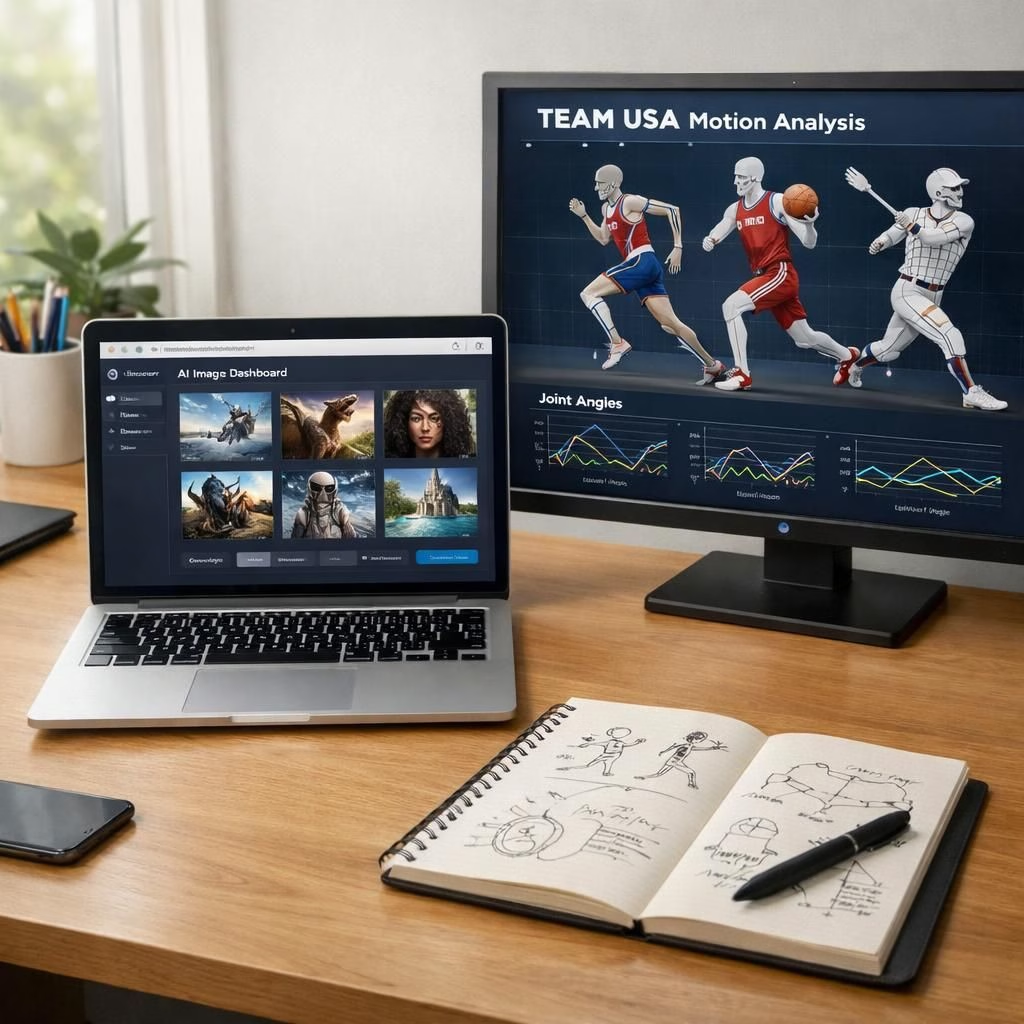
Before the Olympics, Google Cloud and DeepMind teamed up to push an AI video analysis tool for Team USA. The tool maps athlete motion from 2D footage, even with bulky winter sports gear, and it runs on Google Cloud to deliver near real‑time feedback. Coaches can see where a technique needs refinement and athletes can visualize adjustments in seconds rather than hours. The value isn’t just in the data; it’s in the ability to experiment with different training tweaks and see the Impact quickly, which can translate to safer, smarter performance on the ice.
During the big game, a Gemini ad called New Home tried to show how AI turns a house into a living space worthy of family memories. The spot was praised for its warmth and clarity, and it reflected a broader message: AI can translate grand ambitions into everyday usefulness, not just techno‑glamour. The campaign underscores how AI can be part of everyday storytelling, making technology feel attainable and friendly rather than distant and intimidating.
Beyond consumer tools, the February roundups highlighted partnerships in India and initiatives to scale AI for education and science. The AI Impact Summit served as a platform to align researchers, policymakers, and developers on practical goals. The narratives emphasize accessible AI—training programs, national partnerships, and new Impact Challenges that aim to move breakthroughs from labs into classrooms and clinics. The emphasis is on sustainable, scalable progress rather than a one‑off splash.
In sum, this February wave is less about dazzling demos and more about durable utility. AI is not a finish line; it’s a shifting baseline designed to help teachers plan better lessons, doctors interpret complex data more quickly, athletes improve in near real time, and everyday users navigate a world where information comes fast and decisions matter. The responsible‑use thread runs through every update, with attribution baked into the workflow so creators know when something is AI‑driven and when human judgment is essential. The tone is practical optimism: the tools are powerful, but the aim is to empower people to do more with less friction and more trust.
Source and thanks: The latest AI news we announced in February — thank you for the foundational material that inspired this recap.
We’d love to hear how these updates land in your world. What AI and Impact improvements would you like to see next, and how would you apply them in your work or study? Please share your thoughts in the comments below.
How to apply these updates in your work
- Identify one workflow where Nano Banana 2 could speed up image generation without compromising quality.
- Experiment with Flow to centralize creation, editing, and asset management in a single workspace.
- Test a 30‑second prompt with Lyria 3 to prototype a quick musical idea for a project or class.
- Run a small, time‑boxed pilot using Team USA‑style video analysis to measure improvements in technique or performance.
FAQ
-
What is Nano Banana 2?
It combines high‑quality image generation with faster rendering to speed up visuals across Gemini and Search pipelines.
-
What makes Gemini 3.1 Pro different?
It offers stronger reasoning and better data synthesis, helping with complex tasks and multi‑step projects.
-
Where can I learn more?
Check Google’s official February AI updates page and related product docs for hands‑on guidance.
Conclusion
The February 2026 wave emphasizes durable utility over flashy demos. The goal is to empower professionals, students, and athletes to do more with less friction, while keeping trust and transparency at the center. As AI tools become easier to deploy, the focus shifts to responsible adoption and measurable outcomes that anyone can achieve.
References
Original source: https://blog.google/innovation-and-ai/products/google-ai-updates-february-2026/