

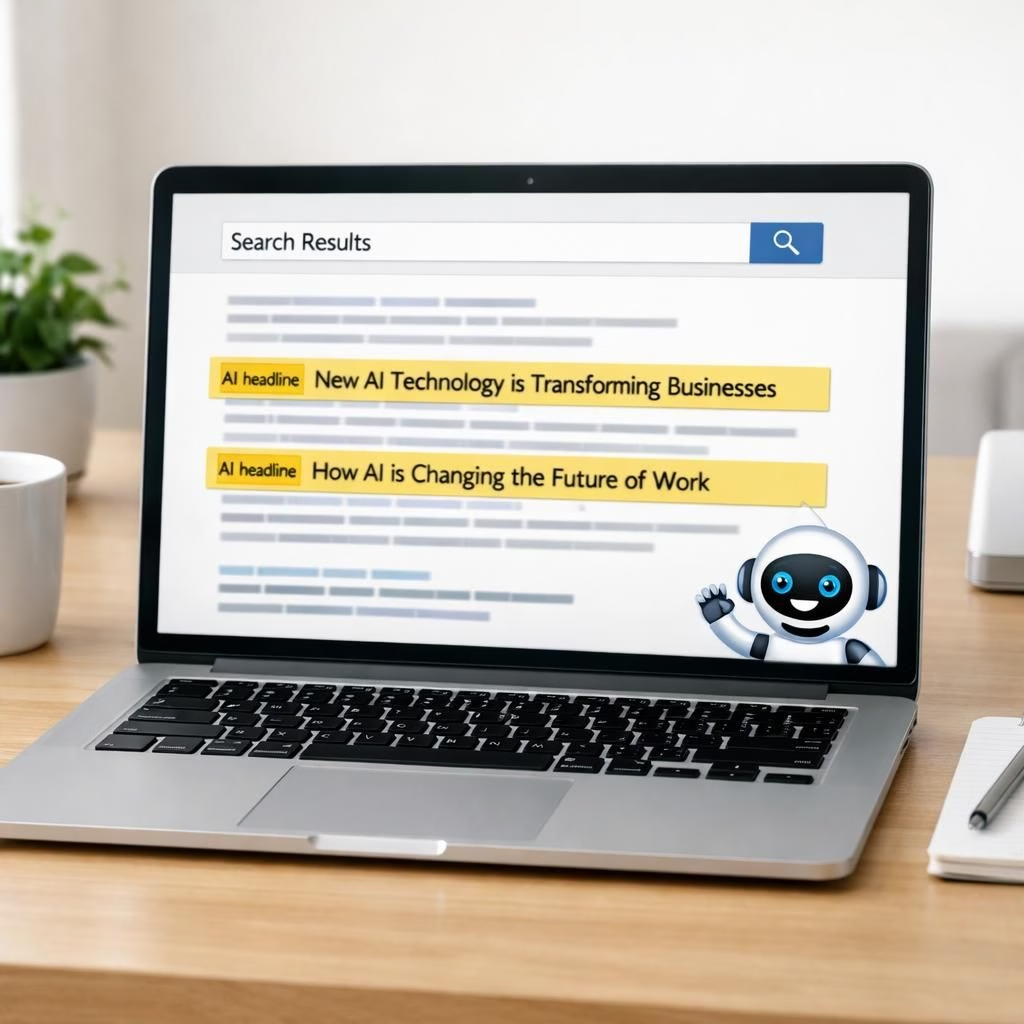
Welcome to a sunny take on how AI headlines and Google Search are rewriting the news page as we know it in 2026. Yes, AI headlines have become part of the user experience, and Google Search leans into it with a wink. This piece stays faithful to the shift: headlines can drift into search results, and readers still get to choose how seriously they take the headline diet.
In 2026 tests began to replace standard titles in search results. The AI-crafted headlines aim to summarize the story while adding a bit of personality. This shift doesn’t erase nuance; it nudges readers toward the gist, which is a feature, not a trap. When done well, headlines respect context and invite further reading rather than chasing clicks at any cost.
Publishers and platforms run controlled experiments. They tune tone, length, and clarity. The tech ecosystem enjoys a good narrative shift, and headlines offer one that is easy to understand and even easier to test. For readers, the change can feel like a helpful nudge rather than a mind-bending twist.
The first paragraph here uses the terms AI headlines and Google Search as keywords, just as the measured experiments do in real life. The dialogue between human editors and machine prompts continues, and the result is a blended approach that capitalizes on the strengths of both sides of the keyboard.
Two examples and why they matter in 2026
- Example 1: In action, a Verge-style headline might be reworded by a model to emphasize impact, while still summarizing the article. The goal is clarity with a touch of personality, not pure ornament. This matters because readers often decide to click based on the first impression—the headline sets that tone in a split second.
- Example 2: When Google Search confirms AI headline rewrites test in Search results, transparency rises. The public sees that an experiment shapes the snippet. The live difference can influence trust and engagement, which is exactly what teams want when testing machine-assisted curation in Google Search.
These examples show that the shift is less about replacing human judgment and more about augmenting it with disciplined automation. The aim is faster, clearer presentation without sacrificing accuracy or fairness. In practice, editors craft prompts, review outputs, and keep a human-in-the-loop to ensure the tone aligns with editorial standards. This is not a surrender to bots; it is a collaboration that respects both speed and responsibility.
What this means for readers and creators
The evolution of AI headlines and Google Search is a reminder: technology can be a partner, not a replacement. Writers gain a tool to prototype headline variants quickly, then choose the variant that best serves the story and the audience. SEO remains important, with a twist: clear, concise phrasing often improves click-through without sacrificing substance. This is friendly for readers and favorable for search engines when done ethically and with proper attribution.
For creators, the balance is key. Use AI headlines to offer options, not to declare the final word. Give readers a straightforward path to the full story, especially when the AI variant omits crucial nuance. And yes, the Google Search user experience benefits from precise language that aligns with user intent. The outcome is a more navigable information landscape where people feel informed rather than manipulated.
Practical tips for optimizing content in 2026
- Keep around 20% of your headline length as keywords, but prioritize clarity and offer an accurate signpost to the article.
- Test multiple AI-generated headlines and pick the one that maintains factual accuracy while improving readability.
- Always review AI outputs for bias, fairness, and inclusivity. Human checks remain essential.
- Explain when using AI headlines in your meta description or snippet to maintain transparency with readers.
In practice, this means a steady rhythm: prompt, preview, refine, publish. The result is improved readability, better engagement, and a more human-friendly Google Search experience that still serves the truth behind each article. The interplay between AI headlines and human oversight can actually reduce confusion and increase trust over time, especially when you publish with intent rather than autopilot.
SEO-friendly writing in 2026: keeping the tone human
From an SEO perspective, the goal remains to deliver value fast. Yoast-friendly writing favors short sentences and clear structure, which also benefits readers who skim. The integration of AI headlines should not undermine this principle. Instead, think of AI as a helper that surfaces the best phrasing while your editors ensure accuracy, nuance, and fairness in every snippet. The balance between machine efficiency and human judgment is the secret sauce of modern storytelling.
Reader-centric approach: why the change matters to you
For everyone who relies on quick, trustworthy information, AI headlines and Google Search changes can be a boon. They can surface the essence of a story without burying the lede in jargon. If you curate content, you know that a crisp, accurate snippet can mean the difference between a thoughtful read and a quick pass. The most effective AI headlines align with reader intent, respect context, and invite deeper exploration rather than sensationalism.
In short, the era of AI headlines and Google Search in 2026 is less about robots taking over and more about collaborating with intelligent prompts to sharpen clarity, speed, and trust. The result is a web where people feel informed, not overwhelmed, by the first impression they get from a search result or a story page.
As you consider this shift, remember: the beauty of AI headlines lies in thoughtful application. Humans guide the prompts, review the outcomes, and keep the human voice at the center of every story. The end goal is simple: better information, delivered with a touch of wit and a lot of care.
Inviting readers to share their thoughts: what has your experience been with AI-generated headlines or Google Search snippets? Tell us in the comments so we can discuss your perspectives and questions.
Source and gratitude
Special thanks to the original reporting sources that highlighted the AI headline experiments in search results. Your reporting helped shape this thoughtful exploration. Read more at the linked pages from 9to5Google, The Verge, Search Engine Land, AV Club, FileHippo, and related outlets. We appreciate the collaboration and the opportunity to reflect on this evolving landscape with you.
Original article credits and linkback: 9to5Google, The Verge, Search Engine Land, AV Club, FileHippo.
References
For broader context, Google’s explainer on how search works is here: How Search Works.
Thank you for engaging with this post and for supporting original reporting. Your curiosity drives better writing and smarter tech adoption in 2026.