

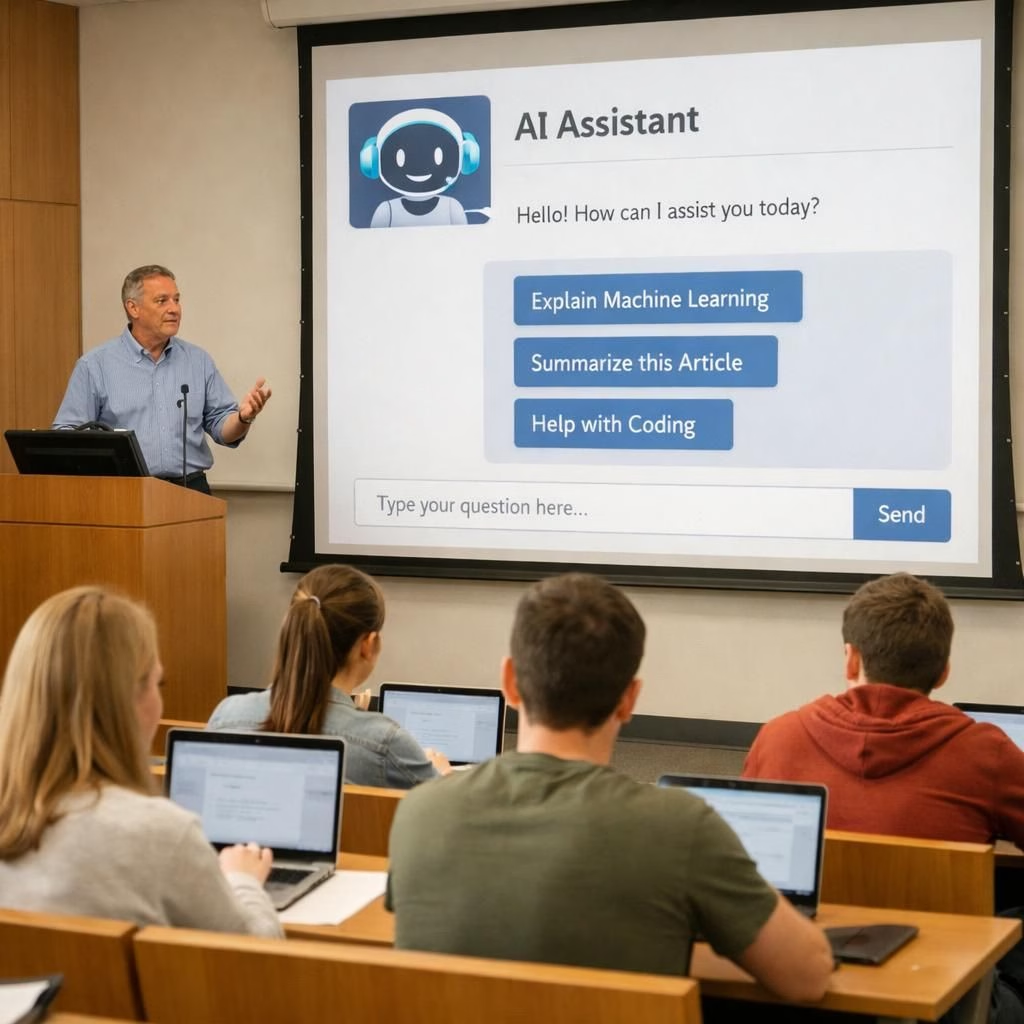
Introduction: AI and Education shaping the future
AI is not some distant sci‑fi rumor; it’s now part of how we learn and how we work. Education systems are evolving to keep pace, and the job market is shifting under the influence of smarter tools. When Jerome Powell spoke to Harvard economics students, he did not pretend the ground was flat; he called the terrain challenging, with hiring cooling and new technologies changing the daily routine.
He added that artificial intelligence can boost productivity and open doors, even as some roles fade. The core message was clear: embrace AI as a set of practical skills, not a threat to your future. In this view, AI becomes a companion in the learning journey, not a villain to fear.
AI in the Classroom: A Fresh Perspective
Powell’s message was practical and grounded. He urged students to invest time to master AI tools, not to wait for the perfect moment. He described his own experiments with large language models and admitted they helped him read faster, draft more cleanly, and reason with speed.
The advice is simple: mix domain knowledge with tool literacy. In a modern economy, the ability to frame a question, select a tool, and interpret results is at least as important as memorizing facts.
The truth is blunt: many companies will automate tasks that can be done by a very smart model, and they will. The smart move is to keep ahead by building complementary skills, not clinging to old routines.
Powell’s tone was reassuring: automation isn’t a doom script; it’s a prompt to rethink how work gets done, with a touch of humor to ease the tension.
Education and AI: Tools for Opportunity
History offers a patient instructor. Powell reminded listeners that disruptive tech has appeared for centuries and, over the long arc of time, raised productivity and living standards.
For today’s students, the plan is actionable: cultivate critical thinking, practice with real datasets, and build a portfolio that demonstrates how Education can solve real problems. Start small with a campus project or a side gig that uses artificial intelligence to improve efficiency. Seek feedback from mentors and peers.
The aim is to turn fear into curiosity and to turn curiosity into consistent practice.
Education becomes an advantage when it pairs rigorous study with hands-on experimentation with AI tools.
In short, the future economy may be jagged at first, but it leans toward opportunity for those who stay curious and patient.
Practical steps you can take this semester
- Identify a campus project that benefits from AI, such as automating a scheduling task or building a dashboard from a dataset.
- Build a small portfolio item that demonstrates a real result using AI.
- Join a student club or internship that applies AI to real tasks.
- Ask mentors for feedback and iterate on your approach.
FAQ
-
What should students do first to leverage AI in their studies? Focus on combining domain knowledge with hands-on tool literacy and critical thinking.
-
Will AI replace jobs? It is more a productivity amplifier; it can automate routine tasks but also create new roles and opportunities.
-
How can I start learning AI on campus? Look for campus projects, clubs, and internships; use real datasets to practice.
-
How long will it take to adjust to the changing job market? It may take time, but steady practice and collaboration build momentum.
Takeaway: Embrace AI as a practical toolkit. Start small, stay curious, and pair your hard knowledge with tool literacy to build a resilient career path.
Original article attribution: Thank you to the source for the material. Original article: Original Harvard economics briefing.
We invite you to share your thoughts in the comments. Your perspective helps everyone navigate the 2026 job landscape with a bit more confidence and wit.
References
- Times of India: Powell to students on AI and learning
- Automation and the future of work — Brookings
- AI and the labor market — Brookings