

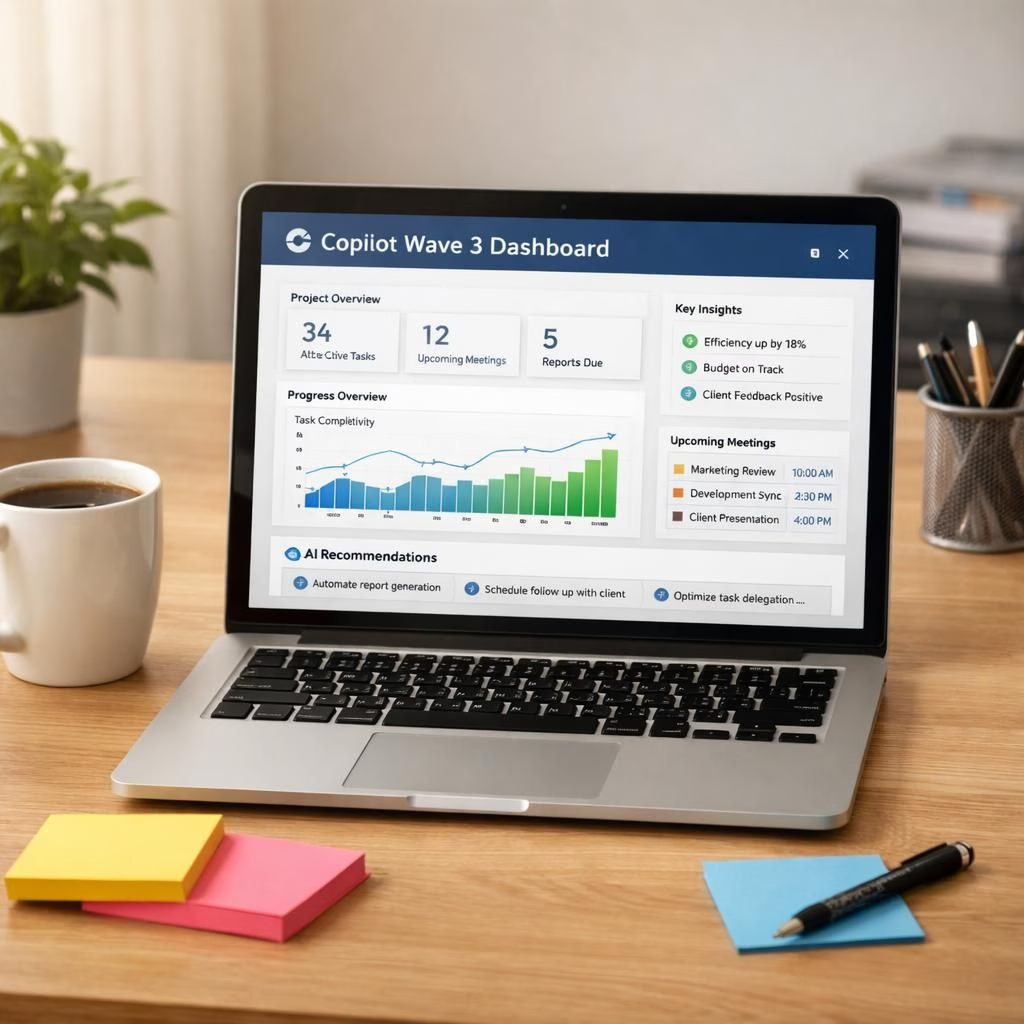
Copilot Wave 3 lands with a nod toward tidier days. It’s more than a demo; it aims for smarter, calmer workflows. Yes, AI and Copilot are the stars, and this frontier invites smarter teamwork. Microsoft calls it an early access Frontier ride, not a final boss fight. If you want a taste of multi-model finesse, this is it.
AI Copilot: Wave 3 features explained
At the heart of Copilot Cowork is a tool designed to handle work that unfolds over time. You describe the outcome, and Copilot Cowork creates a plan, navigates across relevant tools and files, and advances the work while you watch the progress. You can step in to steer at any moment. The feature runs on the same tech platform that powers Anthropic’s Claude Cowork, and it ships with native skills from both Claude and Microsoft.
Copilot Cowork replaces one-off prompts with a coordinated, multi-tool workflow. It maps tasks, assigns a sequence, and tracks milestones, so teams can share context rather than re-explain it. It also keeps you in the loop with visible progress, enabling you to adjust direction on the fly. In short: delegate work, not just tasks, and let the system manage the tempo.
Copilot Council: AI Perspectives collide
The Model Council lets you compare results from different AI models on the same question. You can instantly see where models converge and where they diverge, helping you choose the best approach for your problem.
On the Research front, a Critique feature adds a second eye to the draft. The idea is simple: one model plans, a second acts as an expert reviewer, and a final pass lands the answer with extra scrutiny. Microsoft describes this as a multi-model deep research system designed to improve accuracy, completeness, and objectivity. Early DRACO benchmarks report measurable improvements in research quality.
Researcher with Critique: Smarter multi-model deep research
Critique does not replace human judgment; it pairs multiple AI voices to strengthen the result. The system drafts, then cross-checks with a second model and refines the output before delivery. The result is a more robust synthesis of sources and insights, reducing bias while preserving nuance.
Additionally, the new Model Council is a practical tool to surface blind spots. You can see at a glance which model agrees with your instincts and where it suggests pausing for a closer read. The aim is faster, higher-quality research and a more collaborative vibe across teams.
For practitioners, Wave 3 updates arrive through the Frontier programme, a controlled pace to test, adapt, and scale. The updates include a built-in critic, multi-model benchmarking, and cross-model comparison, all aimed at reducing back-and-forth and speeding projects. The business case is simple: faster insights, fewer context switches, and a clearer picture of what AI can contribute to daily work.
As with any powerful tool, governance, data provenance, and user training are essential. Even with AI that can juggle multiple streams of information, human oversight remains crucial to ensure outputs stay aligned with goals and ethics. When used thoughtfully, Copilot can be a productivity amplifier rather than a mystery box that spouts unfounded results.
If you’re curious about real-world use, here are a few best-practice ideas: start with a pilot in a single team, map out how Copilot will access documents and calendars, and set guardrails around sensitive information. Then invite your team to compare model outputs side by side using Model Council, and decide which approach yields the most actionable insight. And when you’re ready, scale the experiment across departments with a clear success metric.
Original article: Original article — thanks to the authors for their material and insights.