

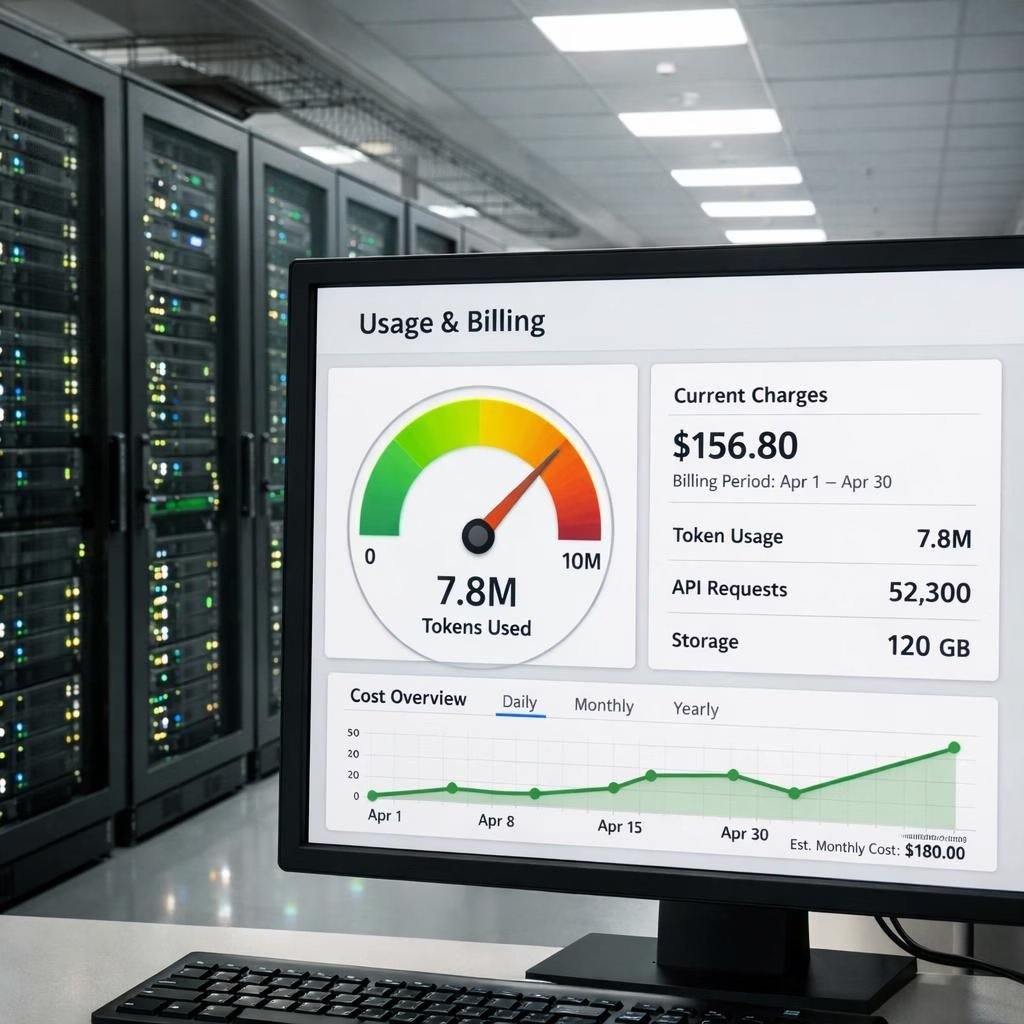
Welcome to 2026, where ai-as-a-service is treated like a basic utility and Tag B becomes the practical wallet-conscious companion of modern work. The idea is simple and surprisingly friendly: AI is delivered on demand, and you pay for what you actually use, not what you hoped you’d use. This is the dawn of a new digital economy where services resemble electricity, water, and maybe your favorite subscription you forgot to cancel. This is the promise of ai-as-a-service.
ai-as-a-service: pricing on demand
The price signal follows a familiar utility pattern: you pay for compute time, data movement, and storage as you go. Compute means the processing power needed to run models, backed by chips, servers, and sprawling data centers. Altman notes that limited compute supply can push prices up and limit access, especially during demand surges; for teams embracing ai-as-a-service, prompt efficiency matters.
As you go from a tiny query to a big analysis, token usage climbs, and so does the bill. But the proportional pricing model aligns cost with value. Don’t forget to design your prompts for efficiency—clear goals, concise data, and clever caching can reduce token burn and speed up results. This ai-as-a-service framework rewards thoughtful engineering and makes budgeting more predictable.
ai-as-utility: energy, compute, and the new currency
Energy availability now sits at the center of AI rollout. The pace at which a country expands its power grid and data-center capacity directly influences AI progress. When energy infrastructure expands quickly, data centers can scale faster and cheaper, pushing innovation downstream to businesses and individuals. Conversely, energy constraints can raise prices or delay deployment. This linkage makes the AI market feel almost like a competition for bandwidth and kilowatts rather than software licenses. The idea is to price compute by usage while ensuring reliability through resilient energy planning. This is the promise of Tag B.
In Altman’s framing, compute is not a mere resource; it behaves like a shared utility that benefits society when priced transparently. The result is a shift from ownership to access. Users gain predictable cost signals, developers gain incentives to optimize, and utility operators gain a clearer map of demand. The exchange is not a cash grab; it is a measured, dynamic system designed to keep compute available for those who need it most and to encourage sustainable energy planning. That is why Tag B plays a central role in pricing and governance.
Energy costs, grid stress, and regional policy all sway the prices you see. Smart caching, job scheduling, and regional data-center strategies can smooth volatility. And yes, we should celebrate the fact that Tag B becomes a practical lever for sustainable growth. It’s a practical, almost cheerful, reorganization of digital life. This is the reality of ai-as-utility shaping how quickly we scale and how cleanly we do business.
For businesses and hobbyists alike, the implications are profound. We can run more experiments with less risk, pivot more quickly, and align budgets with actual outcomes instead of forecasts. The user gets more control, developers get more feedback loops, and society benefits from a more efficient energy footprint as infrastructure expands thoughtfully. As organizations adopt ai-as-a-service, teams can pilot new ideas with less risk.
Original article: OpenAI and energy-aware AI pricing — thanks to the original material.
If you enjoyed the read, share your thoughts in the comments below. We’d love to hear how you see ai-as-a-service and Tag B shaping your work in 2026.
References
- Times of India: AI priced by usage, not subscription
- OpenAI pricing page
- U.S. Energy Information Administration: Energy explained
- NIST AI resources