

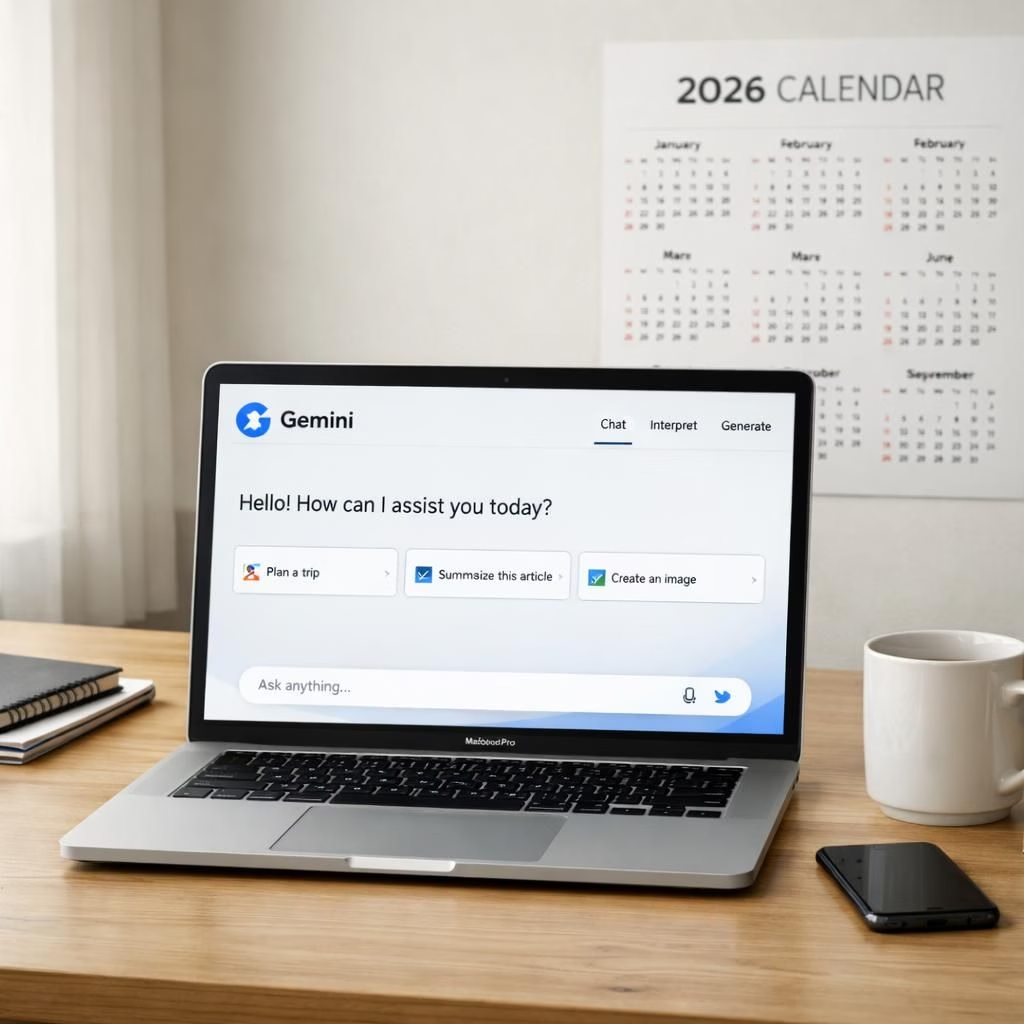
Apple’s latest AI pivot is well-timed and high-profile. Lilian Rincon, a veteran Google executive who spent nearly a decade guiding AI and consumer products, will join Apple as Vice President of Product Marketing for Artificial Intelligence. She will report to Greg Joswiak, Apple‘s marketing chief. Rincon announced the move on LinkedIn, describing nine years at Google as one of the great privileges of her career and noting the bittersweet taste of leaving. The tone is upbeat, and the math is simple: this hire should sharpen Apple’s AI voice and its edge in the marketplace.
AI-First Strategy for Apple in 2026
Apple wants a stronger AI voice in everyday devices. The Siri rebuild will lean on Gemini to deliver faster, more natural conversations. The joint plan calls for the next generation of Apple Foundation Models to run on Gemini and Google cloud, while preserving Apple privacy standards. This is not a gimmick; it is a deliberate bet on AI architecture that scales with devices and on-device thinking.
Rincon’s mandate is clear: translate technical progress into compelling product marketing that users can actually feel. She will guide messaging about on-device AI, privacy guarantees, and the value of a trusted AI assistant as a practical helper, not a mystery box. The emphasis is on making AI approachable, useful, and secure for a broad audience. Critics may push back, but the core bet is straightforward: better AI, better user trust, better outcomes for Apple.
In practice, this move signals that Apple intends to treat AI as a product, not a promise. Marketing teams will need to translate abstract model capabilities into tangible benefits—faster responses, more accurate suggestions, and more natural dialogue that respects user preferences. The result should feel like a natural extension of Apple hardware and software, with AI smoothing the edges rather than overpowering user control.
Apple’s AI-Driven Siri Evolution
Apple and Google have framed their collaboration as a multi-year effort. Foundation Models will be built with Gemini roots and Google cloud infrastructure, enabling more capable experiences inside Apple devices. Apple also emphasizes privacy through its Private Cloud Compute approach, ensuring sensitive data remains under user control even as smarter AI assistants come to life.
Looking ahead to WWDC 2026, analysts expect Siri to gain new capabilities and potentially open to a suite of AI chatbots. Gemini, Claude, and possibly ChatGPT could share the stage with Apple’s own systems, expanding the user’s AI options while the company keeps privacy at the core. The goal is fewer friction points, more meaningful interactions, and a sense that AI truly serves people rather than selling them things they didn’t ask for.
For developers, this is a signal to expect new API surfaces, more robust AI tooling, and a more open yet still guarded ecosystem. For everyday users, it promises smoother, more capable interactions with their devices—without surrendering the sense that their data stays on their terms. The balance is delicate, but Apple has built its reputation on thoughtful risk management paired with bold product storytelling.
In sum, this move is a strategic, pragmatic bet on AI at scale. It aligns Apple’s marketing ambitions with a technical backbone that can support ambitious AI features across the product line, from iPhone to wearables. The goal is not merely smarter software but a more natural, trustworthy AI experience that respects user privacy and device constraints. If successful, users will notice fewer prompts, smarter suggestions, and a calmer AI presence that enhances daily routines rather than hijacking them.
We invite you to share your thoughts in the comments below and tell us how you see Apple weaving Gemini-powered AI into your daily life. Original source: Reuters. Thank you for the original material.
Practical takeaways for readers
- What this hire means for Siri’s daily usefulness: users can expect smarter, context-aware responses.
- Privacy stays central as on-device AI advances.
- Developers can anticipate new APIs and better AI tooling.
- Watch for details at WWDC 2026 on how Gemini-based features roll out.
FAQ
- What does Rincon’s hire mean for Apple’s AI strategy?
It signals a clearer, marketing-driven plan to translate advanced AI into everyday, private, device-friendly experiences. - Will my data stay private with Gemini-powered features?
Apple emphasizes privacy and on-device processing, with safeguards to keep data under user control. - When can we expect updates to Siri?
WWDC 2026 is the event where Apple is expected to unveil new capabilities and integrations. - What should developers expect?
New APIs, improved AI tooling, and a more open yet guarded ecosystem to build on Apple devices.
Apple’s appointment underscores a pragmatic, scalable approach to AI that blends hardware, software, and privacy.
Conclusion
Ultimately, the Rincon hire reinforces Apple’s commitment to making AI a usable, trustworthy part of everyday life — with Apple steering the direction.
External sources
References
Original source: Times of India.